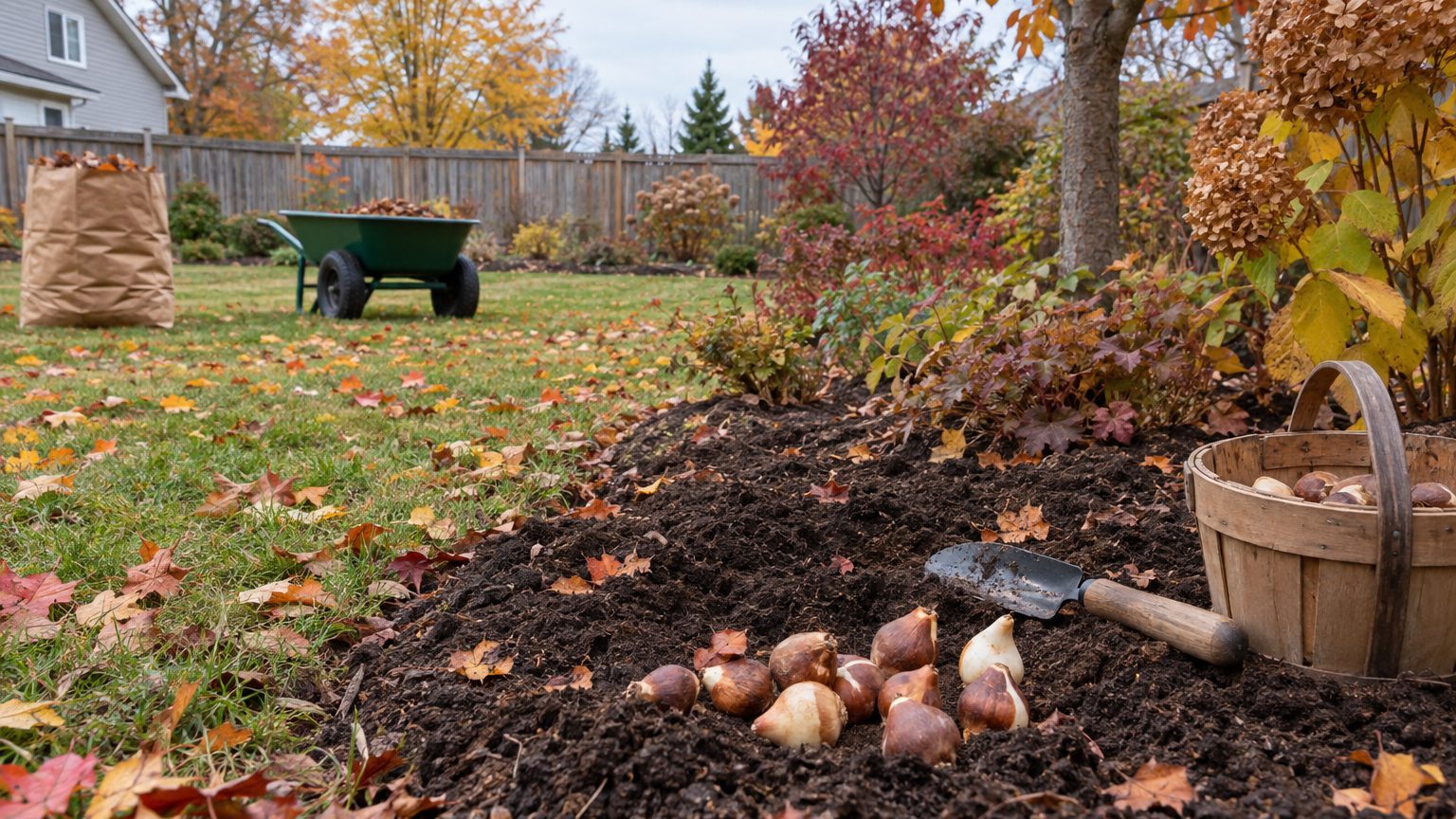
Tulips and other spring-flowering bulbs can go into the ground as late as December, according to Iowa State University Extension, as long as the soil isn’t frozen. The test is physical. If a spade pushes 6 to 8 inches down without hitting solid frost, the bed will take bulbs. A white lawn on a cold morning proves nothing, because the frost sits on the grass blades, above soil that is often still soft underneath.
The deadline is frozen soil, not the calendar
Most guides give a fall window, such as mid-September to mid-October in Minnesota. Those dates exist so roots can form before the ground locks up. Tulips are the exception: University of Minnesota Extension says you can plant them as late as you can get them into the soil. The bulb carries its own energy, so a short root system is enough to produce a flower, though stems may come up a little shorter.
Where you live decides how much of December you actually have. Oregon State University Extension says western Oregon can keep planting into mid-December, while central and eastern Oregon should finish by October. In the Midwest, zones 5 and 6 typically run from mid-October into the first weeks of December. Zones 7 and 8 plant in November and December. Mid-Atlantic and central gardeners in zones 6 and 7 often get workable soil through most of December on mild days.
Cold is the other half of the equation. Tulips need roughly 12 to 16 weeks of temperatures below 45°F to bloom properly. A bulb planted on December 15 in unfrozen northern soil still collects about 12 weeks of cold by early March, which is why late-planted tulips usually catch up once the sun warms the bed. Daffodils and crocus are less forgiving. They can flower later or more sparsely in their first spring, then recover the following year, because they depend more on fall root growth.
Planting in workable soil, step by step
You need a spade or bulb planter, a bucket of mulch (shredded leaves, straw or pine needles work), and the bulbs. A small bed takes an afternoon.
- Squeeze each bulb. Firm and heavy is good. Soft, moldy or badly shriveled bulbs are poor candidates whatever the date.
- Choose a spot with full sun to partial shade and good drainage. Cold soil preserves bulbs, but waterlogged soil rots them.
- Dig 6 to 8 inches deep for tulips, measured to the base of the bulb. Going to 7 or 8 inches for a very late planting steadies the temperature around the bulb and limits heaving, the freeze-thaw cycle that pushes bulbs out of the ground.
- Set each bulb pointed end up, then backfill and water once to settle the soil.
- Spread 2 to 4 inches of mulch on top. The thicker layer suits planting in the dead of winter. Mulch keeps the soil from freezing as fast, which buys the roots a few extra weeks, and it hides freshly disturbed soil from squirrels.
If snow has fallen, shovel it off the bed first. Snow insulates, so the ground underneath is often softer than the air temperature suggests.
Is the ground already frozen solid? Use pots or the surface
When the spade bounces off, you have two workable options, and one non-option. Bulbs left in a bag until spring generally do not recover: Iowa State University Extension reports that tulips kept unplanted rarely perform because they never build roots over winter. Throwing them in a pot or on a bed in December beats holding them for a spring that comes too late.
Pots are the more reliable fix. Use a large container with drainage holes and a good potting mix rather than garden soil, and plant the bulbs 6 to 8 inches deep. A pot at least 24 inches across can stay outside all winter because the volume of soil resists freezing through. A smaller pot, around 18 inches, needs a spot that stays between 38°F and 45°F, such as an unheated garage or shed. Keep the mix moist but not wet. When shoots appear in spring, move the pots into the light. Bulbs can also be forced indoors: Iowa State puts the cold requirement at 40 to 45°F for 12 to 16 weeks, in a refrigerator, cellar or unheated basement, followed by a bright room at 60 to 65°F.
The second option is top-planting, sometimes called the mulch sandwich. Clear the snow, set the bulbs on the soil surface with the root end touching the ground, and cover them with 4 to 6 inches of mulch, compost or potting soil. Don’t press the bulbs down, since that damages the base where roots form. Tulips grow up through the mulch in spring. Treat it as a fallback: the bulbs root more slowly than they would in a dug hole, and a thaw can give you the chance to plant properly instead.
Warm-winter gardens have a different problem
Gardeners in zones 8 to 10 face no frozen ground, so December is a standard planting month there. The risk is too little cold. Soil that never drops low enough leaves tulips with leaves and no flowers, or blooms on a short stub. Bulbs for these areas need pre-chilling in the refrigerator for roughly 6 to 16 weeks, depending on the guidance you follow: Clemson University Extension cites 12 to 16 weeks for most spring bulbs. Texas A&M’s local guidance, for instance, calls for 45 to 60 days for south-central Texas, followed by prompt planting.
Two storage details matter. Keep the bulbs in a paper or mesh bag, away from ripening fruit, which releases ethylene gas that can interfere with flower development. And never put them in the freezer, which kills them. In these zones the practical cutoff is early January, because spring heat arrives fast and can wither buds before they open.
One more check before you buy bulbs at a clearance sale: ask the nursery whether they have been chilled. Bulbs sold in the South are sometimes pre-treated, and bulbs sold in the North almost never need it.
Sources : idealhome.co.uk | yahoo.com