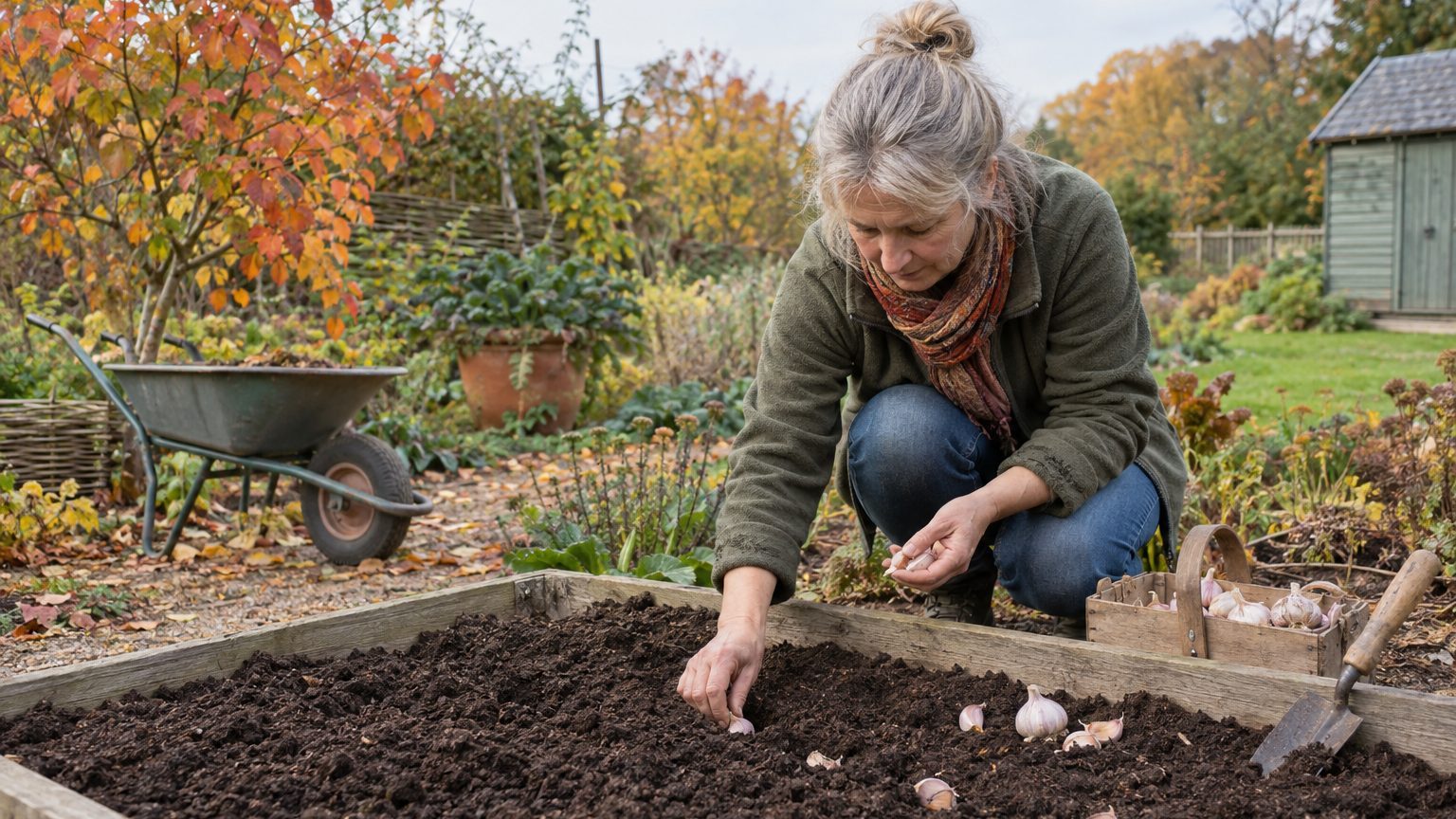
Yes, you can plant garlic in November, and for much of the country it is close to the ideal moment. The goal is simple: cloves need time to grow roots before the ground freezes, but not so much warmth that they push green shoots into winter. Get that window right and you’ll be pulling bulbs next July.
Timing is everything here.
Timing by zone: where November works and where it doesn’t
The common rule of thumb is to plant about four to six weeks before the soil freezes solid, or when soil temperatures at four inches deep drop below roughly 60°F. Roots keep growing in soil down to about 40°F, which is why garlic planted in late autumn still anchors itself before winter. A cheap soil thermometer takes the guesswork out.
In USDA zones 3 through 5, the ideal window runs from late September to mid-October. November planting is cutting it close, though it still works if the ground is workable. Gardeners in Minnesota or northern Vermont who have a frozen crust by Thanksgiving have simply missed the boat, and they should heavily mulch or wait for spring (with smaller bulbs as the penalty).
Zones 6 and 7 are the sweet spot for November. Think Pennsylvania, Ohio, the Mid-Atlantic and much of the Pacific Northwest, where the first hard freeze often arrives in late November or December. Plant in the first half of the month and you are right on schedule.
Zones 8 through 10 can plant through November and even into December. The Southeast, Gulf Coast and much of California have the opposite problem: soil that stays too warm. Plant too early and garlic sprouts weeks ahead of schedule. In the warmest areas, gardeners often chill their seed garlic in the refrigerator for four to six weeks before planting, since garlic needs cold exposure to form proper bulbs.
Missed the window entirely? Plant anyway. Cloves tucked into the ground in December, if the soil can still be worked, often give a respectable harvest, just a little smaller.
Choosing cloves and planting depth
Start with the right garlic. Grocery store bulbs are often treated to prevent sprouting and may not be suited to your climate. Seed garlic from a nursery or farmers market is a safer bet, and the choice matters: hardneck varieties handle cold winters well and produce edible scapes in early summer, while softneck types store longer and do better in mild climates.
Break the bulb into individual cloves a day or two before planting, leaving the papery skin on each. Pick the largest cloves. Clove size correlates with bulb size, so planting the fat ones and eating the small ones is the cheapest yield boost in the garden.
Depth is where many beginners go wrong.
Plant cloves two inches deep in milder zones and up to three or four inches deep in cold ones, pointed end up, flat root end down. Space them four to six inches apart in rows about a foot apart. Deeper planting protects against frost heave, the freeze-and-thaw cycle that can push shallow cloves right out of the soil like corks.
Garlic wants loose, well-drained ground with plenty of organic matter. Heavy clay that stays soggy in winter rots cloves, so raised beds are a smart fix if your yard holds water. Work in a couple of inches of compost before planting, and skip fresh manure, which can burn young roots and introduce pathogens.
Mulch: the winter blanket that makes the difference
Mulch does three jobs at once. It moderates soil temperature swings, keeps frost heave in check, and suppresses the weeds that would otherwise crowd out slow-starting garlic in spring. Shredded leaves, straw and weed-free hay all work well.
Apply it after planting, once the ground has cooled, in a layer of four to six inches in cold zones. In zones 7 and warmer, two to three inches is plenty. Use certified weed-free straw if you can find it, since cheap hay arrives loaded with seeds that will sprout all over your bed.
Don’t panic when green tips poke through the mulch in December or January. Garlic is tougher than it looks, and an early shoot of a few inches will usually survive the cold. If a deep freeze is forecast and the sprouts are tall, add another layer of mulch on top.
In spring, pull the mulch back slightly as temperatures climb so the soil can warm, then reapply a thinner layer to hold moisture. Garlic is shallow-rooted and thirsty during bulb formation, so water about an inch per week from April through early June if rain falls short. Stop watering about two weeks before harvest to let the bulbs cure properly in the ground.
Feed lightly. A nitrogen-rich fertilizer or compost top-dressing in early spring, when shoots are actively growing, supports leaf growth, and leaves feed the bulb. Cut off nitrogen by late May or you’ll get lush tops and mediocre cloves.
Harvest comes when about half the lower leaves have turned brown, typically late June to late July depending on zone. Dig, don’t pull, then cure the bulbs for two to four weeks in a shaded, airy spot. Save your three best bulbs for replanting: garlic adapts to your soil over the years, and many growers have been replanting the same line for decades.