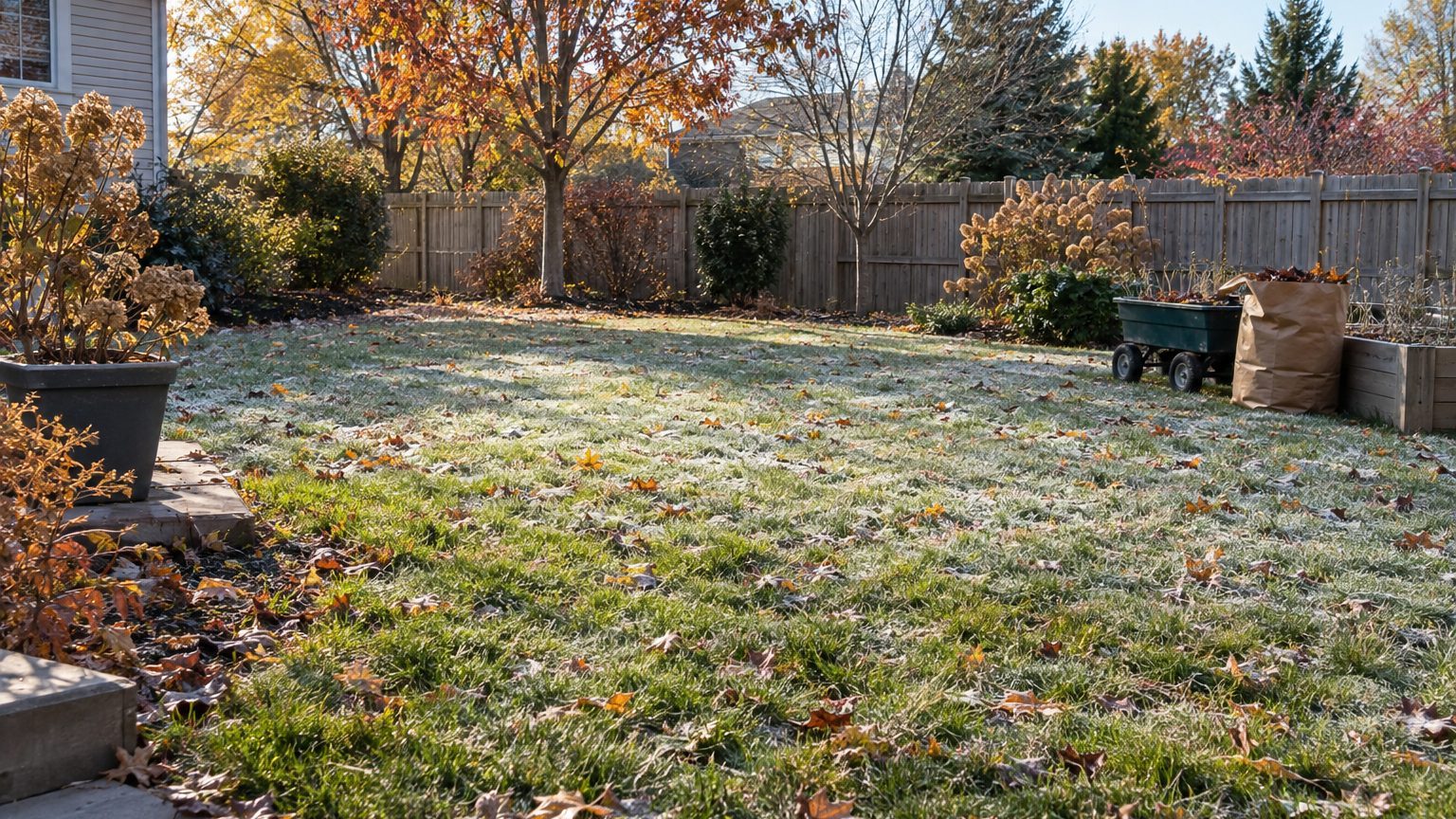
In cold-winter areas, soil is usually under 50°F by November, so normal seeding is done. A bare patch can still be dealt with this month, though. Cool-season grass seed spread on cold ground stays put until spring, and in the right conditions it comes up ahead of seed sown in April. Whether November works for your yard depends on soil temperature, your grass type, and how cold your winters get.
Soil Temperature Sets the Date
Dormant seeding means spreading seed after the soil is too cold for it to sprout. The seeds will not germinate until spring, but the work is already done, so they take off as soon as conditions are right. The trigger is the thermometer, not the calendar. University of Minnesota Extension says it can be done anytime soil temperatures are below 40°F, which is typically early November to mid-March for most of Minnesota. Other guidance sets the cutoff higher, at about 50°F, and UMass Extension’s definition sits at roughly 40 to 45°F. The safest reading is the lowest one: if you are not sure, wait for colder soil.
Check the soil, not the air. Push a probe thermometer about 2 inches into the lawn and read it at the same time of day for several days running. A single cold morning proves little. You want readings that stay low and a ten-day forecast without a warm rebound, because a week of 60°F afternoons can wake the seed.
The problem is that early germination is a trap. Young seedlings lack the reserves to survive a later hard freeze, which means total winter kill. If that happens, the fix is a regular overseeding in spring once the soil is reliably above 50°F. Seeding in October or early November, while the soil is still warm enough to sprout seed, is riskier than seeding in December. UMass-based guidance calls that stretch the gap to avoid, because the seedlings don’t have time to toughen up before the first hard freeze.
Where November Works and Where It Doesn’t
The technique is for cool-season lawns: Kentucky bluegrass, tall fescue, fine fescue and perennial ryegrass. These are the grasses of the northern states and much of the transition zone. Warm-season lawns such as bermudagrass, zoysia, St. Augustine and centipede are a poor fit. They need warm soil, often 65 to 70°F and up, to germinate, and their seed does not reliably survive a cold, wet winter.
Within the cool-season belt, geography matters as much as grass type. In Minnesota, dormant seeding opens in early November. Farther south the window shifts later. Purdue Extension puts the Indiana window from about Thanksgiving to March. In the mid-Atlantic and the upper South, November soil often stays in the 50s, and a warm December spell is common. One buyer’s guide describes November soil in Zones 7 and 8 often remaining at 52 to 58°F, which triggers partial germination and then freeze kill. In those areas the realistic options are a later seeding around mid-winter or waiting for spring.
Early November in the South and the upper transition zone can be an ordinary seeding window. Seed has a real chance of partial germination before temperatures shut growth down for winter. That is a different job from dormant seeding. It is regular fall seeding, and it needs watering and a few more weeks of mild weather.
Cold-climate extension offices do not all agree on how well dormant seeding works for homeowners. Illinois Extension has called it difficult and not suggested for homeowners. Purdue has documented perennial ryegrass seeded in November that did not survive the winter, and warns that a quick-germinating species can sprout in an early spring warm spell and then die in the cold that follows. A heavy, bare, high-stakes lawn is a better candidate for sod in spring. A thin lawn with a few patches is where dormant seeding earns its keep.
Spreading Seed on Cold Ground
The tool list is short: a leaf rake, a probe thermometer, a hand-crank or drop spreader, and seed. Do the prep before the ground locks up. Rake off leaves, because excess leaf litter blocks seed-to-soil contact according to the University of Minnesota guidance. Loosen the surface with the rake so the seed has crevices to settle into. Seed can only work its way into the soil where it touches it, and it can’t do that on frozen ground. It just sits on the frozen surface and washes or blows away.
Seed choice matters here. Kentucky bluegrass is the preferred species for dormant work because it germinates slowly and tolerates cold. Purdue’s recommendation for thin lawns is about 2 to 3 pounds per 1,000 square feet. Tall fescue also works, though it germinates faster, so the temperature gate matters more. Buy extra: 10 to 20 percent more seed covers winter losses to birds, rot and washout. Seed with a germination rate under 80 percent on the label loses too much over the winter.
Spread the seed dry, in two passes at right angles to each other. The best day is when the ground is a little soft, or just before rain or snow, which pushes the seed slightly into the soil. Do not water it in. An Ask Extension answer explains why: watering at this stage might only encourage germination. Do not fertilize either, since the seed won’t use nutrients until it grows. Mulch is optional on flat ground. On a slope, a thin layer of straw or an erosion blanket keeps the seed from washing into the lowest corner of the yard.
What Happens in Spring
The seed waits. It germinates once spring soil sustains 50 to 65°F for 10 to 14 consecutive days. In most northern yards that means April or May. Freeze and thaw cycles in the meantime crack the surface and work the seed down into the soil. Kentucky bluegrass is slow, taking 14 to 30 days to germinate even in good conditions, so a thin spring stand does not mean failure. Fine fescue and tall fescue come up in one to two weeks.
Dormant seeding has a conflict with standard weed control. Crabgrass preventer, applied in early spring, stops grass seed along with weed seed. Skip spring pre-emergent where you seeded. Crabgrass starts sprouting once soil at 2 inches holds above 55°F for several days, so thin spots seeded in November are exposed through the spring. A spot treatment for weeds after the new grass has been mowed a few times is the usual workaround. Light, frequent watering is only needed if spring turns dry after the seedlings emerge. University of Minnesota Extension notes that some watering may be needed in the spring after the seedlings have emerged.
Check back in late spring. Any patches still thin after the first few mowings can take a light overseeding at the normal fall rate, spread once soil is steadily above 50°F.
Sources : extension.umn.edu | ask.extension.org