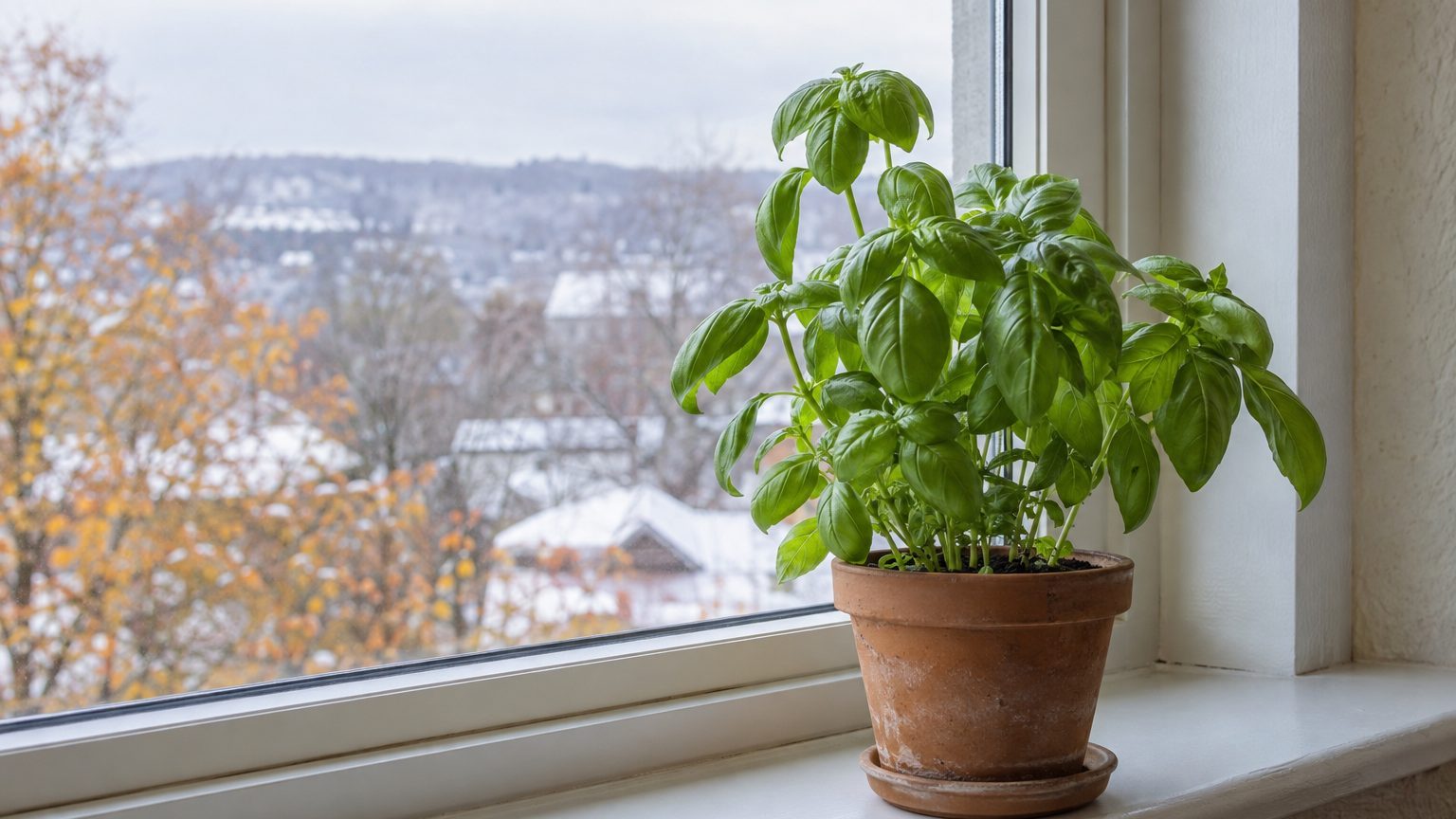
Light, not water, decides whether a windowsill herb survives the dark months. Growing herbs indoors in winter works in almost any home, but a north-facing sill in December delivers a fraction of what basil or rosemary evolved to expect. Most culinary herbs want six to eight hours of bright light a day, and a short winter day rarely delivers it.
Dry air from the furnace is the other limit.
Which herbs earn a spot on the winter windowsill
Extension horticulturists list a dozen reliable candidates: basil, cilantro, parsley, chervil, rosemary, bay laurel, mint, chives, oregano, thyme, sage and lemongrass. They split into two camps. Parsley, mint and chives tolerate somewhat less light, while rosemary, thyme and bay laurel usually need help from a full-spectrum LED or fluorescent grow light.
Basil is the diva. It is the most popular herb and the fussiest indoors, wanting the warmest, brightest window in the house (ideally 65 to 75°F) and often a grow light on top of that. Plenty of people buy a grocery-store pot, watch it sulk on a cold sill, and conclude they have a black thumb. They don’t. They have a light problem.
Mint and chives forgive almost everything, which makes them the best starter pair.
Annuals such as cilantro, dill and basil can be sown from seed all winter, and extension advice is to stagger the sowings so a fresh batch is always coming up behind the one you are harvesting. Cilantro bolts quickly in warm rooms, so give it a cooler spot and longer light hours to stretch its leaf production. Perennials like rosemary, thyme and sage can be carried over indoors, then moved back outside once late spring warms up.
Light: the part that decides everything
Pick a south- or west-facing window that really does get at least five or six hours of sun. Stand there at noon in January and check. Trees, neighboring roofs and a low winter sun can cut the hours in half.
When the window falls short, a grow light fills the gap. Artificial light is weaker than the sun, so the rule of thumb is about two hours of lamp time for every hour of natural light. In practice that means a timer set to 12 to 16 hours a day, with the fixture hung roughly 6 to 12 inches above the leaves. It’s a small sun with a schedule, and it never forgets to show up.
Choose full-spectrum LED or fluorescent tubes, both of which are compact enough for a kitchen shelf. Tabletop fixtures are enough for a few pots. Turn pots a quarter turn every few days, because plants lean toward the light (a reflex called phototropism) and you will end up with lopsided basil otherwise.
Pale, stretched, floppy stems mean the plant wants more light.
Water, humidity and feeding without the guesswork
Every pot needs drainage holes and a quality potting mix. Skip topsoil from the yard, which packs down, drains badly and can bring in pests. Water when the top of the mix feels dry, and before the plant wilts. Check by pushing a finger into the soil to about a half inch.
Herbs split on thirst. Bay, marjoram, oregano, sage and thyme prefer to dry out between waterings, while others do better with slightly moist soil. Use room-temperature water and cut back in cooler weather, since plants drink less when growth slows.
Overwatering is the classic way to lose a pot of thyme.
Heated homes are dry, and that stresses herbs as much as it stresses your skin. Grouping pots together helps, and so does setting them on a tray of moistened pebbles with the water kept below the top of the stones. Keep them away from heat vents and cold drafts, and aim for room temperatures at or below 70°F. A mister helps if you only have a few plants.
Feeding is easy to overdo. A balanced all-purpose fertilizer at half or quarter strength is plenty, and no more often than every two weeks. Too much fertilizer can dull the flavor and aroma you grew the herbs for in the first place.
Harvesting so the pots keep producing
Cut what you need, when you need it. Frequent light trimming keeps basil and mint bushy and prevents the leggy, top-heavy growth that makes a plant look tired by February. Pinch just above a pair of leaves so the stem branches and gives you two shoots where there was one.
Herbs hauled in from the garden can be a head start. Mint, chives and tarragon grown in containers actually benefit from a light frost before coming indoors, since the chill induces a rest period and the new growth that follows is firm and fresh. Plan on repotting once a year and replanting annuals as they run out of steam.
One last detail explains why the grow light is worth the electricity. The more intense the light, the more aromatic oil a herb builds in its leaf and stem glands, so a well-lit sprig of rosemary tastes stronger than a pale one grown in a dim corner.
Sources : indoorgarden.ee | utianews.tennessee.edu