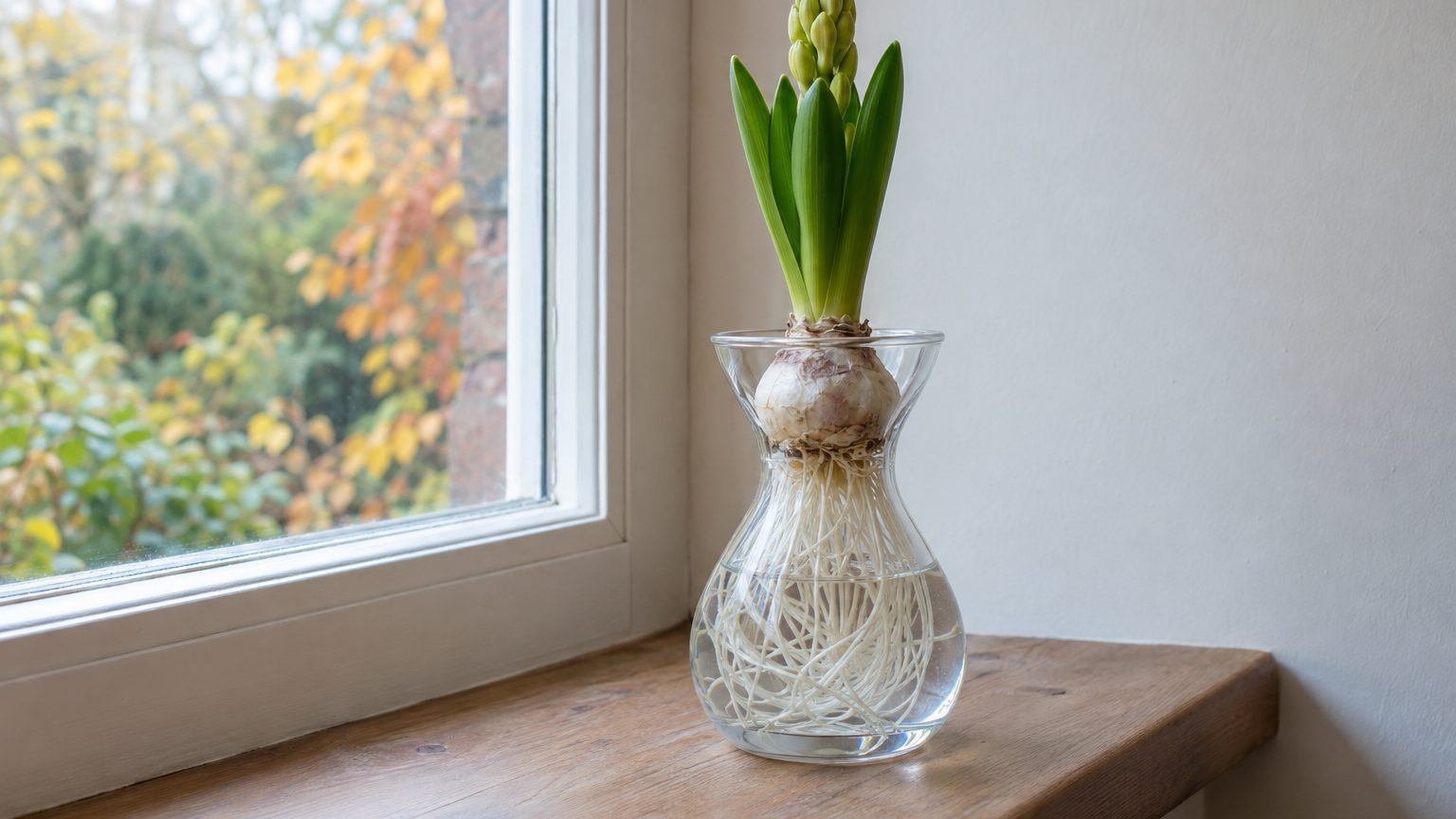
Hyacinth bulbs need 11 to 14 weeks at 35–50°F before they will flower on a windowsill. That cold stretch is the part of how to force hyacinth bulbs indoors that most people skip or cut short. The warm, bright, fragrant part takes only a few weeks.
Count backward before you start. Chilling plus roughly 3 to 4 weeks of indoor growth puts you at about 15 to 17 weeks from fridge to flower. A bulb that goes into cold storage this week should open around early March, which is why many gardeners buy bulbs sold as pre-chilled or prepared.
The cold period decides everything
In the ground, a hyacinth spends winter building roots in cold soil. Forcing fakes that winter. Bulbs must be cooled long enough to develop an extensive root system before they get any indoor warmth, and the flower bud inside is still forming during that time.
Pull a bulb too early and the stem comes up stunted, or the bud never fully develops.
Recommendations vary a little. Extension guidance runs from 11 to 14 weeks, and some growers go up to 15. You can chill a bulb longer than necessary, just not shorter, so when in doubt, add a week. A pre-chilled bulb has already done part of this at the grower’s, and its package will give a shorter cold period (often around 8 to 10 weeks, so follow the label).
The refrigerator crisper drawer works well if you have no unheated garage or cold frame. Put the bulbs in a paper bag labeled with the date. Keep them away from apples and pears, which give off ethylene gas that can damage flower buds. Never let the bulbs freeze, and aim for the 35–45°F range.
Pot or vase: choosing your method
A pot gives you the most forgiving setup. Use a container with drainage holes and a well-drained potting mix. Set the bulbs close together with their tips just showing at the surface, then water thoroughly. Then the whole pot goes into the cold, dark place for its 12 to 14 weeks.
Check it every few weeks. The soil should stay slightly moist, never bone-dry or soggy. The best readiness test is at the bottom of the pot. Roots poking out of the drainage hole are the best sign the pots can leave cool storage.
The vase method, using a hyacinth forcing glass or any narrow-necked container, is more theatrical because you can watch the roots grow. Chill the dry bulbs first, then set each one in the glass. Fill the water just below the base of the bulb. If the bulb sits in the water, it rots.
Put the filled glass somewhere cool and dark for one to two weeks. This rest encourages roots rather than shoots. Water-grown bulbs have no soil to anchor them, so a few pebbles in the glass can keep the bulb steady.
Wear gloves. The papery skin and powdery coating on hyacinth bulbs can irritate skin, and some people itch for an hour after handling a whole bag.
Bringing them into the light
The shoots tell you when to move. Look for a pale yellow or nearly white shoot of 1.5 to 2 inches. That color is normal for growth in the dark. Some sources suggest waiting for green shoots about 2 inches tall.
Don’t rush the shoots into full sun.
Warm them up gradually, as a slow spring would. Start in a cool room out of direct light for about a week. One forcing guide recommends moving them into a room-temperature home after about a week. Others suggest indirect light and temperatures near 60°F at first. The shoots will green up within days.
After that, a bright window is fine. Turn the container every few days so the stems grow straight instead of leaning toward the glass. Bloom comes in about a month, and flowers can last about 2 weeks once open.
Keeping the bloom going, and fixing what goes wrong
Heat is the enemy of a long show. Keeping pots out of direct sunlight and moving them to a cool room at night helps prolong bloom. A hallway or unheated spare room does the same job. A hyacinth next to a radiator will open fast and fade within days, and it will smell strongly the whole time.
Floppy stems usually come from too much warmth or too little light. A bloom spike that stays short and tight usually means the bulb came out of the cold too early. Without at least 12 weeks of consistent cold, the flower bud won’t fully develop, so mark your calendar when the bulbs go in. If a bulb fails, check the dates before blaming the variety. Extension guidance says all hyacinth varieties force well.
Start with large, firm bulbs. Pick ones that feel heavy for their size, and leave behind any that are paper-dry, moldy or mushy. A single soft bulb in a bag can spoil its neighbors during a 12-week fridge stay.
If you want hyacinths on more than one date, stagger the schedule. Put a new set in the fridge every two weeks and you will get overlapping blooms. A forced bulb is mostly spent afterward, but you can plant it in the garden in fall. It may bloom again in a year or two, though not on a forced schedule.
Sources : gardeningknowhow.com | livingflowers.com