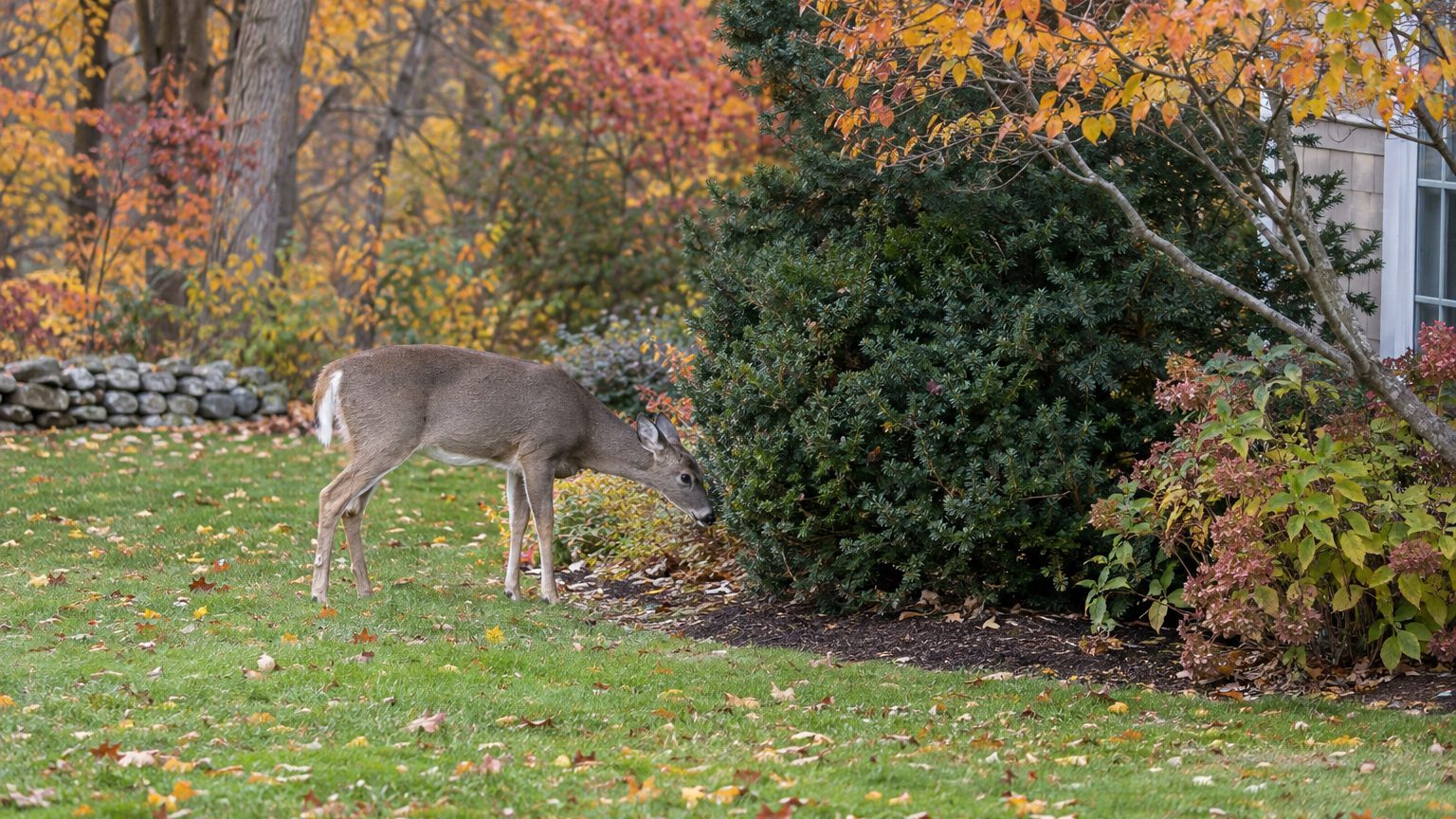
A hungry deer can strip a yew or arborvitae to bare twigs in a single night. Winter is when it happens most, because acorns are gone, perennials have died back, and your evergreen shrubs are the only green on the menu. Four tools work: physical barriers, repellents, smarter plant choices, and a little knowledge of how deer actually think.
Why winter is the danger zone
Deer don’t hibernate. They shift to browsing woody twigs, buds and evergreen foliage, and a single adult can eat several pounds of plant material daily. When snow covers the ground, your foundation plantings become a buffet.
Damage has a signature. Deer lack upper front teeth, so they tear rather than cut, leaving ragged, shredded edges on stems. Rabbits, by contrast, make clean, angled cuts at a lower height.
Check the height of the damage.
Browsing above roughly 18 inches points to deer, and a “browse line” on the lower four to six feet of an arborvitae is the classic sign. Late winter is often the worst stretch, when food scarcity peaks and even plants labeled “deer resistant” get sampled.
Barriers: the only near-guarantee
Fencing beats everything else. A properly built fence is the one method that works regardless of how hungry the herd gets, though “properly built” is the catch. Deer can clear an 8-foot fence from a standing start when motivated, so the old four-foot garden fence is more of a suggestion than a barrier.
Full-height fencing, 8 feet tall, is the gold standard for large properties, and it’s expensive. For most suburban yards, a cheaper trick works: two shorter fences, about 4 feet apart. Deer are reluctant to jump into a space where they can’t see a safe landing, and the double layer confuses their depth perception.
For individual shrubs, wrap them instead. Black plastic deer netting (the lightweight polypropylene kind sold in rolls) can be draped over or stapled around a plant. Heavier-gauge mesh cages made from welded wire or hardware cloth last for years and protect young trees from both browsing and antler rubbing.
A few practical details make the difference between success and a wasted weekend. Stake the netting so it doesn’t touch the foliage, because deer will happily eat through anything pressed against the plant. Leave enough room for the shrub to move in wind. Remove or loosen netting in spring so it doesn’t girdle growing stems.
Burlap screens help too. Wrapping a shrub in burlap on stakes blocks both the view and the scent of the plant, which also shields evergreens from winter wind burn. Two problems, one solution.
Repellents: cheap, imperfect, worth using right
Repellents come in two kinds. Contact products taste awful, and area products smell awful. Most rely on putrescent egg solids, garlic, capsaicin or predator urine, and they all share one weakness: rain, snow melt and freezing temperatures degrade them.
Read the label for temperature limits. Many sprays can’t be applied below about 40°F, which is a real problem in January, so apply in a warm spell and expect to reapply every few weeks, particularly after heavy precipitation. Spray new growth and buds, since those are what deer go for first.
Rotating products matters more than people expect. Deer habituate. If the same smell sits on the same shrub for months with no consequence, the animals learn it’s harmless, so switching between two different active ingredients keeps them wary.
Scare devices, like motion-activated sprinklers, work for a while. They’re a poor fit in deep freeze, since lines must be drained to avoid bursting, but they’re excellent in the early-winter shoulder season.
Repellents slow deer down. They rarely stop a starving one.
Plant what they don’t want
No plant is truly deer-proof. Land-grant university extension programs rate plants on a scale from rarely damaged to severely damaged, and the ratings shift by region and by herd pressure. Still, some choices are consistently safer than others.
Shrubs with strong aromatic oils, toxic compounds, or prickly or fuzzy leaves tend to be left alone. Dependable options for winter structure include boxwood, which deer typically avoid because of its bitter alkaloids, along with Colorado blue spruce, inkberry holly, and many barberries. American holly and mountain laurel get passed over more often than not. Daphne and juniper are also usually safe, though juniper can get nibbled in harsh winters.
The usual victims are worth knowing, so you can protect or relocate them:
- Yews (Taxus), a favorite despite being toxic
- Arborvitae, especially ‘Emerald Green’ types
- Rhododendrons and azaleas
- Euonymus, hollies with soft leaves, and young fruit trees
If you already have these, don’t rip them out. Cage the most valuable specimens and swap the rest out gradually. A mixed border with a deer-resistant outer layer and the tasty plants tucked inside or near the house also helps, because deer prefer to browse where they feel safe from cover and noise.
Timing the work
Do it now, before the first hard freeze. Deer establish feeding routes in autumn, and a shrub that is protected from the first bite rarely becomes a regular stop. Once the habit sets, it is much harder to break.
Building a layered defense
The most reliable yards combine methods. Cage or wrap the three or four plants you’d hate to lose, spray the next tier of shrubs with a rotating repellent, and let resistant species fill the exposed edges. Each layer covers the weakness of the others, so a deer that ignores the smell still meets the wire.
One last nuance: check local rules before you build. Some municipalities and homeowner associations cap fence height, often at 6 feet in front yards, and a few states have wildlife regulations on lethal or exclusion methods. A call to your county extension office takes ten minutes and usually yields a local deer-resistance plant list tailored to the herd in your neighborhood.