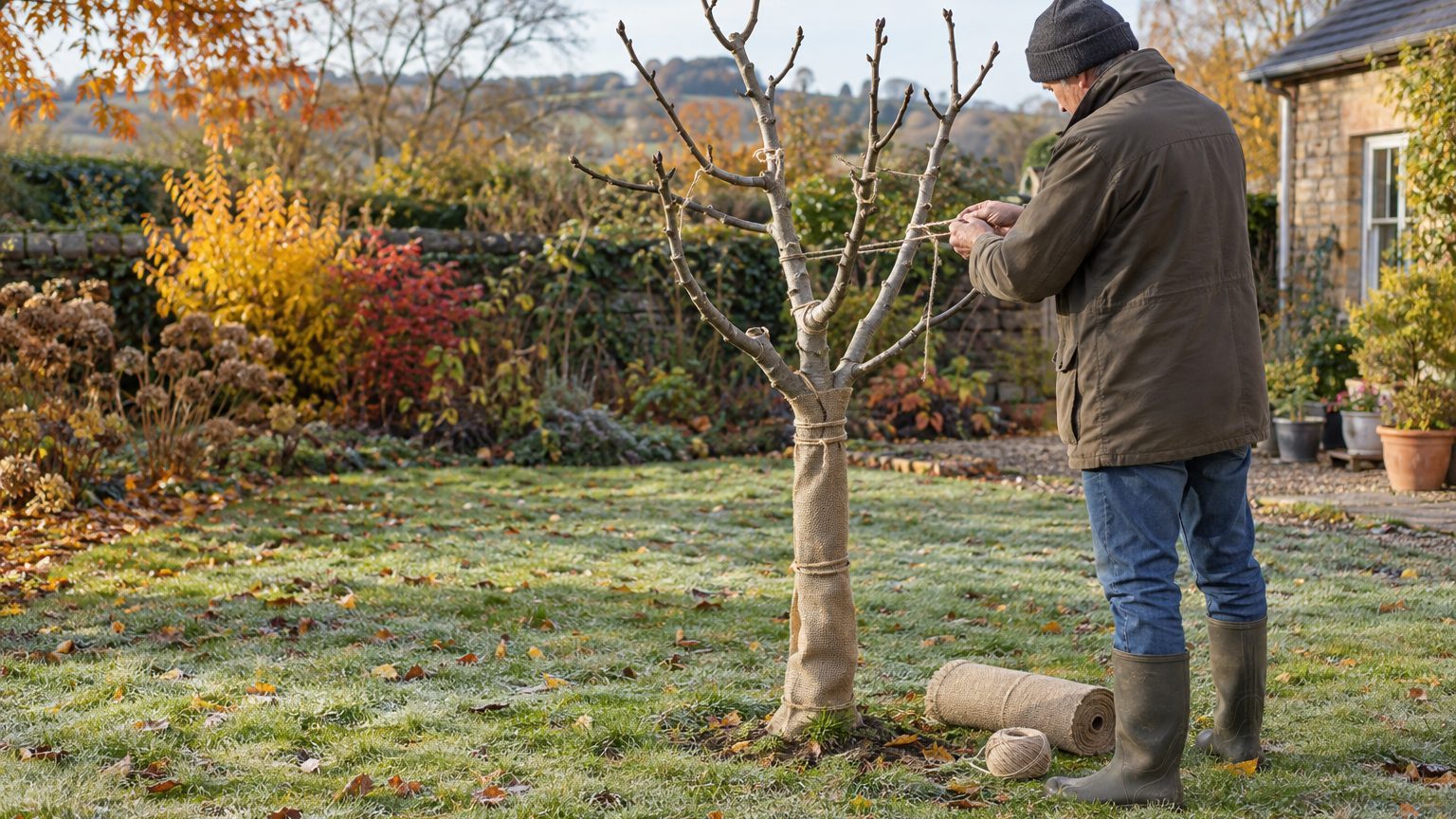
A fig tree that dies back to the ground in January is not necessarily dead. Common figs (Ficus carica) often resprout from the roots after a hard freeze, but you lose a year of fruit, because the best varieties set their main crop on last season’s wood. Protecting the tree in winter is what separates a bumper August from a bare green bush.
Which method you choose depends on your climate zone, the size of your tree, and whether it lives in the ground or in a pot.
Know your tree’s limits before the first hard freeze
Most common figs are rated hardy to USDA zone 7 or 8, and the above-ground wood can be damaged once temperatures fall to the low teens or single digits Fahrenheit. Some cultivars such as ‘Chicago Hardy’ and ‘Brown Turkey’ are known for coming back from the roots even after severe cold. Young trees are the most vulnerable, since their bark is thin and their roots shallow.
Timing matters as much as temperature. Wait until the leaves have dropped, which usually happens after a few light frosts, before you wrap, bury or move anything. Covering a tree that is still actively growing traps moisture and invites rot and mold.
Stop fertilizing by midsummer and ease off watering in autumn. Soft, late growth is the first thing winter kills.
Mark your calendar for mid to late November in most of the Northeast and Midwest, and December in milder regions.
Wrapping: the standard move for zones 6 to 8
Wrapping works best for in-ground trees that are too large to bury. Start by tying the branches loosely upward with soft twine, pulling them into a narrow column like a closed umbrella. Be gentle, because figs wood is brittle in cold weather and snaps more easily than you would expect.
Next, build insulation around the column. A cylinder of chicken wire or hardware cloth, set a foot or so out from the branches, makes a cage that you can stuff with dry leaves, straw, or pine needles. Wrap the outside with burlap or frost cloth, and top it with something waterproof, such as an upside-down bucket or a plastic sheet tucked under the burlap.
Keep the insulation dry. A soggy wrap does more harm than none at all.
Avoid wrapping in plastic directly against the bark. On a sunny day in February, the temperature inside a clear plastic sleeve can climb well above freezing, which breaks dormancy early and sets the tree up for a damaging cold snap afterward. Many growers add a few ventilation holes near the top for that reason. Mound 8 to 12 inches of mulch around the base too, since the roots are what ensure the tree returns in spring even if the branches fail.
Unwrap in stages in spring, usually after the last hard frost date, and leave the frost cloth nearby for a surprise cold night.
Burying: old-world technique, surprising results
In Italian and Eastern European gardens, growers have laid fig trees to rest underground for generations. The method suits zones 5 and 6, and works best with young, flexible trees that bend without cracking. Mature trunks thicker than a wrist rarely cooperate.
The process starts a few days earlier than you might think. Dig a trench next to the tree about 12 to 18 inches deep and as long as the tree is tall. Loosen the soil on one side of the root ball with a spade so the tree can tip over gradually, then bend it into the trench over a couple of days rather than all at once.
Cover the branches with a layer of straw or a sheet of burlap before adding soil. Then shovel on 6 to 12 inches of earth, and top that with leaves or a tarp so the mound sheds water. Rodents are the real danger here. Mice love a warm, buried tree, so some growers lay hardware cloth over the mound or put out bait stations to protect the bark.
Dig the tree out in early spring, once the ground thaws and nights stay above roughly 25°F.
The work is heavy, and it isn’t pretty. But a buried fig in Minnesota or upstate New York can survive temperatures that would finish a wrapped one.
Garage storage for potted figs
Containers solve the cold problem by letting you move the tree. A fig in a 15-gallon pot can spend winter in an unheated garage, shed, or basement, where temperatures sit between roughly 20°F and 45°F. That range keeps the tree dormant without freezing the roots solid, which pots are far more vulnerable to than the ground is.
Bring the pot in after the leaves drop, and keep it away from heaters. Too much warmth wakes the tree up, and a fig sprouting leaves in a dark garage will stretch and weaken. Water lightly, about once a month, just enough that the soil is barely damp. A pot that is bone dry in March can damage fine roots, while a soaked one in January may rot.
Light isn’t required during dormancy. Cold, darkness, and dryness are all you need.
Move the tree out in spring once nights stay above freezing, but do it gradually. Set it in shade for a few days, then shift it into full sun over a week or so, or the tender new leaves will scorch. If a late frost threatens after you have moved it, carry it back inside for the night.
Pots over 20 gallons get heavy, and a plant dolly makes the seasonal move much easier on your back. If a heated space is the only option, keep the tree near a window and accept that it may keep its leaves, which is a perfectly workable choice if you can give it light.
One more detail worth knowing: even a fig that loses all its top growth tends to return from the roots, usually as a bushier plant that fruits later in the season than it would have otherwise.