Bigleaf hydrangeas (Hydrangea macrophylla) and mountain hydrangeas (H. serrata) set their flower buds in late summer and early fall, on stems that grew the previous year. Those buds sit exposed on the branches all winter. A hard freeze, a warm spell followed by a sudden plunge, or a late-spring frost can kill them, and the shrub will leaf out looking healthy while producing no flowers at all.
That is the whole problem in a nutshell.
Why old wood makes these hydrangeas vulnerable
Smooth hydrangeas and panicle types bloom on new growth, so a frozen stem simply regrows and flowers anyway. Bigleaf and mountain types don’t have that safety net. Flower buds on last year’s stems are the entire show, and once they’re lost, nothing replaces them until next summer.
Hardiness numbers explain much of the frustration. Most bigleaf varieties are rated for USDA zones 5 or 6 through 9, but the plant’s roots and the buds on its stems tolerate cold very differently. Roots in insulated soil often survive zone 5 winters easily, while the above-ground buds can be damaged at temperatures around 5 to 10°F, depending on the cultivar and how well the stems hardened off. Mountain hydrangeas tend to be a bit tougher, with buds that handle somewhat colder snaps, which is why many gardeners in zone 5 report better luck with them.
Timing matters as much as raw temperature. A plant that experiences a gradual cool-down in October hardens off properly. One that gets hit by a 15°F night after a mild November has not, and that’s when bud loss is worst.
Start in fall: mulch, water and restraint
Hold off on pruning. Cutting stems back in fall removes the very buds you’re trying to save, and even tidying dead-looking canes can be a mistake because bigleaf hydrangeas leaf out late. Wait until new green shows in spring, then remove only what is clearly dead.
Water matters more than most people expect. Dry soil going into winter stresses roots and makes stems more prone to dieback, so a deep soaking every week or so during dry autumn spells pays off until the ground freezes. Stop fertilizing by midsummer, since late nitrogen pushes soft new growth that won’t harden before frost.
Mulch comes after the first hard frost, not before. Spread 4 to 6 inches of shredded bark, pine straw or chopped leaves over the root zone, extending a bit past the drip line. Applying it too early can keep soil warm and invite rodents to nest, and piling it against the stems traps moisture that encourages rot. Keep a small gap around the base.
Mulch protects roots, not buds.
Wrapping and caging the stems
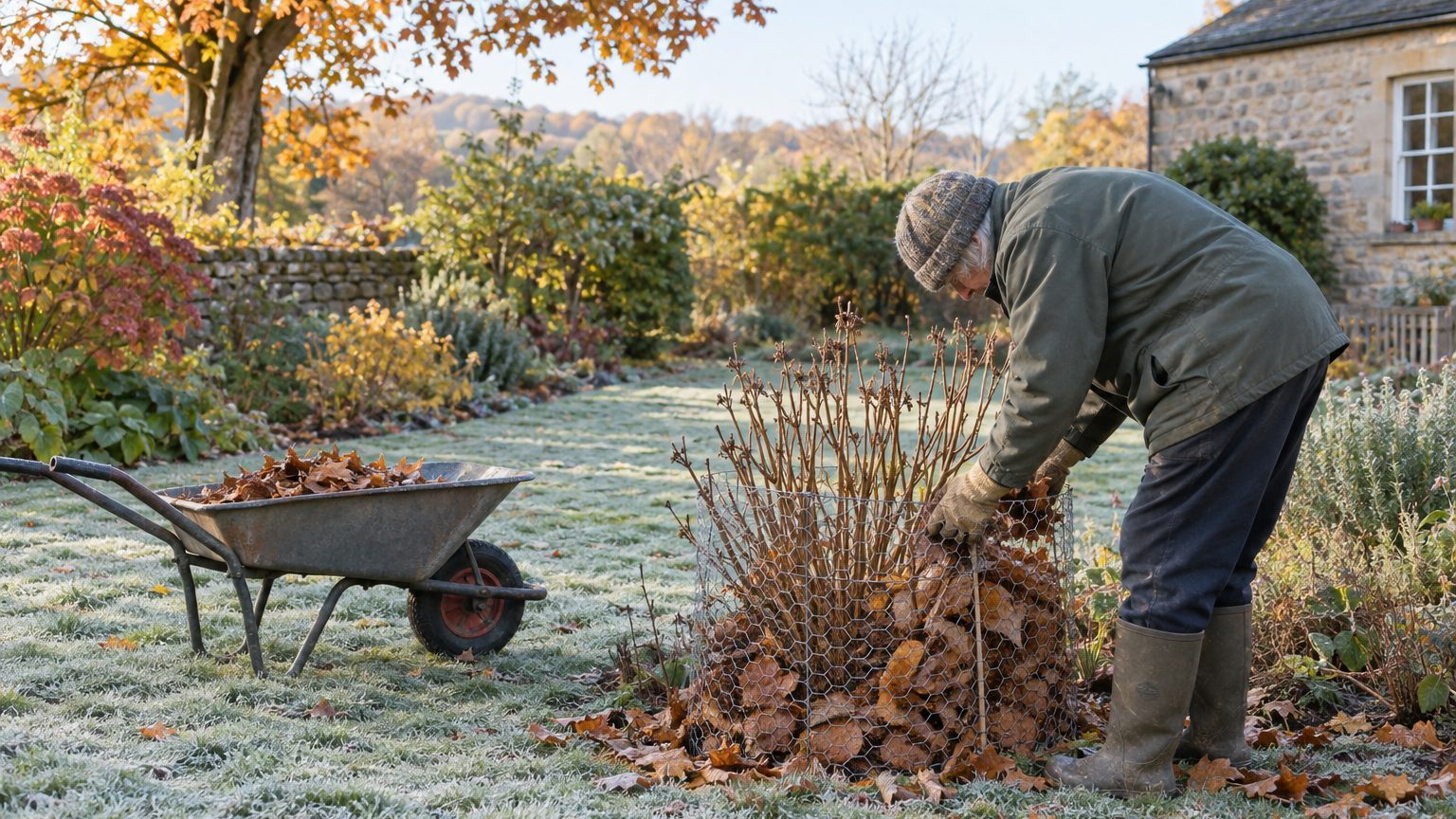
In zone 6 and colder, and in any spot exposed to wind, the stems themselves need cover. The classic method is a cage built from chicken wire or hardware cloth, set in a ring a few inches outside the branches. Stakes at three or four points hold it upright. The cage should stand roughly as tall as the shrub, so there’s room to fill it.
Fill the cage loosely with dry leaves, pine needles or straw. Shredded oak leaves work well because they resist matting, while whole maple leaves tend to pack into a soggy layer. Pack enough that the stems are surrounded but not crushed, and avoid wet material, which holds cold and can encourage fungal problems.
Burlap offers a simpler option for smaller shrubs or milder zones. Wrap it around the stakes, leave the top open on warm days, and avoid plastic, which traps heat on sunny afternoons and can cook buds before cold returns. Frost cloth (also sold as row cover) works too, and it can be laid over the shrub ahead of a surprise cold snap in late fall or early spring.
A few gardeners go further and use a leaf-filled cage plus a burlap skin. In a windy site in zone 5, that double layer can be the difference between a flowering shrub and a green mound with no blooms.
Container hydrangeas need different handling
Pots are far less forgiving. Roots in a container freeze much harder than roots in the ground, with soil temperatures that may sit 10 to 20 degrees colder than in a garden bed. Move potted plants into an unheated garage, shed or basement where temperatures hold between roughly 25 and 40°F.
Water them lightly once a month so the soil doesn’t dry out completely, and bring them back outdoors once nights stay above freezing.
Spring: the quiet danger
Late frost causes more lost blooms than midwinter cold in many regions. Buds begin to swell on warm March days, and a hard freeze in April can wipe them out. Resist the urge to strip winter protection too early.
Remove coverings gradually. Open the cage or loosen the wrap in mid-spring, when daytime highs are reliably mild, and keep frost cloth handy for forecasts dipping into the low 30s. Pull mulch back slightly from the crown once growth starts, so air and warmth reach the soil.
If frost does strike, wait before judging the damage. Blackened leaves and shriveled buds may be gone, but dormant buds lower on the stem often push out later. You may get fewer flowers or a delayed show, and the shrub will usually recover fully by the following year.
Reblooming varieties give you some insurance, because they also flower on new wood. Cultivars in the Endless Summer family, for instance, were bred specifically for that trait and tend to produce at least a late-season flush even after a rough winter. Gardeners in cold climates who keep losing buds on traditional bigleaf types often find that switching to a rebloomer solves the problem without any wrapping at all.
Your local cooperative extension office can tell you the typical last frost date for your county, which is the best marker for when to uncover the plants.