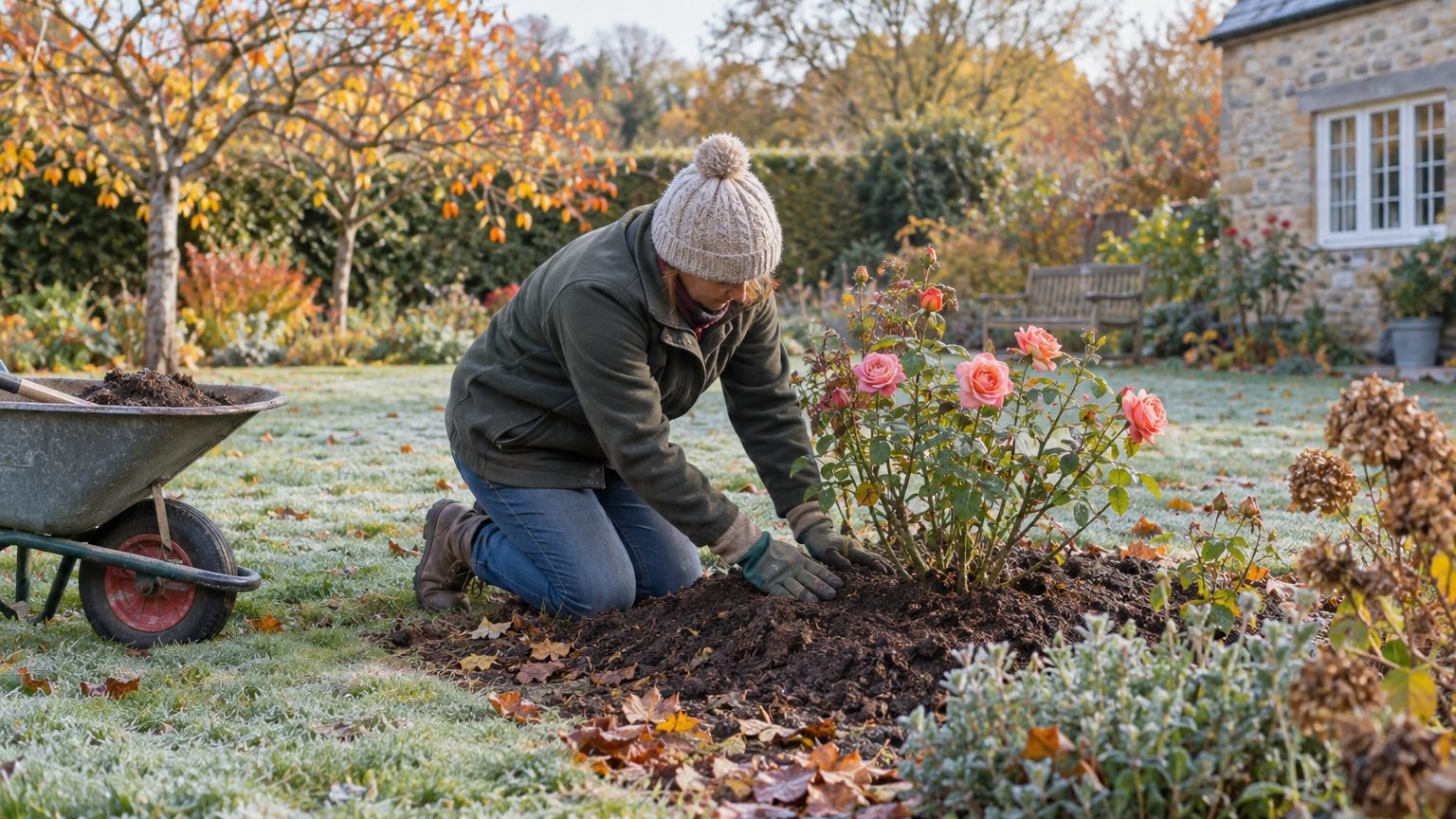
A rose that survives winter is usually one that was left alone at the right moment, then buried at the right moment. Timing matters more than the amount of mulch you pile on, and the correct approach changes depending on whether you grow hybrid teas, shrub roses, climbers or old garden types.
Start with the calendar, not the weather forecast.
Timing: wait for the cold, don’t rush it
The biggest mistake in rose care is covering plants too early. Roses need to go dormant, and that happens only after several hard frosts, when temperatures settle in the mid-20s °F. In much of the northern U.S. that means mid-November to early December; in USDA zones 6 and 7, it can slip into December.
Cover too soon and you trap warmth. Canes stay active, moisture lingers, and fungal diseases such as canker and botrytis move in under the blanket you meant as protection.
Stop feeding roses about six weeks before your first expected frost. Nitrogen late in the season pushes soft new growth that freezes at the first real cold snap. Stop deadheading too, so the plant gets the signal to form hips and slow down.
Clean up first. Rake fallen leaves from around the base, since black spot spores Overwinter in that litter, and toss them in the trash rather than the compost pile.
Mounding: the workhorse method for grafted roses
Hybrid teas, floribundas and grandifloras are grafted, meaning a tender variety sits on a hardier rootstock. The bud union, that knobby swelling near the base of the canes, is the part that dies first. Protect it and the plant can regrow from there even if the canes above are lost.
Mounding does exactly that. Once the ground has begun to freeze lightly, pile 10 to 12 inches of loose material over the crown, forming a cone around the base. Use soil, shredded bark, or compost brought in from elsewhere in the yard.
That last detail matters. Scraping soil from around the plant exposes surface roots to the very cold you are trying to avoid, so haul it in from a vegetable bed or a bag.
Straw and shredded leaves work as a top layer, but they are poor choices directly against the canes because mice love them. Hardware cloth wrapped in a cylinder around the plant keeps rodents out, and it costs very little compared with replacing a prized rose.
Cut canes back only to about 3 feet, or to a height where the wind won’t whip them loose. Save the serious pruning for spring, when you can see which wood is alive.
Wrapping, cones and climbers
Climbers present a different puzzle, because the canes you need for next year’s flowers are the same ones the winter wants to kill. In zones 5 and colder, many growers untie the canes, lay them gently on the ground, and cover them with soil or a thick layer of mulch. It is awkward work. Canes grow brittle as temperatures fall, so loosen them on a mild afternoon rather than a frozen morning.
Where laying down isn’t practical, wrap in layers. Tie the canes together loosely, wrap them in burlap, and stuff straw or leaves between the burlap and the canes for insulation. Burlap breathes, so moisture escapes. Plastic does not, and it can cook canes on a sunny January day.
Rose cones, those foam domes sold at garden centers, are a common sight. They work only if vented, and they should be weighted so wind doesn’t send them across the yard. A sunny day in the 50s can turn the inside into a sauna. Prop the cone open or remove it when the thermometer climbs.
For tree roses, the exposed trunk is the weak point. Dig a trench, tip the plant gently on its side, and cover the whole thing with soil. Or, if tipping is too risky, wrap the head and trunk in burlap stuffed with straw.
Protection by rose type
Not every rose needs this much fuss. Matching effort to type saves labor.
- Hybrid teas, floribundas, grandifloras: mound in zones 6 and colder; in zone 7 and warmer, a light mulch is often enough.
- Own-root shrub roses and landscape roses: many need nothing beyond a layer of mulch, since they regrow from the roots even after dieback.
- Old garden roses (gallicas, albas): generally very hardy, and mostly need cleanup.
- Climbers and tender ramblers: lay down or wrap in zone 5 and colder.
- Miniatures: mulch heavily; a few inches of shredded bark over the crown does the job, and potted ones need to be moved to a sheltered spot.
Check your own variety’s hardiness rating. Cold tolerance varies even within a single class.
Potted roses deserve special attention because roots above ground have far less insulation than roots in the soil. Move containers against a house wall, group them together, and wrap the pot itself. Or sink the whole pot into a garden bed and mulch over it.
Water, wind and the thaw
Dry soil kills more dormant roses than people expect. Water deeply before the ground freezes, then again during dry, mild spells in winter when the soil isn’t frozen. Evergreen-like canes and roots keep losing small amounts of moisture all season.
Wind is the quiet enemy. Whipping canes loosen the plant’s grip on the soil and create air pockets around the roots, so shorten tall canes after leaf drop.
Spring is where many gardeners slip. Remove mounded soil gradually, over a week or two, beginning when forsythia blooms and hard freezes have passed. Pull it away in stages so tender new growth isn’t shocked by a sudden cold night, and keep some covering material nearby in case frost returns.
A last, practical detail: dead, black canes are normal after a hard winter. Scratch the bark with a thumbnail, and if you see green underneath, the cane is alive. Prune back to that green, and a rose written off in March often blooms by June.