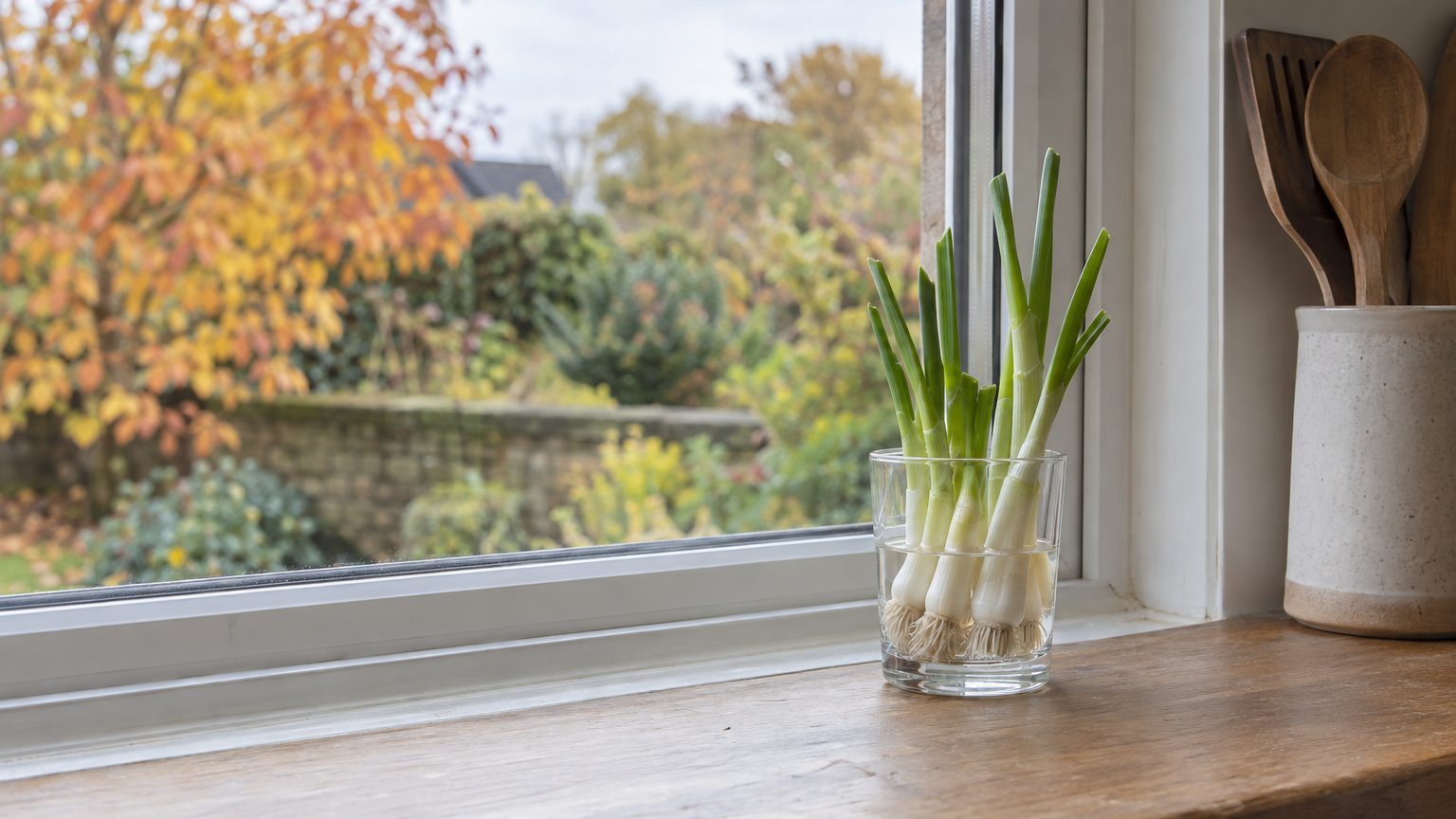
The method is simple: stand the white root ends of grocery-store green onions in about an inch of water. Depending on how much sun they get, you’ll have fresh green onions in a few days to a week. That’s the full recipe, but a few details decide whether you get a tidy little crop or a jar of slime.
The whole setup costs nothing.
Setting up the glass
Start at the cutting board. When you use a bunch of scallions, cut them about 2 inches up from the white root base, and other guides say an inch is enough. Either works, as long as you keep the roots intact. Before you start, sort through the bunch and set aside any scallions without a few roots on the white end, since those have little to regrow from.
Pick a container that holds the stalks upright without crowding them. A fairly small glass, cup or ramekin works well. A shot glass is a good fit for three or four stalks, and a clear jar lets you watch the roots and spot cloudy water early.
Water level matters more than most people expect. Add water to cover the roots and just a bit more. If the tops of the bulbs sit submerged, they can rot. If the water drops too low, the base dries out and stops sprouting.
Then find light. A window that gets plenty of sunlight is ideal, though green onions will survive in a dimmer corner, just much more slowly. South- or west-facing sills are the best bet in a US kitchen during the short days of late fall and winter.
Change the water every one to three days.
What the first two weeks look like
Day one is unglamorous: trimmed stalks, a glass of tap water, not much else. Within roughly a day or two you may notice the roots perking up, and new shoots start to grow in about 3 days. The green tips lengthen quickly at this stage, sometimes visibly overnight. Pale, slightly translucent growth at the center of each stalk is the new leaf pushing up.
By day five to seven, you have something you can cook with. After about 4-5 days the new stems are usable, or you can let them grow for 7-10 days. Past that point they tend to brown at the tips as the stalk runs out of steam.
Harvest with scissors, not your fingers. Snip the greens when they’re about the length of your palm and leave an inch or so above the white base, and the stalk will send up another round. Think of it as a garnish supply for soups, eggs and baked potatoes rather than a full replacement for the grocery bunch. A single glass won’t feed a family, but it will cover the sprinkle-on-top needs of a week’s dinners.
Pulling the whole plant ends the cycle immediately.
Water hygiene is the one thing that sinks the project. Forget to change it for a week or so and the water gets murky, mold can form, and it smells. Rinse the roots gently when you refill, and if the base turns mushy rather than firm, compost that stalk and start a fresh one.
Why water alone runs out, and what to do about it
Water gives the plant moisture and nothing else. Most green onions can be regrown two to four times in water before growth becomes weak or thin. Each cutback yields skinnier shoots because the bulb is spending stored energy without refilling it, which is why the bulb eventually drains and stops producing new shoots.
Soil is the fix. Once the shoots are a few inches long, move the stalks into a pot of ordinary potting mix with drainage holes, planting them about an inch deep with the roots down, in a spot with at least six hours of direct sunlight. Some growers transplant earlier, when the leaves are just 2 to 3 inches tall. A stalk in soil can keep producing for months with regular snipping, and it can even multiply if you leave it alone for a while. A 6-inch pot on a sunny sill holds a handful of stalks comfortably.
If you’d rather stay with water a little longer, a small nutrient boost helps. One suggestion is a single drop of liquid fertilizer added each time you change the water. Keep it to a drop, since a strong solution in a small glass can burn the roots. This works as a stopgap, not a permanent system.
Expect the output to taper regardless. By the third or fourth cut, the stems may be thin enough that they’re better as a pinch of garnish than a chopped ingredient. At that point, add the spent stalk to your compost. Buy a new bunch, save the roots, and the cycle starts over. If you cook with scallions a couple of times a week, keeping two glasses staggered a few days apart means there’s nearly always something ready to snip.
One more nuance for the cold months: a cool windowsill slows everything down, so a cold, drafty ledge may stretch that one-week timeline closer to two. Moving the glass a foot away from the pane at night, or onto a warmer counter that still gets daylight, is often enough to keep the shoots moving.
Sources : 8billiontrees.com | homesteadingguide.com