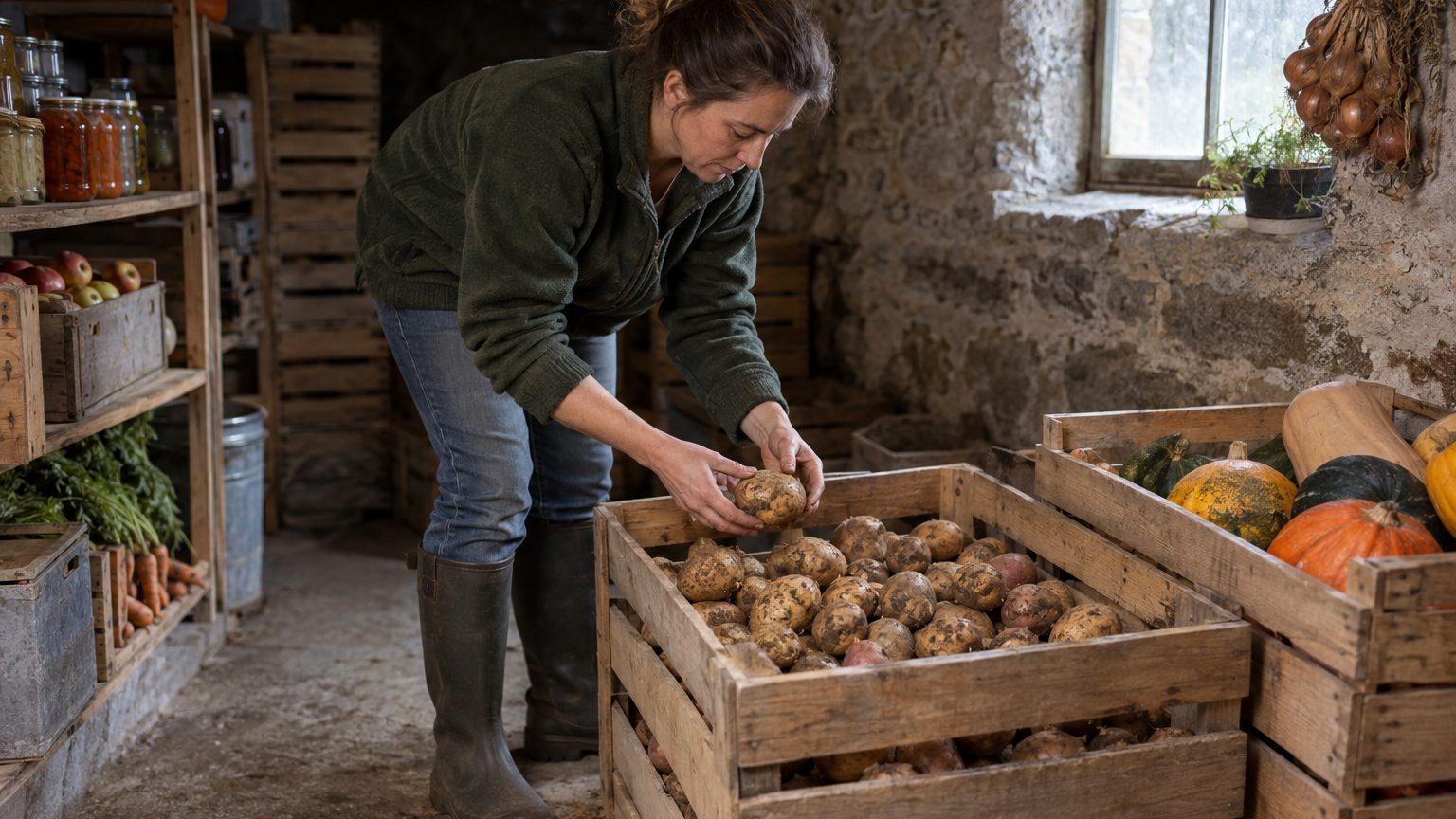
A potato dug in October can sit in good condition until April or May. One dug the same day and stored badly will be soft, green or sprouting by January. The difference comes down to three things: how you cure the tubers, how cold and dark you keep them, and what they sit in.
Cure first, store second
Freshly dug potatoes have thin, easily scuffed skin. Curing lets that skin toughen and small nicks seal over, which is the main defense against rot for the next six months.
Skip the washing. Brush off loose soil with your hand or a soft brush and leave the rest, because wet skin invites fungal and bacterial problems.
Lay the tubers in a single layer somewhere dark and humid, ideally around 50 to 60°F, for 10 to 14 days. A garage, a shaded porch or a spare room works. Cover them with a cloth or cardboard if any light reaches them, since light triggers the green, bitter solanine that makes potatoes unsafe to eat in quantity.
Dig on a dry day if you can.
Handle them like eggs, too. A potato bruised by a fork tine or tossed into a bucket is a potato that will rot, and one rotten tuber can spoil its neighbors in a matter of weeks. Set aside anything cut, stabbed or soft and eat it first, within a few days. Only sound, unblemished tubers should go into long storage.
The temperature sweet spot
After curing, drop the temperature. The target range is 38 to 45°F, with humidity around 90 percent. Within that window, tubers stay dormant and hold their starch.
Go colder and you create a different problem. Below about 38°F, potato starch converts to sugar, which gives you tubers that taste oddly sweet and turn dark brown when fried or roasted. That’s why the refrigerator is a poor long-term home for them. Go warmer, above roughly 50°F, and dormancy breaks. Eyes swell, sprouts push out, and the tuber wrinkles as it spends its own moisture feeding them.
Most American homes don’t have a perfect spot, but many have a close one. An unheated basement, an insulated garage in a mild climate, a root cellar, or a closet against an exterior wall can all land in the low 40s through winter. A cheap thermometer left in place for a few days will tell you more than guessing. Check it again after the first hard freeze, because a garage that held 45°F in November can fall to 25°F in January, and frozen potatoes turn to mush when they thaw.
Darkness matters as much as cold.
Containers that keep them dormant
Potatoes need darkness and airflow, not airtight seals. Trapped moisture breeds mold, and a sealed plastic bag is among the worst choices you can make.
Good options share one trait: they block light while letting air move. Cardboard boxes with holes punched in the sides, wooden crates lined with newspaper, burlap sacks, and paper bags with the top folded loosely all do the job. Slatted wooden bins are the traditional choice because air circulates through the gaps and the wood buffers small swings in humidity. For a few pounds, a ventilated bucket or a basket covered with a dark cloth is plenty.
Avoid deep piles. Stacking tubers more than about 12 inches high squeezes the bottom layer and traps heat in the middle, so shallow containers beat tall ones. If you have a big harvest, use several boxes instead of one barrel. Some gardeners layer tubers with dry sand or peat moss, which cushions them and absorbs stray moisture, though it isn’t required.
Keep them away from apples, pears and bananas. Ripening fruit gives off ethylene gas, which can encourage potatoes to sprout sooner than they otherwise would. Onions have a similar reputation, mostly because they prefer drier air, so storing the two together tends to shorten the life of both.
Check, sort and use in order
Storage isn’t set-and-forget. Once a month, run your hand through the boxes and pull out anything soft, wet-smelling or visibly sprouting.
Small sprouts are not a disaster. Rub them off and the potato is fine to cook, as long as the tuber is still firm. Once it’s shriveled, green or deeply sprouted, compost it. Green patches can be cut away when they’re shallow, but a tuber that’s green throughout belongs in the bin.
Variety shapes how long you can keep a crop. Late-season types such as Russets, Kennebecs and Katahdins generally store far better than early new potatoes, which are bred for quick harvest and thin skins. Eat the early varieties first, within a few weeks to a couple of months, and reserve the thick-skinned, late-maturing ones for the long haul. If your garden grew both, label the boxes so you don’t have to guess in February.
One more habit pays off: keep your seed potatoes separate if you plan to replant. Choose a few healthy, medium-sized tubers and store them in the same cool conditions, then move them to a warmer, bright spot about two to four weeks before planting to encourage short, sturdy sprouts. Whether to plant saved tubers at all is debated, since disease can carry over from one season to the next, and certified seed potatoes are the safer bet for a clean crop.
A well-stored harvest also loses weight slowly, roughly a few percent a month in good conditions, so a 50-pound crop in November will still feed a household well into spring.