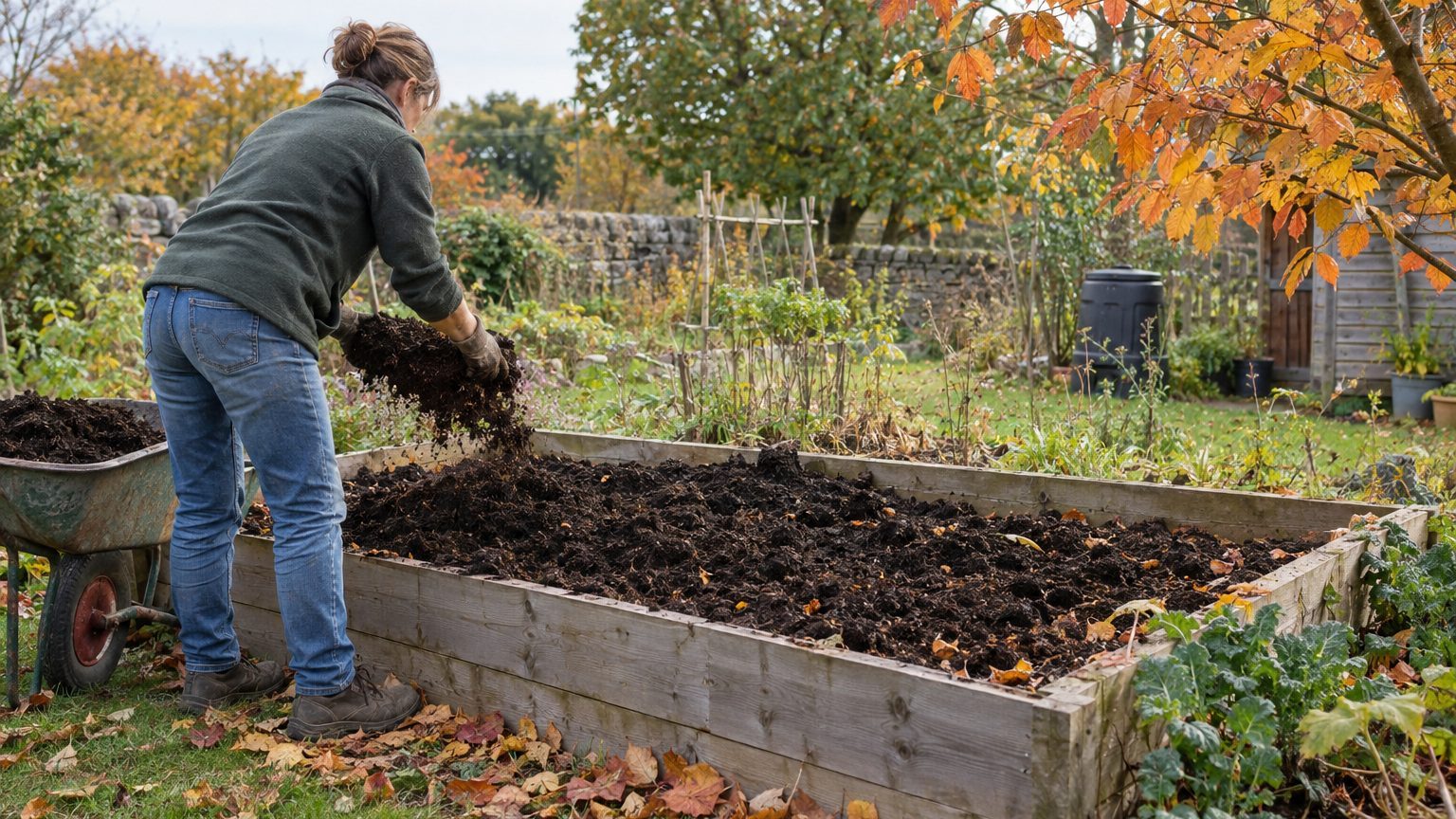
Spring gets all the credit, but fall is when compost does its best work. Spread a layer of 1 to 2 inches over bare beds before the ground freezes, and worms, microbes and winter moisture will carry it into the soil for you. By April, the job is already done.
Most gardeners wait five months longer than they need to.
- Spread 1 to 2 inches of fully decomposed compost on bare beds before the ground freezes.
- Worms, microbes and winter moisture work the compost into the soil over the cold months.
- Cover the compost with 1 to 2 inches of shredded leaves or bark to stop washout and weed seeds.
Why fall beats spring for feeding the soil
Vegetable plants demand a lot of nutrients, leaving gardens depleted after harvesting. Compost applied right then gives the soil time to recover. To improve the structure (tilth) of your garden soil, a fall application of compost is best. The slow release suits the schedule too: the compost feeds the soil, suppresses weeds, and releases nutrients slowly over winter. Rain, snowmelt and freeze-thaw cycles do the mixing that you’d otherwise do with a fork in a muddy bed.
There’s a practical payoff as well. In October, your beds are empty and the soil is workable. In April, you’re juggling seed trays, cold hands and soil too wet to touch without wrecking its structure.
One condition applies, though. Compost that still contains food scraps can attract pests and harm young plants, so it has to be fully decomposed before it goes on the beds.
Half-finished compost belongs back in the bin.
How much compost, bed by bed
The numbers vary depending on who you ask, which is confusing until you see the pattern. For established beds, 1 to 2 inches is the working range. Annual application of 1 to 2 inches is enough for most established gardens; new beds need 3 to 4 inches worked in. A county recycling coordinator once asked an extension service whether the right amount was 2, 3 or 4 inches. The answer was that three inches is the ceiling, but any smaller amount helps.
Here is how that plays out in each part of the yard:
- Vegetable beds: about 2 inches after the last crop comes out. Some gardeners go further, loosening the soil and mixing in 3 to 4 inches as spent crops are removed.
- Perennial beds: a 1-inch layer around the base of each plant, kept a few inches from the stems to prevent rot.
- Trees and shrubs: a 3-inch layer in a wide band extending past the canopy edge, kept 6 inches from trunks.
- Lawns: a thin dusting only. One-quarter to one-half inch of fine, screened compost, raked in and watered. More than that will smother turf.
Raised beds are the exception to the “thin layer” rule. Because the soil settles and drains fast, some composting guides suggest covering them with 3 to 6 inches of compost, ideally shredded leaf compost, to protect and enrich the soil over winter. That’s generous. I’d start nearer 3 inches and see how far the bed sinks by spring.
Watch out for plants that don’t want the feast. Some plants, especially California natives, prefer unamended soil, and a 2-inch layer every two years may be enough for them. Rich compost can do more harm than good on plants adapted to lean ground.
The method: spread it, don’t dig it
Start by clearing the bed. Cut back spent growth, pull weeds roots and all, and rake any old mulch aside if you can still recognize the chips. Then topdress one to two inches of compost directly on the soil.
Skip the tiller. On small gardens, heavy tilling disrupts soil structure and harms beneficial organisms, so add compost or mulch directly on top instead. The worms handle the rest. They drag it down to the soil so microbes can work on it too. If you tend a large plot, light tilling after adding organic matter is acceptable.
Cover it before winter weather arrives.
Bare compost is vulnerable on two fronts. Heavy rain can wash it away, and it often carries annual weed seeds that sprout early. Gardeners solve both problems by laying down 2 inches of compost, then covering it with a light 1 to 2 inch layer of mulch such as bark or ground leaves, which are abundant in fall. Another guide puts the mulch cap slightly thicker, at 2 to 3 inches, applied after a hard frost. Waiting for the frost keeps cozy-minded rodents from moving into the mulch before the cold arrives.
Shredded leaves are the cheapest option, and you probably already have a pile. Run the mower over them once or twice and rake them onto the beds. For vegetable beds, straw or shredded leaves over bare soil does the same job. The leaves break down by spring and feed the same microbes the compost is feeding below.
What the beds look like in April
Repeat this each fall and the payoff compounds. Gardeners who stick with no-till routines find that they only need to scratch a furrow and press seeds into the crumbly soil. There’s no spring digging, and the bed is ready as soon as the ground thaws enough to plant.
Perennials benefit as well. A light topdressing in autumn encourages better flowering in the years to come. The goal in these beds isn’t dramatic feeding. It’s to feed soil microbes and slowly build organic matter, not to shock the roots.
Gardeners in the Pacific Northwest and other mild, wet regions put a narrower window on timing: late fall (October to November) and early spring (March to April). In colder regions, the principle is the same, but you want the compost down before the ground freezes solid. Hard-frozen soil can’t absorb anything, and a thick layer of compost on frozen ground can wash off during a thaw.
Miss the window? Spring still works. Empty vegetable beds can take 2 inches of compost blended into the top 6 inches of soil, while beds with actively growing perennials get a lighter inch on top. You’ll just be doing by hand what the worms would have done over winter.
Sources : yahoo.com | mulchmound.com