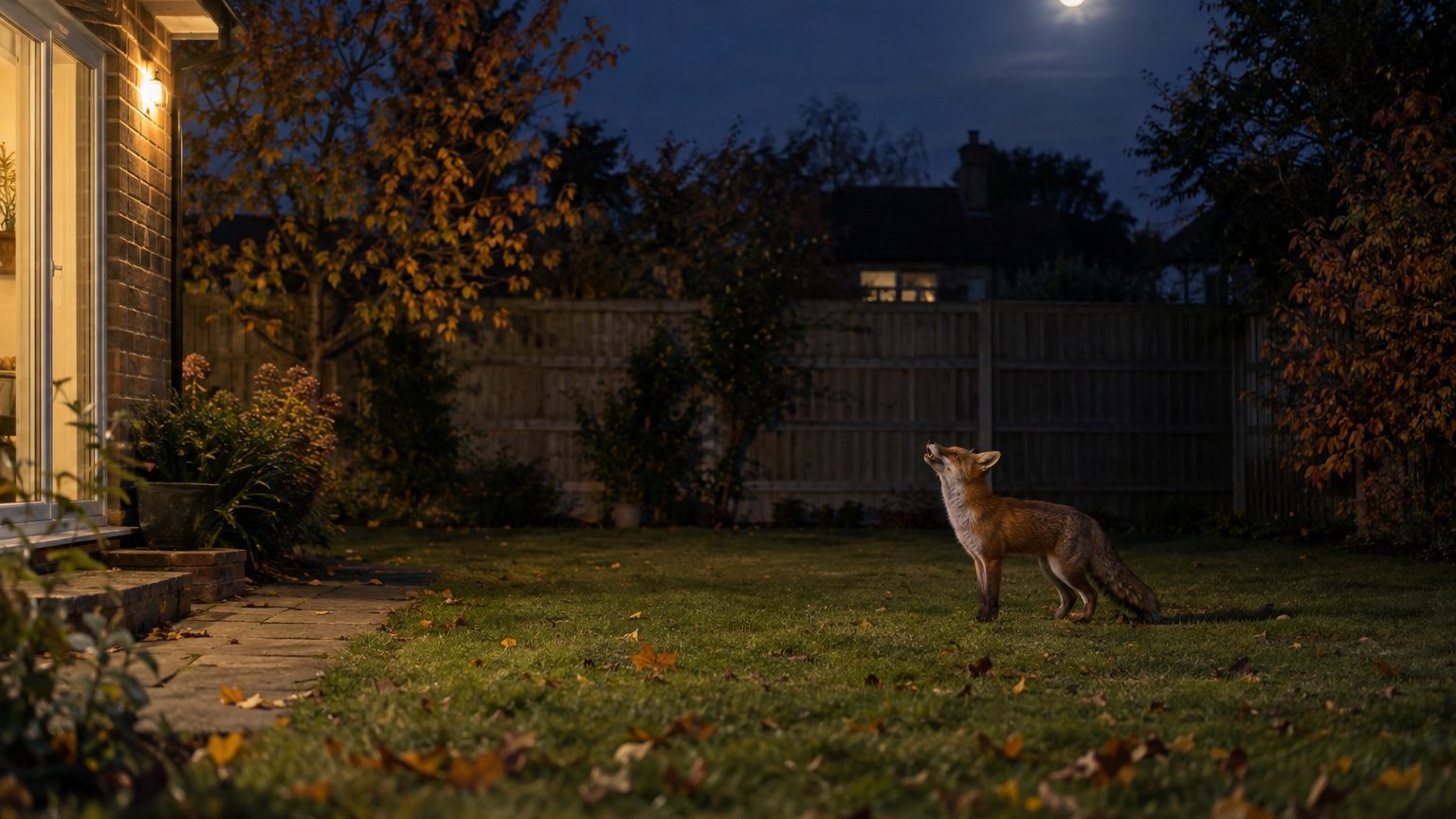
Most nighttime screeches in American yards trace back to a short list of suspects: red foxes, raccoons, owls and, now and then, a bobcat. Coyotes, bobcats, and foxes can all make noises that sound like a scream. Working out what animal is making noise at night mostly comes down to three clues: the season, the pitch and the rhythm.
It is almost never a person in trouble.
- Red foxes produce the most common nighttime shriek, peaking December through February.
- Raccoons screech over trash scraps, with activity rising in spring and early summer.
- Screech-owls trill and whinny, while barn owls give long, harsh screams.
- Season, rhythm and location are the three clues that identify the caller.
The usual suspects behind the scream
Start with the red fox, the animal behind most of the 2 a.m. panic. Its famous “vixen’s scream” is a high, eerie, almost human-sounding shriek heard mostly on winter nights during the mating season. The peak runs roughly December through February, though some state wildlife agencies stretch the window to March. Males answer with a different sound, the “hup-hup-hup” triple-barks of dog foxes. To a fox, this is normal communication, not a sign of distress.
Winter air helps the drama along. Foxes are vocal all year, but their calls seem to travel farther at night in the still winter air. That may explain why many Virginia homeowners have called the police over a scream that turned out to be a fox.
Raccoons are the second big candidate, and they have range. Raccoons have over 200 vocalizations they use to communicate, from purring to snarling. The one that wakes people up is a hissing screech or scream, and it tends to erupt when two raccoons argue over the same tasty scraps near your trash can. Spring and early summer, when mating occurs, bring even more of it.
Owls complicate things. The Eastern screech-owl, a bird no bigger than a pint glass, produces an even-pitched trill and a shrill, descending whinny. Despite the name, screech-owls do not screech.
The real screamer in the owl world is the barn owl. Its call is a long, harsh scream from the air or a barn, which is nothing like the gentle hooting people expect from an owl. Bobcats, where they live, add loud yowls and screams to the mix. Some raccoons can even screech like owls, which muddies the waters further.
Clues that narrow it down fast
Season is the quickest filter. A shriek in January or February points strongly toward a fox. The same sound in May, coming from a tree or a roofline, leans toward raccoons or a young owl.
Rhythm comes next. A red fox tends to produce scream-bark or raspy yowl patterns that may repeat every few seconds, sometimes with a second fox answering back. A rising whinny or an even, quavering trill suggests a screech-owl. Yips, barks, and group howls are the classic coyote signature. Even then, don’t count heads by ear: two coyotes can resemble a much larger group.
Darkness fools the ear.
Location helps too. Noise from an attic, a chimney or a crawl space is a raccoon problem more than a wild-night problem, since raccoons den in places like attics or chimneys. A call that seems to travel across an open field or drift down from a barn roofline is more likely a fox or an owl. If you can safely step onto the porch with a flashlight, a pair of glowing eyes at the edge of the lawn settles a lot of arguments. Keep your distance, though, and don’t try to get closer for a better look.
Apps that record and match sounds can help, and a recording is useful for comparing against online libraries of fox, owl and raccoon calls. A park district’s “sounds at night” handout can do the same job. A smartphone voice memo captured from the same spot on three consecutive nights will tell you more than your memory of a startled 2 a.m. wake-up.
What to do once you know who is calling
Most of the time, nothing. The animal is communicating, defending turf or looking for a mate, and the noise will fade. Fox screaming peaks while foxes are pairing up and defending territory, then dies down by spring once cubs are born. Even fox squabbles that sound ferocious seldom end in serious injury.
Your own habits can change the soundtrack, though. Foxes can easily lose their fear of people if they’re fed or repeatedly rewarded with food, so skip the pet food on the patio and the unsecured compost. Latching trash cans and bringing pet bowls inside removes the main reason raccoons gather and bicker near the house. Raccoon growls, for what it’s worth, are warnings meant for other raccoons or curious pets, so keep dogs on a leash if you let them out at night.
Small pets deserve a bit more caution. A great horned owl can carry off surprisingly large prey, including cats, which is a good argument for keeping cats indoors after dark. Whatever the animal, the advice is the same: give wildlife plenty of room and avoid trying to touch or feed any animal.
Don’t second-guess a genuine emergency, either. If a sound truly resembles a human scream and you can’t tell what is making it, there’s no harm in calling an emergency hotline. Dispatchers have heard foxes before. A wrong guess costs far less than a right one ignored.
Timing offers one last comfort. Fox cubs start emerging above ground between late April and July, and by then the midnight shrieking has usually given way to daytime playing near the den, which makes for a much quieter neighborhood.
Sources : animalsoundidentifier.app | positivebloom.com