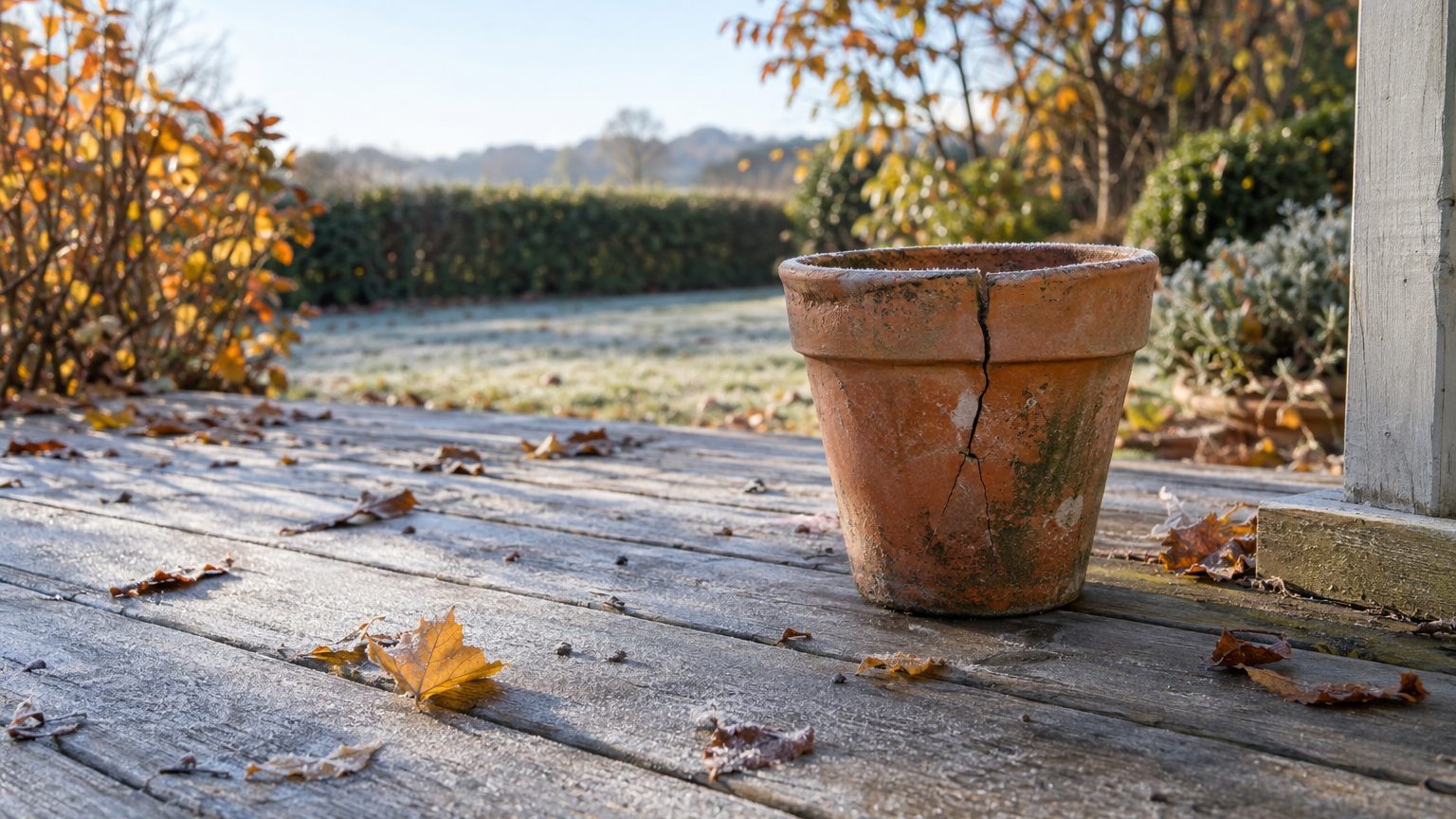
Water expands by up to 8.7% when it freezes. That sounds trivial until the water is locked inside a terracotta wall or a glazed ceramic bowl with nowhere to go. The pot loses.
Cold alone rarely breaks a pot. Trapped water does.
- Water expands by up to 8.7% when it freezes, which is what splits containers.
- Terracotta and standard ceramic are the most at-risk pot materials in winter.
- Perennials in containers should be rated two USDA zones colder than your own.
- Grouping pots against a wall and mulching them cuts exposure to freeze-thaw cycles.
Why containers split while the garden bed shrugs off winter
Clay and ceramic are porous, so rain, snow and irrigation soak into the walls. Once temperatures dip below freezing, that moisture turns to ice and pushes outward against the material. The damage compounds, too. After a thaw, water seeps into the new hairline fractures, and the next freeze widens them, which is why a pot can survive its first winter and shatter in its second or third.
Glaze offers less protection than most people assume. Many ceramic pots are glazed only on the outside, or only on the bottom is left bare, so they still absorb water. Ceramic is also brittle and has no capacity for expansion, so the soil inside can split it as it freezes and swells.
Repeated cycling between just above and just below freezing does more harm than one deep freeze. That pattern describes plenty of winters across the Midwest and Northeast.
Drainage is the other culprit. A pot sitting flat on a patio can have its drainage hole sealed off, and soil can plug the hole and freeze there. A saucer full of ice under a pot adds direct pressure from below.
Sort your containers before the first hard freeze
Start with the plant, not the pot. The standard rule is that a perennial or shrub living outdoors in a container should be rated two USDA hardiness zones colder than your own. In Zone 6, that means plants rated for Zone 4 or lower. The extra cushion exists because a pot has none of the insulation that surrounding earth provides.
Tender plants such as dahlias don’t belong outside at all.
Lift them from the pot, let them dry, and store them somewhere cool and dark, like a basement, until warm weather returns. Plants that fall within your zone or one colder can spend winter in an unheated garage, or be buried in the ground.
Then look at what the plant is sitting in. Fiberglass, heavy-duty plastic, wood and resin composites generally ride out winter well, and so do glazed ceramics that are actually rated for frost. Concrete and metal planters are typically freeze-resistant, though even these can show surface damage over time. Metal also conducts cold quickly, so a liner or a layer of mulch inside helps the roots. Terracotta and standard ceramic are the risky ones, and if the label doesn’t mention frost resistance, assume the pot isn’t rated for it.
Empty pots get a different treatment. Dump the soil, scrub them, let them dry completely and store them in a garage or shed, because leftover soil holds moisture right against the wall.
How to winterize potted plants that stay outside
Knowing how to winterize potted plants starts with water. Give Everything a thorough soaking before the ground freezes, since moist soil stays warmer than dry soil and protects roots better. Through winter, containers still need an occasional drink, but they shouldn’t stay soggy. Skip fertilizer until growth restarts in spring.
Location comes next. Lift pots off the cold, wet ground (pot feet or a few bricks work), then cluster them with the hardiest plants on the outside edge. Tuck the group against a wall or fence that blocks wind, or against a south-facing wall of your house where a little radiated warmth gathers. An eave on the north or east side of a building can also work for smaller pots.
Think of the group as one bigger pot.
Fill the gaps between containers with fallen leaves or pine needles, and stack bags of mulch or soil along the exposed sides to form a windbreak. Wrap individual pots in bubble wrap, burlap, old blankets or frost cloth, and top the soil with mulch. Container size matters here as well: large pots protect roots better than small ones, and in cold climates like Minnesota’s, extension advice includes nesting a pot inside a larger one with soil or packing material between them.
Covers need some care. Plastic wrap traps condensation and doesn’t let air circulate, and when sunlight hits it, it can damage any foliage it touches. Use burlap, frost cloth or a tarp instead, held up on stakes or hoops so it doesn’t rest on the plant.
Burial works too, particularly for hardy perennials. Dig a hole slightly deeper and wider than the pot, set the container level with or just below ground, and pack mulch or soil around it. The earth does the insulating, and the pot never goes through the full swing of freeze and thaw.
Small checks that save pots in January
Before the freeze, check every drainage hole with a finger or a pencil. A clogged hole turns a pot into a bucket that freezes solid. Loose, fluffy potting mix also gives some protection, and compacted soil does the opposite.
In spring, uncover the plants, set pots upright and move them back to their usual spot. If a pot shows hairline cracks, replace it before planting, since a cracked pot rarely survives another winter.
One last wrinkle concerns plastic. For plastic pots, the culprit is usually sunlight rather than cold, because ultraviolet rays make the material brittle and after two or three years outdoors it often cracks with little provocation.
Sources : ask.extension.org | hgtv.com