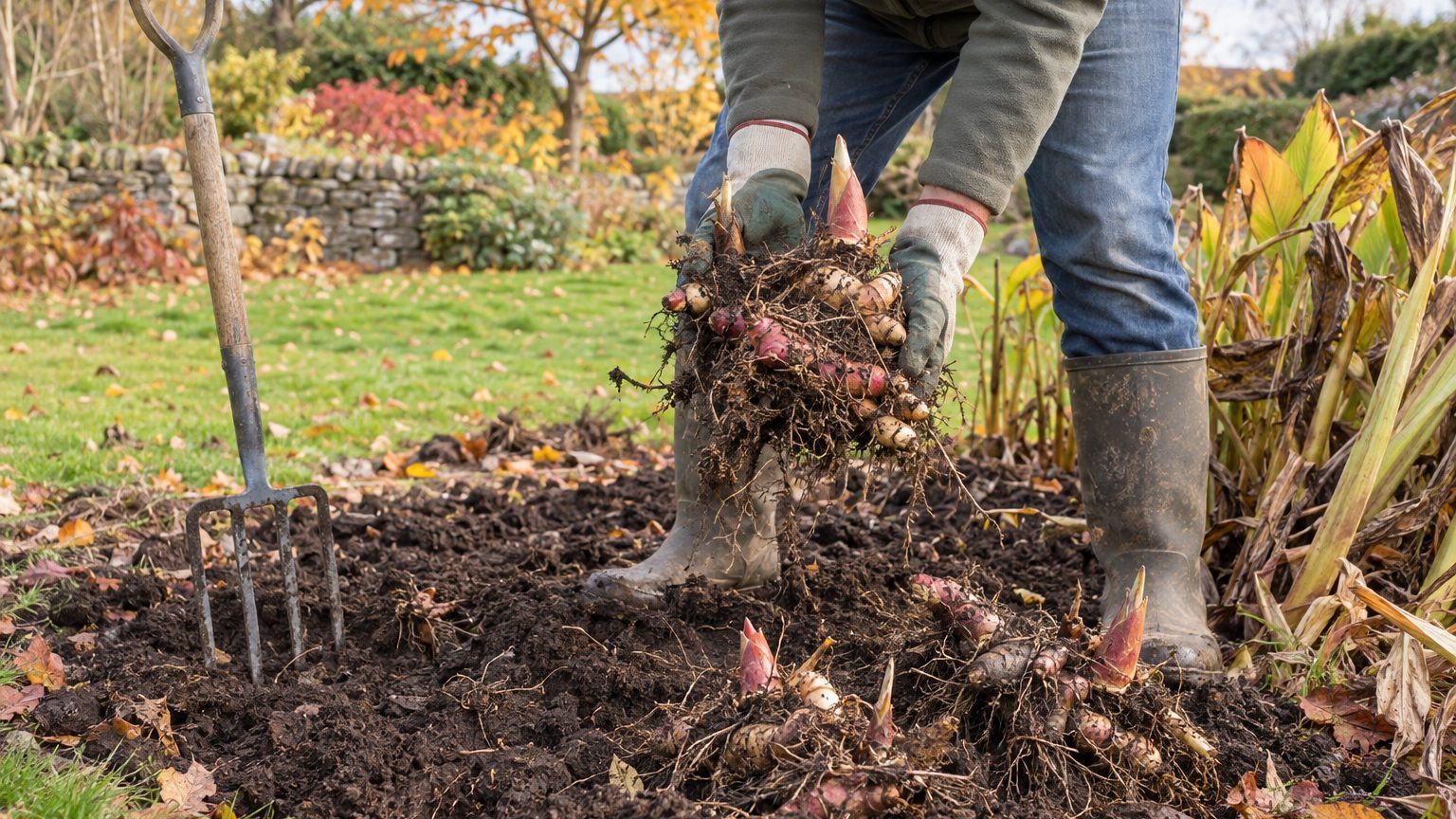
One hard freeze is all it takes. Cannas are tropical, and in zones 7 and colder the winter chill is too much for them outdoors, so the fleshy parts of the plant freeze and rot if left in the garden. Dig the rhizomes first and you’ll have the same plants next June, for free.
The job takes one afternoon and a few cardboard boxes.
- Cut canna stalks back to about 6 inches after the first frost blackens the foliage.
- Cure rhizomes in a single layer for 2 to 7 days in a warm, dry, ventilated place.
- Store packed rhizomes between 40°F and 50°F, never below freezing, and check them monthly.
Wait for the frost, then lift the clumps
Resist the urge to dig early. Growers generally wait for the first frost to signal dormancy, which means blackened, collapsed foliage. Then cut the stalks back to about 6 inches and dig carefully to avoid bruising. A garden fork works better than a spade because it’s less likely to slice through the rhizomes, and you’ll want to start well outside the clump, since canna root systems spread wider than most people expect.
Knock off the loose soil, but keep each clump whole for now. Dividing can wait until spring, and University of Kentucky extension guidance explains why: the new growth buds sit in the old stem base, so every division needs a piece of it. Cut too aggressively in October and you’re guessing where the buds are.
Think of a canna clump as a pantry the plant stocked all summer. Your job is to keep that pantry intact until the shelves are needed again. A rhizome that’s been gouged by a shovel tip loses that protection before winter even starts.
Cure first, pack second
Curing is a fancy word for air-drying, and it’s the step people skip. Spread the cleaned rhizomes in a single layer on a tray, cardboard or screen, somewhere warm and dry with good air circulation. A garage, a garden shed or even a covered porch works, as long as the temperature stays above freezing. Sources disagree on timing: Longfield Gardens suggests 3 to 7 days, while another of its guides says 2 to 3 days. Either way, the goal is a toughened skin and soil that has dried and crumbled away.
Skip curing and mold is the likely payoff.
Packing comes next. Peat moss and coco coir are the popular picks, vermiculite suits humid climates, and wood shavings or sawdust add airflow. Put a two-inch layer of your chosen material in the bottom of a box, lay the rhizomes on top so they aren’t touching, cover them, and repeat. The spacing has a purpose: packing material regulates moisture and keeps rhizomes apart, which limits the spread of any rot. Whatever you choose should be slightly damp, never wet.
Short on space or supplies? Wrap each rhizome in several layers of dry newspaper and tuck the bundles into a box or burlap bag.
Containers matter as much as the filling. Cardboard boxes, paper grocery bags or plastic crates with plenty of holes all let the rhizomes breathe, while a sealed plastic tub traps moisture. Gardeners in very dry regions face the opposite problem. In low humidity the rhizomes are more likely to shrivel, so a bin with holes drilled in the sides and damp peat inside is the better setup. Label each box by variety before it goes into the dark, because a basement full of identical lumpy boxes is a guessing game in April.
Where the boxes spend the winter
Cannas want a spot that’s cool but not cold. Recommendations land in a narrow band: 40°F to 50°F in one Longfield guide, 45°F to 55°F in another. Kentucky extension is blunt about the ceiling and the floor: keep them below 50°F and never let them freeze. An unfinished basement, a crawl space or a cool closet in a mudroom all fit.
Garages are fine with a caveat. Keep the boxes off the concrete floor, on a shelf or wooden pallet, since the floor pulls heat away. Unheated sheds and detached garages in cold climates are riskier because they will eventually drop below freezing, and a spot beside the furnace or water heater swings the other way into too warm.
The refrigerator seems like a clever shortcut, but it isn’t. Most run around 35 to 38°F, too cold for tropical cannas, and the air inside is often very dry.
Check the boxes monthly. Fuzzy mold on a firm rhizome usually means the medium is a bit too damp or airflow is lacking, and the fix is simple: brush off the mold, air-dry the rhizomes for a day, and repack in fresh, dry material. Shriveling points the other way, toward too little moisture, so a light misting of the packing material is usually the answer. Soft or mushy rhizomes are a lost cause, and pulling them out protects their neighbors.
Put a monthly reminder on your phone, because winter has a way of erasing good intentions.
Potted cannas get the easy route
If your cannas grew in containers, you may not need to dig at all. After frost, cut the stems back, stop watering, and carry the whole pot to a cool, dark storage area, where the dry soil acts as the storage medium and buffers temperature swings. Keep it frost-free, and keep it dry. A damp pot in a cold garage is the quickest way to rot the rhizomes you were trying to save.
Come spring, each clump can be planted whole or divided. Divide if you want more plants, and leave it whole if you’d rather have one big, early show.
The same fork-and-box routine covers other tender plants, too. Kentucky extension notes that elephant ear tubers are dug and stored like canna rhizomes, while dahlias have their own rules, including cutting the top back to 4 to 6 inches before lifting.
Source : longfield-gardens.com