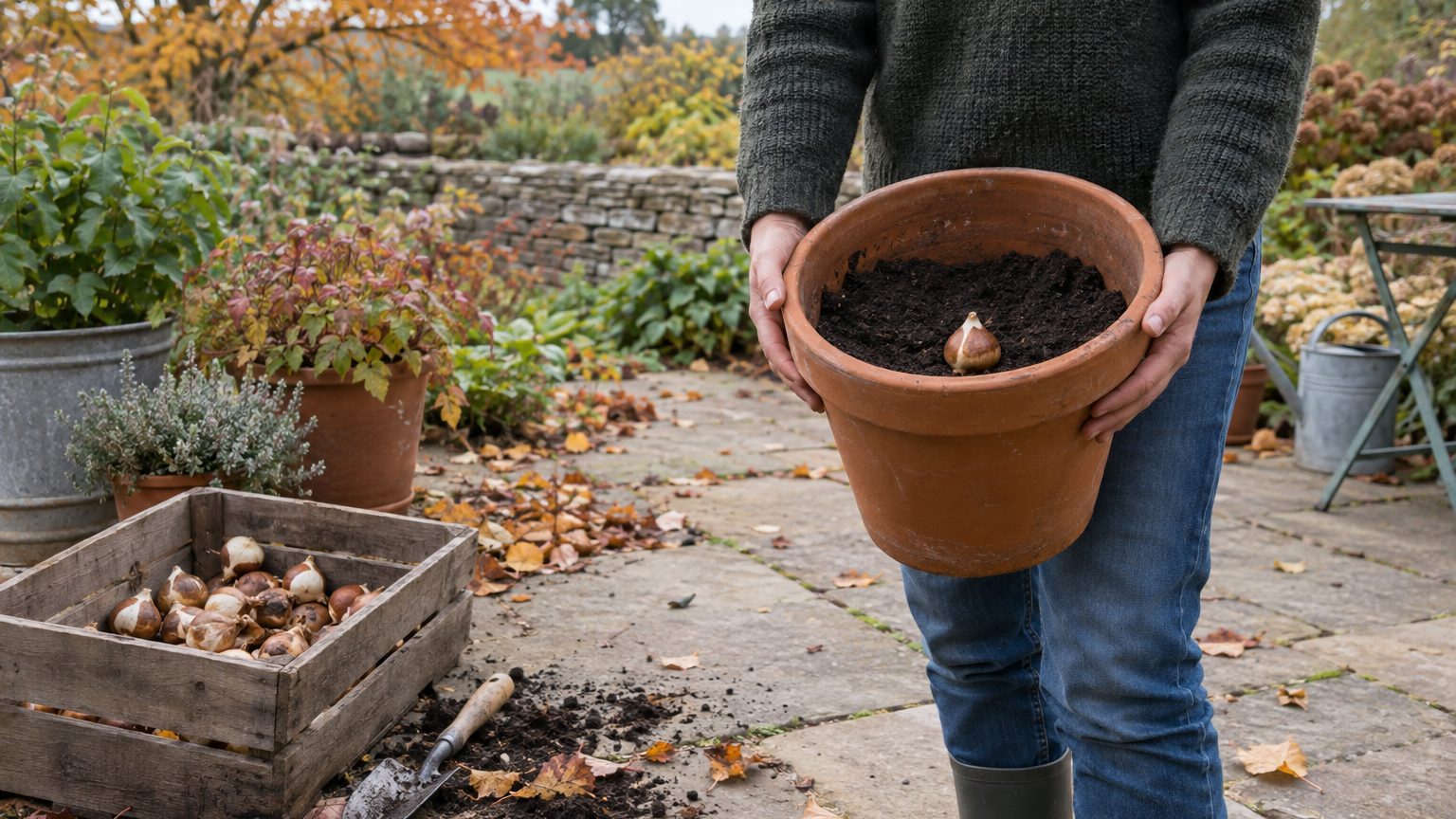
A 10-inch-deep container will hold two layers of bulbs, and a 14-inch container will hold three. That one measurement decides whether lasagna planting bulbs in pots works at all, before a single bulb touches the soil.
Depth comes first. Bulbs come second.
The method is simple to describe. Different bulbs are stacked at different depths in the same pot. Each layer blooms in turn, so as one flower fades, the next takes its bow. A patio container that would normally flower for two weeks in April can carry color from early spring into late spring.
- A 10-inch container holds two layers of bulbs and a 14-inch container holds three.
- Bulbs are planted in bloom order, so the latest-flowering bulbs go deepest.
- A three-tier mix of tulips, daffodils and muscari can flower for six to eight weeks.
Building the layers from the bottom up
Start with a pot that has drainage holes, because bulbs sitting in cold, soggy mix will rot before they ever sprout. Put a layer of gravel in the bottom, then add 2 to 3 inches of potting soil mixed with bulb food. The largest bulbs go on top of that. Space them so none touch, but set them as thickly as you can for a big display.
Cover that first tier with about 2 inches of mix, then add the second. These bulbs need a little more elbow room. Spacing them 1 to 1½ inches apart leaves gaps for the lower bulbs, and the shoots will find their way up through the layers above. Gardeners tend to worry about this step more than they need to.
Pointy end up, every layer, no exceptions.
The top tier is where you can plant tightly. Small bulbs like muscari can sit about an inch apart, and the final soil layer should stop roughly an inch below the rim. Water the pot well. A 2 to 3 inch blanket of shredded bark, wood chips or seedless straw insulates the bulbs against freezing and thawing, and it plays the role of the melted cheese on a real lasagna.
Which bulbs go where
Most people assume the biggest bulbs go deepest simply because they are biggest. The real rule is about timing. The order follows bloom order rather than size order, so the last flowers to open are the ones buried farthest down. Tulips, which are both large and late, happen to satisfy both rules. Planting depth for tulips runs 6 to 8 inches, according to Clemson’s extension guidance.
A reliable three-tier combination exists, and it needs no exotic shopping. Tulips make the bottom layer, daffodils the middle, and grape hyacinths (muscari) the top. A variation swaps in hyacinths and crocuses. Hyacinths sit above the tulips and crocuses go nearest the surface, each coming up in turn as the soil warms from the top down.
Early, mid and late tulip varieties stretch the show further. Mixing all three timings gives you an extended run of color. One planting session in autumn, and a single container can flower for six to eight weeks instead of two. That’s a lot of return for one afternoon with a trowel.
Resist the urge to cram. Experts suggest leaving a couple of fingers of space between bulbs, and keeping them off the container walls too.
Bulbs need room to push.
Check the depth arithmetic before buying a pot. Count 2 to 3 inches of mix at the base, 6 to 8 inches above that for the tulip layer, another 3 to 4 inches over the upper tiers, and then mulch plus headspace under the rim. The total lands at 14 to 16 inches. A shallow decorative bowl, however pretty, will not hold three tiers.
Getting the pot through winter
Spring bulbs need cold, but the roots need protection from a hard freeze. The goal is a full chilling period without the root zone freezing solid, and a mix that never sits wet through the dormant months. In cold climates, the pot itself becomes a factor. Plastic nursery pots avoid damage to expensive pottery, which can crack as it swells and contracts with the temperature. Some gardeners sink a plain plastic pot inside a decorative one in spring and swap it in only when buds show.
Feeding is optional but easy. A small amount of natural fertilizer or a balanced 10-10-10 between layers works. Bulb food in the base layer, as mentioned earlier, covers the same ground. Either way, skip heavy feeding in autumn and wait until green shoots break the surface in spring.
The name has a pedigree, by the way. Dutch growers call it “flower bulb lasagne,” and Michigan State University Extension recommends it for maximizing impact in small spaces. The technique works in the ground too, though soil depth matters there. Three layers need soil dug 8 to 12 inches deep, and if yours is shallower, go with two layers or a single traditional planting.
That same rule applies to the pot sitting in your garage right now: if it measures only 10 inches deep, plan on two tiers, and put the daffodils on the bottom.
Sources : highcountrygardens.com | thetatteredpew.com