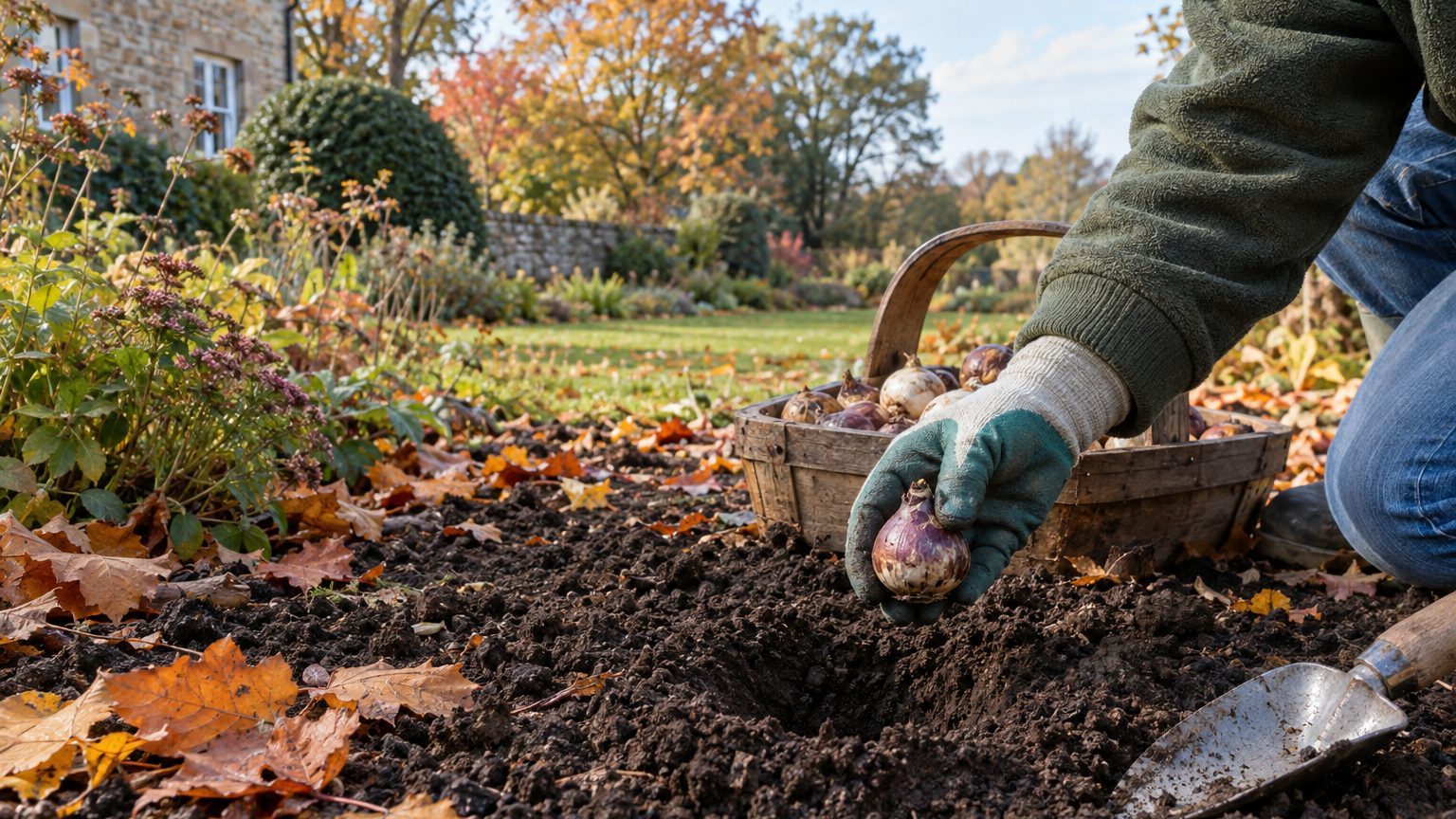
Hyacinth bulbs are loaded with calcium oxalate crystals, which make up as much as six percent of the bulb and can become airborne, causing irritation on any exposed skin. That is why a task as simple as setting bulbs in the ground can leave your fingertips itching for hours. Planting them gloveless is a mistake you only make once.
So the gloves go on before the bag opens.
- Hyacinth bulbs contain calcium oxalate crystals that irritate bare skin.
- Hyacinths should be planted in fall, 2 to 4 weeks before the ground freezes.
- Bulbs go 4 to 5 inches deep and 5 to 6 inches apart, pointed end up.
What a hyacinth bulb does to bare skin
The reaction usually shows up where you grip. Thumb and forefinger for small bulbs, with the middle finger joining in for larger ones. Casual gardeners get itchy fingers and not much more, while Professional bulb handlers can develop redness, swelling, eczema and even blisters on the hands, forearms and face. Most of it isn’t a true allergy. Most people who itch are reacting to the calcium oxalate itself.
Prevention is simple. Wear gloves from the moment you open the package, and keep other areas of skin covered as much as possible. Handle bulbs outdoors on a calm day, because wind kicks up more of the irritating crystals. And keep those gloved hands away from your face and eyes.
If you get itchy anyway, wash the affected area with soap and water. Bulb suppliers also point out that hyacinths can exude a smelly, viscous goo (the Dutch have an unflattering name for it) that wipes off with a paper towel. Don’t panic over a papery skin that is torn or missing, either. As long as the bulb is firm, it is good and viable.
A bulb with a soft spot you can press a finger into goes in the trash.
How to plant hyacinth bulbs in the ground
Timing matters more than technique. Hyacinths go in during fall, usually September through November depending on location, once the weather cools and at least 2 to 4 weeks before the ground freezes. They also need real winter: 12 to 14 weeks of temperatures between 40°F and 45°F, so gardeners in mild climates must pre-chill bulbs in the refrigerator first. Keep them away from the fruit bowl, since ethylene from ripening fruit damages the developing flower bud.
Pick the site with the nose in mind. Hyacinths want 6 to 8 hours of sun but tolerate partial shade, and because they bloom before most deciduous trees leaf out, the spot under a maple works fine. Drainage is the dealbreaker. Oklahoma State’s extension service recommends a spot with well-drained soil that doesn’t get soggy, and the same column suggests planting near a doorway, along a garden path or at the front edge of a border, where the scent can reach you. Work in compost or aged manure if your soil is tired.
Depth and spacing vary a little by source, so treat the numbers as a range. The Old Farmer’s Almanac says 4 to 5 inches deep and 5 to 6 inches apart, with an extra 1 to 2 inches of depth at the cold edge of their range, USDA Zone 3. Set each bulb pointed end up, and think in clusters. Groupings of five to nine look best. Water thoroughly afterward so the soil settles around the bulbs.
One bonus for the yard: the oxalic acid that irritates your skin also makes the bulbs unappealing to deer, chipmunks and voles.
Planting hyacinths in pots
Containers let you stage the show wherever you want it. Use pots with drainage holes, a 4-inch pot for a single bulb and at least 6 inches across for three. Fill with a soil-based mix and plant the bulbs with their tips just showing.
Then comes the hard part: waiting in the dark.
Roots need time before shoots are worth anything. Store the pot in a dark place above freezing but no warmer than 45°F for at least 10 weeks, such as an unheated garage or a cold basement corner. Check now and then that the mix stays moist, never wet. When shoots reach about 1 inch, raise the light and temperature gradually, and bulbs taken out of the chill, planted and exposed to light usually bloom in 3 to 4 weeks. Water carefully, avoiding the shoots and any waterlogging.
If you’d rather skip the chilling math, look for “prepared” bulbs. They’ve already been given a cold period, which brings them into growth earlier and is the usual route to winter blooms.
After the flowers fade
Snip the spent flower stalk, but leave the leaves alone. Nature Hills advises you to cut the stem close to the base and leave the leaves so they can make food for the bulb. Forced bulbs aren’t a one-time purchase, either: after flowering, they may be transplanted into the garden and will flower again in later years. Wear gloves for that move too.
Manage your expectations, though. Like tulips, hyacinths look their best the first spring, and over the years they gradually revert to single florets spaced widely along the stem. Many gardeners simply replant fresh bulbs every couple of years.
One more caution for the final planting day: the ASPCA lists hyacinths as toxic to both cats and dogs, so dig in spots where a curious pet can’t undo your work.
Sources : ask.extension.org | almanac.com