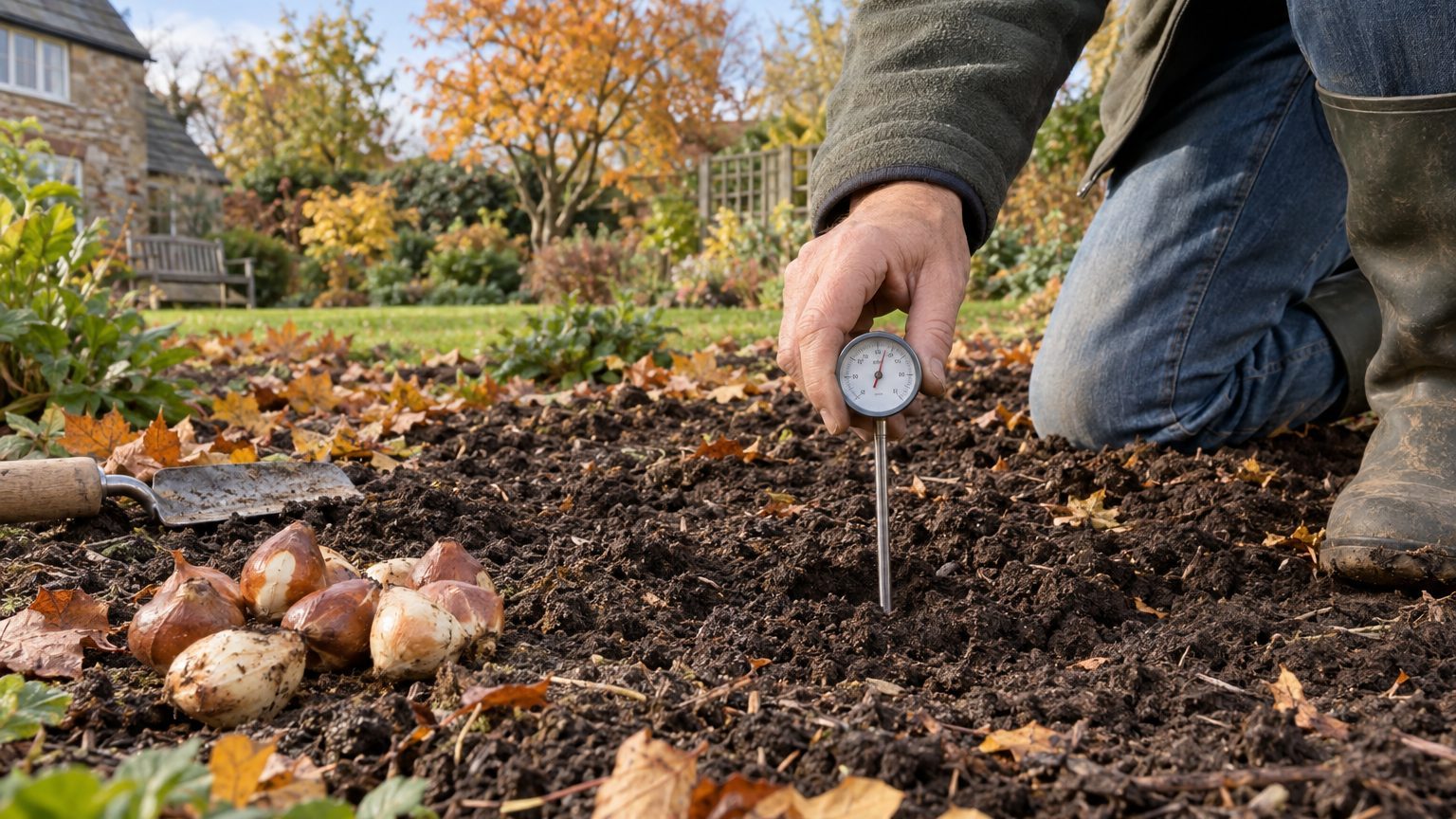
Tulip bulbs prefer to be planted when the soil temperature at a depth of six inches has dropped to 55°F or cooler. They also need about six weeks in the ground before it freezes. For most of the country, that puts the window somewhere between late September and December. Last year I planted on the first cool-feeling weekend of fall, and the soil hadn’t caught up with the air.
The calendar is a rough guess. The soil is the truth.
- Tulip bulbs should go in when soil six inches deep drops to about 55°F.
- Bulbs need roughly six weeks of root growth before the ground freezes solid.
- In zones 8 and warmer, bulbs must be pre-chilled in the refrigerator for 12 to 16 weeks.
Why 55°F is the number to watch
That temperature tells the bulb winter is approaching, which triggers it to develop roots instead of sending up shoots. Go above it and the bulb gets mixed signals. With autumn rain on top, tulips in particular are prone to fungal rot. Premature sprouts can also get damaged by the coming winter frost.
Soil lags behind the air, which is the part most of us forget. Ground at that depth cools about two weeks behind the air, so the first light frost is a handy signal. A sunny 68-degree afternoon in early October says very little about what’s happening six inches down.
A basic soil thermometer costs less than a bag of bulbs.
No thermometer? Watch the nights instead. Once nighttime lows stay in the 40s or low 50s for two weeks, your soil is likely ready. Pot growers should be a little more careful, because soil in containers swings in temperature faster than the ground does.
The planting window, zone by zone
Zones are a proxy for how fast your ground closes up for winter, not a hard rule. In the colder zones 3 to 5, gardeners should aim to plant in September or October. Think Minnesota, Montana, upstate New York. Nights get long fast up there, and the soil follows quickly.
Farther south the window slides later. The Midwest and Northeast run from October to mid-November, and in zones 6 and 7 the sweet spot sits in mid to late October for places like the Mid-Atlantic or Southern New England. In the South, planting runs from late November into December.
Zones 8 and warmer play by different rules.
Tulips need a sustained cold period to set a flower, and in zone 8 and warmer the ground never delivers it. The workaround is the refrigerator. Pre-chill bulbs for 12 to 16 weeks at 35 to 45°F before planting. Then plant in late December or January and treat them as annuals. Don’t store the bulbs next to apples or other ripening fruit, which release ethylene gas that can damage the flower inside the bulb.
What if you’re already behind?
Here’s the good news for procrastinators. The deadline is later than most people think. Too late means the ground is frozen solid and you can’t dig. Bulbs set out late, even in December in the Midwest, usually flower on time, if a little shorter.
That also fixes a common misreading of the six-week rule. The deadline is the ground freezing solid, which comes weeks after the first hard freeze of the air. A frost warning on the weather app doesn’t mean your season is over. It means check the thermometer and get moving.
Early is the riskier side. A bulb planted a few weeks late loses a little stem length, while one planted into warm soil can rot before winter even starts. That’s the lesson my tulips taught me last year.
Holding bulbs until the soil cooperates
Bulbs often arrive before the ground is ready, and that’s normal. A good supplier ships when soil temperatures in your area are approaching 55 degrees F. If you can’t plant right away, open the boxes so air can reach the bulbs and keep them somewhere dry, dark and cool. Temperatures between 50 and 60 degrees are ideal. A basement or unheated garage usually works, as long as the mice can’t get in.
Once the soil hits the mark, depth matters as much as timing. Plant them three times their height deep. In practice that works out to roughly 6 to 8 inches for a standard tulip bulb. Pointed end up, spaced a few inches apart.
Don’t stop checking in November. A warm spell after planting is fine, but if you’re planting into pots, the soil temperature can swing in either direction within days. Pots warm and chill faster than beds, so a thermometer reading from the garden next door won’t tell you much about your containers.
Sources : spearheadspade.com | farmersalmanac.com