Peppers aren’t annuals. They’re tender perennials that die at frost, not at the end of a season. A plant held above roughly 50°F through winter regrows in spring with a mature root system and, by one grower’s estimate, a four-to-eight-week head start.
Most of us toss them anyway.
- Peppers are tender perennials that die from frost, not from the end of the season.
- Dig and pot plants two to three weeks before the first expected frost, before nights drop below 50°F.
- Hard-prune plants to a Y-shaped framework of stems 6 to 10 inches tall and treat them with insecticidal soap before bringing them indoors.
- Dormant plants do best between 45 and 60°F with dim light and infrequent watering.
Timing: Before the Cold Decides for You
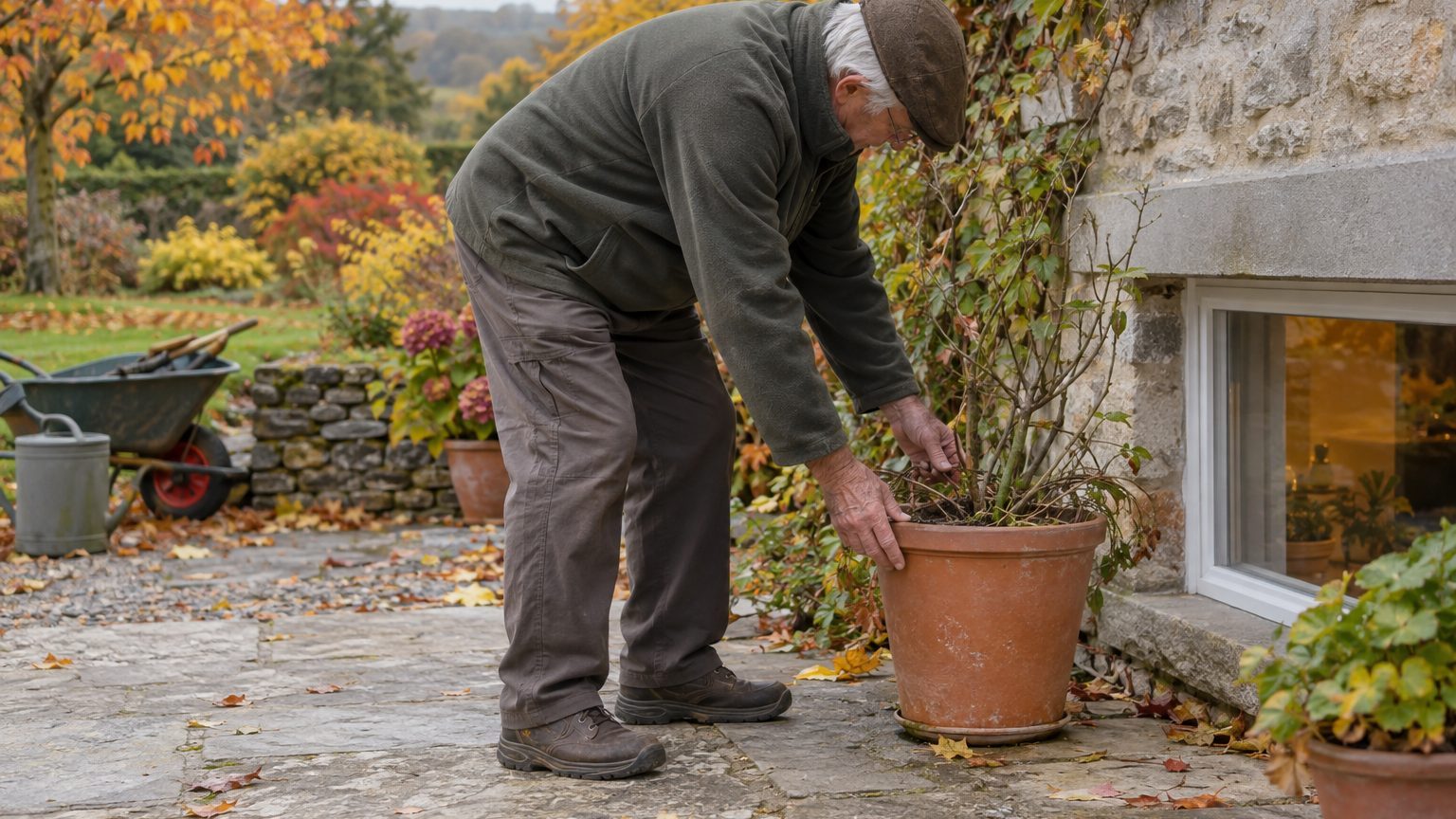
The trigger is a trend, not a single frost warning. Act before nighttime temperatures drop below 50°F, because peppers slow dramatically at that point. For plants growing in the ground, dig and pot them two to three weeks before your expected first frost so the roots can settle. Even a light frost can kill stems and damage the root system, and recovery gets much harder from there.
Not every plant deserves a second year. Pick the healthiest ones with strong stems, and lean toward hot peppers, since an Ask Extension reply notes that sweet peppers are less resilient than hot peppers, while slow-ripening super hots gain the most from a head start.
Cutting Back: The Step That Looks Like Murder
Hard pruning is the step most growers skip, and it does the most work. Cut the plant down to a Y-shaped framework of main stems about 6 to 10 inches tall, each with a few nodes, and strip off every leaf and fruit. Make the cuts with clean pruners just above the nodes, because those joints are where spring growth will emerge.
It will look like you killed it.
The bare look has a purpose. Leaves are where aphid and whitefly eggs ride indoors, and a leafless plant stops transpiring, which lets it survive on almost no water. Gardeners with a bright window to spare can go gentler, trimming by a third to a half and keeping the foliage. That version reduces leaf drop and shock, but it demands light and steady attention all winter.
Next comes the move. Lift the root ball, knock off the garden soil, rinse the roots, and trim them to fit a pot of 1 to 2 gallons. Use fresh potting mix, never garden soil, which brings fungus gnat larvae and root aphids in with it.
Pests get their own step, because a single aphid colony can spread to every houseplant you own. Dunk the plant in an insecticidal soap solution before it comes inside. For plants that can stay outdoors a little longer, one grower’s routine is to spray the whole plant with insecticidal soap at sundown, repeating every 3 to 4 days over 10 days, then bring it in only if no bugs show up.
Winter Quarters: Cold Storage, Not a Windowsill Garden
Think of dormancy as a refrigerator, not a greenhouse.
The dormant plant wants somewhere between about 45 and 60°F with dim light, such as an unheated basement, an attached garage or a mudroom that never freezes. Water only when the mix is dry an inch down, roughly every 3 to 4 weeks, and skip the fertilizer. Pepper Joe’s growing guide calls overwatering the most common mistake during dormancy.
The active route asks more of you. A south- or west-facing window works, or a grow light running about eight hours a day, with temperatures in the 55 to 65°F range. Peppers rarely fruit indoors, so if you want blooms, plan on 14 to 16 hours of light and a heat mat, then hand-pollinate with a soft brush.
No room for a whole plant? Take cuttings instead. Snip 4- to 6-inch stem cuttings from healthy plants before frost, check them for pests, and root them in soil or water. Roots typically show in two to four weeks, and a cup on a windowsill takes up far less space than a 2-gallon pot.
Spring Wake-Up: Slow Is Faster
As days lengthen in late winter, move the plant to a brighter, warmer spot and water a little more often. Within a few weeks, fresh green growth should emerge from the nodes you left behind. A light pruning just before or after the plant goes back outside will push it to branch.
Rush the hardening-off and you undo the winter.
Give the plant one to two weeks of gradually longer outdoor exposure, and only once frost danger has passed and nights are consistently above 50°F. Start with a shady, sheltered corner for an hour or two, then lengthen the stay each day.
One honest caveat from the University of Florida’s extension horticulturists: it is often more practical to start or transplant new pepper plants the following spring. Overwintering pays off for a rare variety, a slow-ripening super hot, or a plant that outperformed the rest of your bed. If the plant doesn’t make it, seed-starting in late winter is still waiting as a backup, so the experiment costs you a corner of the garage and a few weeks of occasional watering.
Sources : growhotpeppers.com | bountifulgardener.com