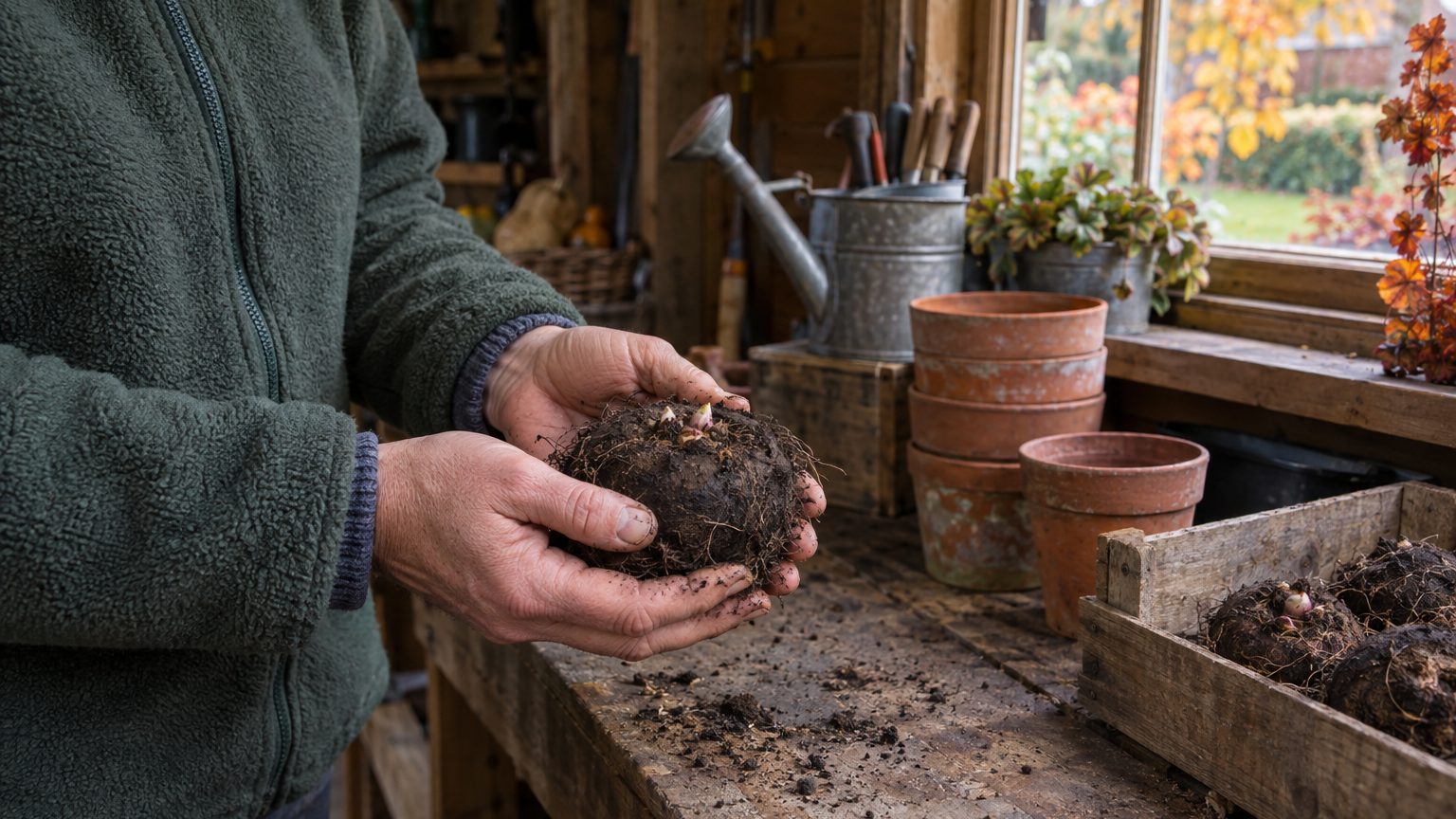
Every October I used to pull my begonias out of their pots and toss them on the compost pile. That was a waste. The right way to overwinter begonias depends on what grows under the soil, and fibrous, Rex, rhizomatous and cane types don’t go dormant, so they come indoors as houseplants, while tuberous types are stored as dormant tubers.
Two plants, two completely different winters.
- Tuberous begonias are stored as dormant tubers in a cool, dry spot at 40 to 50 degrees Fahrenheit.
- Wax, cane and Rex begonias never go dormant and are brought indoors as houseplants.
- Tubers need a two to three week curing period in a dry, shaded area before storage.
Know what is growing in your pot
Tuberous begonias are the larger-flowered, showier, often double-flowered varieties most often grown for container planting. Wax begonias are the bedding workhorses, with small flowers, glossy succulent-like leaves and a fibrous root system rather than a tuber. Then come the cane types, nicknamed angel wings for their leaf shape, which grow tall, bamboo-like stems.
If the plant tag disappeared in June, look at the plant itself. Tuberous begonias form flat tubers below ground. Rhizomatous types, the group that includes many Rex begonias, grow from thick, creeping stems that sit just at the soil surface. A small, glossy, mounding plant covered in tiny flowers is almost certainly a wax begonia.
Guess wrong and you lose the plant either way.
How to overwinter begonias that grow from tubers
The work starts in late summer, well before any frost. Stop fertilizing, which nudges the plant to stop making new foliage and start storing energy in the tuber. Then cut back on watering and let the soil dry out more than usual between drinks.
Timing the dig is where advice splits a little. Iowa State University Extension says to dig the tubers within a few days of a killing frost. Other growers prefer to beat the cold, and one guide wants tubers indoors before outdoor temperatures drop below fifty degrees. A light frost is forgiving, though: blackened leaves won’t hurt the tuber as long as the ground or pot doesn’t freeze solid.
Go gently when you lift. Use a garden fork, and avoid cutting or bruising the tuber, because wounds can lead to rot in storage. Extension guidance suggests you leave a little soil around each tuber and cut the stems about an inch above it. Resist the urge to yank off what remains, since pulling can damage the “eyes,” the growth points on top of the tuber. Container plants are easier: tip the pot over and slide the plant out.
Next comes curing, and the recommended time varies. Iowa State suggests two to three weeks in a cool, dry area, while another guide settles for about a week. Whichever you choose, pick a spot that is dry, shady, and protected from rain and frost, such as a garage, shed or basement.
Curing is the step most beginners skip.
It matters because the tuber’s outer skin toughens up, a “skinning over” that helps it hold moisture while keeping mold out. After curing, shake off the remaining dirt, and don’t wash them. Check each tuber and discard any that feel squishy or have soft spots. Some gardeners also dust the tubers lightly with powdered sulfur or another dry bulb fungicide before packing.
Storage is low-tech. Put a layer of peat moss, vermiculite or sawdust in a small cardboard box, lay the tubers on it, and cover them with more. Keep the box at 40 to 50 degrees Fahrenheit, and never let the tubers freeze. A closet against an interior basement wall often hits that range.
Spring brings the payoff. Around April, start tubers by planting them shallowly in a tray or pot of pre-moistened vermiculite, peat moss or sand. Set the tuber so its upper surface sits at the soil line, no deeper, and hold off watering again until the soil dries or new stems appear. Give them a bright windowsill where they won’t get chilled, and they will be ready to head outside once frost danger has passed.
Keeping wax, cane and Rex begonias awake indoors
These plants never nap, so the goal is a smooth move inside. Wax begonias are more tender and should come in well before any frost is predicted. Start by cutting irrigation in half in late summer and ceasing fertilizer by late August. Then inspect the leaves, because you are about to invite everything living on them into your living room.
Pull off yellowing leaves and check for aphids or spider mites. A rinse with mild insecticidal soap or a neem oil solution before they cross the threshold protects your other houseplants. Plants growing in the ground should be moved into lightweight, shallow pots filled with sterile, well-draining potting mix, not garden soil, which compacts and stays soggy.
Ease them in over a week or so. Bring the pots inside for a few hours a day, lengthening the time over 7 to 10 days. Once settled, they want bright, indirect light, and they should be watered only when the top inch of soil feels dry. Keep them away from heat vents and cold drafts, which can shock the plants and trigger leaf drop.
A little leaf drop after the move is normal.
Short on windowsill space? Take cuttings instead. Choose a stem about 3 to 4 inches long with a few leaves, and cut just below a node. Strip the bottom leaves, then root the stem in water, and once the roots reach about an inch, move it into a small pot of peat moss and perlite. A tray of cuttings takes up a fraction of the room a full-size plant does, which matters with cane begonias that can become quite large over several years.
One caveat for gardeners in the warmest parts of the country: where winter frosts are rare to nonexistent, tuberous begonias can go dormant on their own outdoors. Digging them up becomes optional there.
Sources : homesandgardens.com | longfield-gardens.com