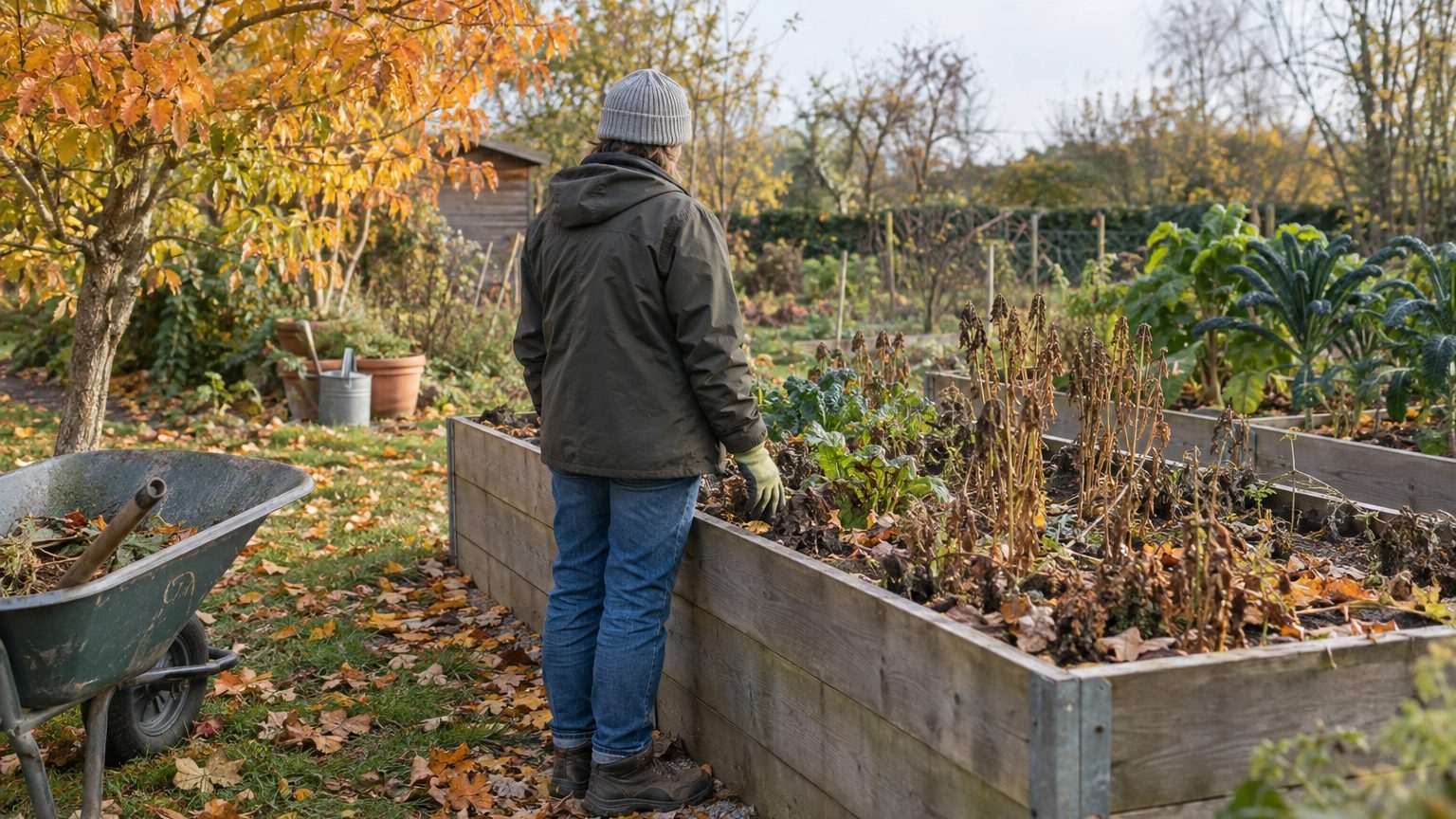
Leave a vegetable garden alone in November and it doesn’t rest. It festers. Blighted tomato vines, weed seeds and insect eggs all ride out the winter, waiting for the first warm week of spring.
A few hours now buy you an easier April.
Knowing how to put a garden to bed for winter comes down to four moves: clear, feed, cover, plant. Extension educators at the University of Wisconsin say a good fall cleanup cuts weeds and disease, reduces insect pests, discourages rodents and lightens next year’s planting workload. None of it takes special tools. Most of it takes one dry afternoon.
- Diseased plants belong in the trash, not the compost.
- Pea and bean roots should stay in the ground to release nitrogen.
- A soil test tells you what your bed needs before you add lime or wood ash.
Clear the beds, but not everything
Timing matters more than most people expect. Wisconsin extension advises working on a dry, sunny day, late morning or afternoon, because handling wet plants can spread disease spores and walking on soggy ground compacts it. Before you pull anything, pick the last tomatoes, peppers and bean pods. Green tomatoes will ripen on a kitchen counter or go into a batch of salsa verde.
Then pull the spent plants. Healthy material can go in the compost, but anything diseased or infested belongs in the trash, and that includes tomato fruits and potato tubers hit by late blight.
Leave the roots of peas and beans in the ground.
Cut those plants off at soil level and the roots break down, releasing the nitrogen the legumes captured for next year’s crops. Weed one last time, too, especially anything that has gone to seed, and dispose of the seedheads carefully so they don’t scatter across the bed. Go easier in the flower border, though. Coneflower and other seedhead-bearing plants feed birds through winter, and their hollow stems shelter native bees come spring.
Feed the soil, then cover it
Start with a soil test. Your state’s cooperative extension office typically runs one for a small fee, and the results tell you what the bed is actually missing instead of leaving you to guess. University of Wisconsin extension specifically cautions against adding lime or wood ash without that data.
Next comes compost, a 2- to 3-inch layer worked in gently with a garden fork. Tilling has fallen out of favor because studies suggest it damages soil structure, although some older guides still turn the soil to expose overwintering insects. Garden centers often discount bagged compost in fall, so it’s a good week to stock up.
Bare soil is the enemy over winter.
You have a few ways to cover it. A cover crop such as winter wheat, winter oats or field peas prevents erosion and adds organic matter, and in the mild Deep South gardeners often sow rye, oats or crimson clover. Too late for seed where you live? Shredded leaves or straw do much the same job for free. Prefer a no-growth option? Lay black plastic or weed cloth over the compost, weighted down with bricks, so weed seeds can’t settle in.
Mulch depth depends on your climate. In milder regions, a 3- to 4-inch blanket of leaves, straw or shredded bark steadies soil temperature and suppresses weeds, as long as you keep it off the stems and crowns of perennials, where it invites rot. In colder zones, tuck beds in lightly now and add a second layer once the ground freezes, especially around garlic and perennial herbs. Use grass clippings only if the lawn was never treated with chemicals.
Plant garlic, protect roots and write it down
Garlic is the one crop that wants the cold. Plant it in mid-autumn, since the bulbs need the winter to size up, and mulch over it once the ground freezes.
Root crops can stay put as well. Carrots, parsnips, leeks and turnips will keep in the soil for harvesting into early winter if you pile on heavy mulch to keep the ground from freezing solid. Mark the rows with tall stakes, because a snowfall erases a garden bed surprisingly fast.
Do the five-minute jobs while you’re out there: drain drip lines, unhook hoses, pull stakes and cages. Bring in any houseplants or tender perennials that spent the summer outdoors.
Sketch where each crop grew. Next spring you can rotate tomatoes and squash into new spots, a simple way to starve soil-borne disease. A phone photo works too.
Tender bulbs deserve a separate trip. Wait until frost kills the top growth, then lift them carefully, because any nick lets rot organisms in. Cure them for a few days in a well-ventilated spot between 60 and 70°F, out of direct sun, then pack them in lightly moistened peat, vermiculite or wood shavings. Go easy on the water, since a bulb in damp packing rots faster than one in dry packing.
Sources : growagoodlife.com | gardenista.com