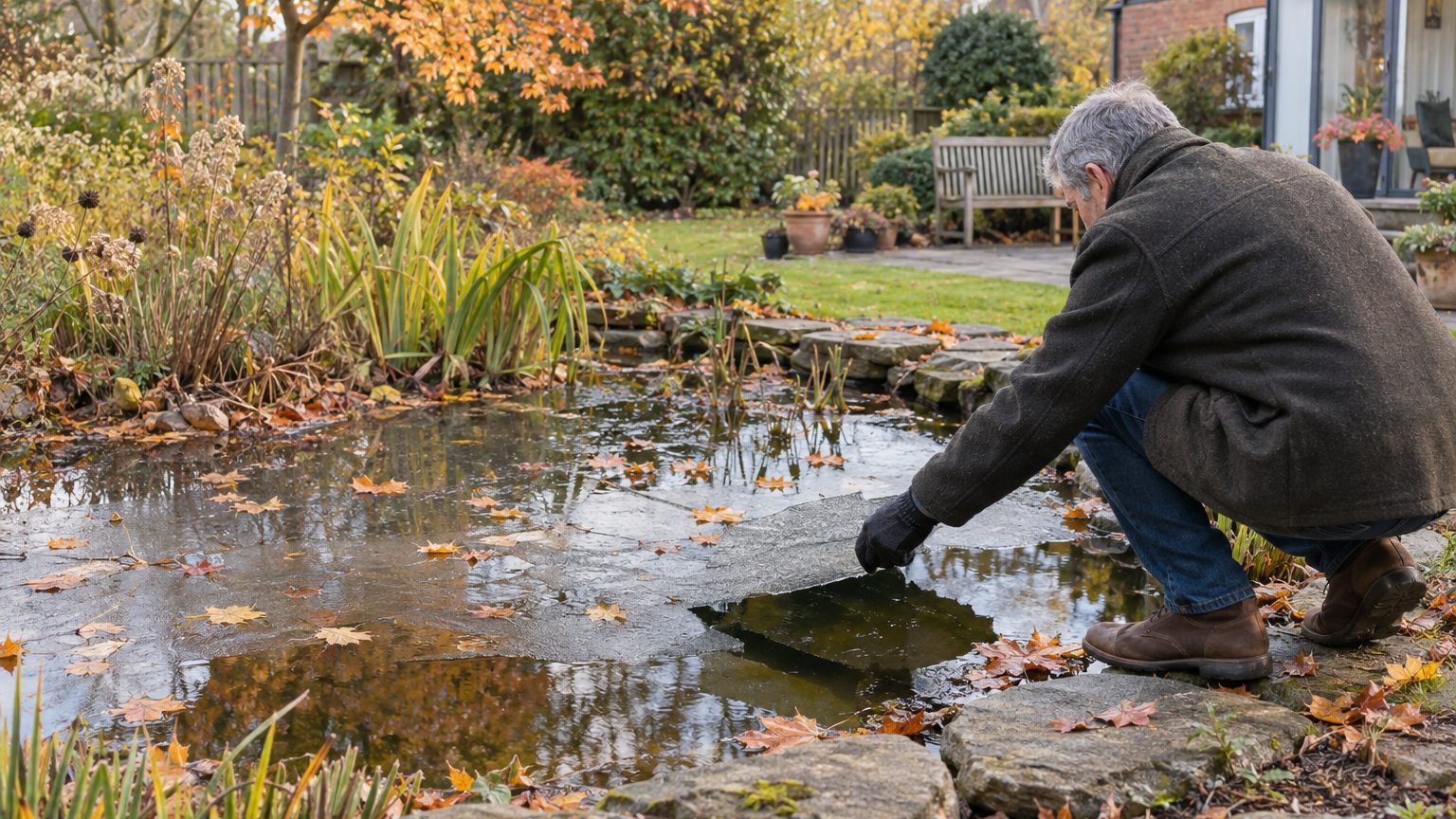
A pond sealed edge to edge under ice traps the carbon dioxide and ammonia the fish exhale and cuts off the oxygen they breathe. That, more than the cold, is what kills them. Fish in water two feet deep or more do not need warmth. Knowing this changes how you spend a fall weekend.
Learning how to winterize a pond comes down to air, not heat.
- A pond sealed under ice traps carbon dioxide and ammonia and cuts off oxygen, which is what kills fish.
- Fish in water two feet deep or more do not need extra warmth to survive winter.
- Stop feeding pond fish once the water drops to about 50°F, and resume only above 55°F.
Clear the leaves before the water cools
Start with the debris. Decomposing organic material, like fallen leaves, releases toxic gasses that can build up in the water and kill your fish. Skim the surface, rake the bottom with a net, and cut back overhanging shrubs so the pond doesn’t get a fresh load every windy night. Then add netting, but keep it off the water. Laid flat, it sags under falling leaves and turns the water dark, so prop it like a tent on PVC pipes and the leaves slide off to the side.
Trim dying plant foliage while you’re at it, since leftover stems rot under ice the same way leaves do. Some hardy water lilies and submerged plants can survive the winter if your pond doesn’t freeze solid. A quick test of pH, ammonia and nitrite before the cold sets in tells you whether you’re starting clean.
Go by the thermometer, not the calendar. At about 50°F, switch to cold water bacteria and stop feeding as fish slow down. Many pond keepers use a wheat-germ food during the transition, which is easier for sluggish fish to digest.
Stop feeding, then leave the fish alone
This is the step that feels wrong, because stopping the food feels like neglect. Fish are cold-blooded, so as the water cools their digestion slows with it, and food that sits in a near-dormant gut can rot. Uneaten pellets in the water pull oxygen down under the ice too.
Resume feeding only when the water holds above 55°F.
Depth matters more than any gadget. A common guideline is at least 18 to 24 inches for goldfish and minnows, and 3 feet for koi. Water is densest at about 39°F, so in a deep enough pond a warm, still layer settles at the bottom and that is where the fish spend the winter. Hardy comets, shubunkins and common goldfish handle this routine well, but sensitive fish like exotic goldfish are best brought indoors regardless of pond depth.
The pump question: pull it or keep it running?
Advice splits here, and the split is geographic. In mild climates, you can keep the pond pump going. Where water freezes, many pond professionals say to disconnect the filter and pump just before freezing to avoid ice damage. Large outside filters should be drained and shut down for the winter, and UV units, lights and clarifiers should come indoors.
There’s also a fish-based reason to pull the pump. A main pump left running through a freeze circulates the whole pond and drags that warm bottom water up to the frigid surface, chilling the spot where the fish are resting.
Drain every hose, because ice will split what water fills.
Some people keep a waterfall running for the oxygen and for the ice sculptures it builds. If you go that route, expect some of the pond water to evaporate during winter, so top it off. A small pump or aerator set on a shallow shelf so it bubbles at the surface can also hold a hole open in moderate cold, and in northern areas a combination of a small pump and de-icer is the usual answer.
Keeping one hole open in the ice
A de-icer is not a heater. As one aquatic biologist puts it, it’s not heating the entire pond, just keeping a small hole open in the ice to allow for gas exchange. Floating models are typically thermostatic and switch on near freezing, so install and test yours before the first hard frost. Snow is the other threat: snow on top of ice is the main driver of winterkill, because it blocks sunlight and the oxygen plants would otherwise make, so sweep part of the surface clear.
Never smash the ice. The shock can harm or kill fish, and hammering is the most common mistake on a morning when the hole has frozen over. If you arrive too late for a de-icer, set a pot or container of hot water on the ice and let it melt through. Then get the de-icer or an air pump running so the opening stays put.
For aeration, an air stone belongs near the top of the water column. Ideally a de-icer plus an aerator with the air stone set high, not on the bottom. Ohio State University Extension warns that a diffuser running at depth under ice drags the 39°F refuge water up against the cold surface and can supercool the whole pond.
Check the hole weekly, since a power outage or a cold snap can close it overnight. A quick look also lets you top off the water level, which can drop quietly through the cold months. Most pond fish come through a properly prepared winter looking exactly as they did in October, only a little hungrier in April.
Sources : support.aquascapeinc.com | dripworks.com