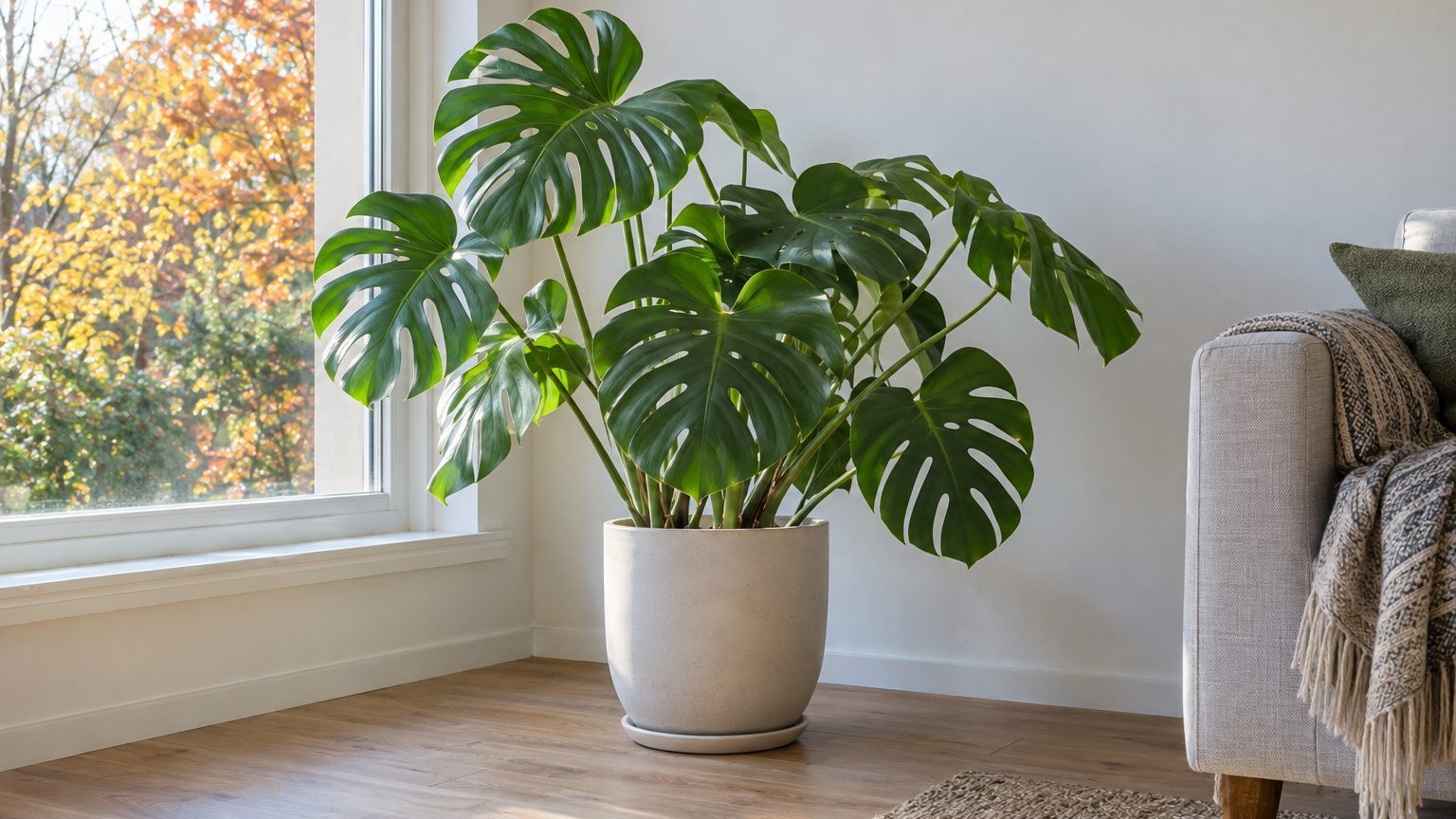
A monstera that hasn’t pushed out a new leaf since October is almost certainly fine. Shorter days and drier indoor air slow the plant to a crawl, and that’s what monstera care in winter has to account for.
Stalled growth is normal.
Why your monstera stops growing when the days get short
Light drives everything. The sun sits lower in winter and usable daylight hours shrink, so a spot that gave your plant plenty of bright indirect light in July can feel like a cave by December. The monstera responds by spending less energy on new leaves, much as a car idles at a red light.
Then comes the heating. Indoor humidity in a heated home typically drops to 20–30%, well below the 50–60% a monstera prefers, and other estimates put it at 30–40%. Temperatures also swing more near vents, radiators and drafty glass. A plant that evolved in humid Central American forests doesn’t enjoy any of it, and temperatures below 55°F risk damaging its tender foliage.
The slowdown is a pause, not a sickness.
Some growers call it dormancy, but that’s a loose term. Monstera dormancy is a partial downshift, not the deep sleep of a deciduous tree. The plant keeps its leaves, keeps drinking a little, and waits for spring.
Watering: the winter mistake that costs the most plants
Cut back. Reduce watering frequency by roughly half from late autumn through winter. Many guides land on a gap of two to three weeks between waterings, though your home’s light, warmth and pot size will shift that number.
The reason is simple physics. A slower plant drinks less, and cooler rooms mean the soil evaporates less, so the potting mix stays wet far longer than it does in summer. Winter overwatering is the most common way monsteras die indoors. Roots sitting in soggy mix lose oxygen, then rot, and by the time leaves droop, the damage is often well along. Skip the calendar and push a finger two or three inches into the soil instead. If it feels damp, wait.
When you do water, soak the pot. Roots need oxygen between waterings, so a full soak followed by a real dry-down beats frequent sips. Let the excess drain, then empty the saucer, because a pot standing in a puddle defeats the whole exercise.
Yellow leaves deserve a closer look. The two most common causes are overwatering and too little light, and in winter both often happen together. Drooping can mean the opposite problem or rot, so check the soil and the roots before reaching for the watering can.
Hold the fertilizer until spring.
A resting plant can’t use the nutrients, and salts build up in the soil. Fertilizing dry soil can burn the roots. Repotting follows the same logic: a monstera that isn’t growing has no use for fresh space, so wait until spring to repot.
Light and humidity: the tweaks that actually help
Move the plant to your brightest window. Reduced light is the main reason new leaves come out smaller and with fewer splits, so a better spot now pays off in the first leaves of spring. A low winter sun rarely scorches foliage the way July rays do, though keep the leaves from touching cold glass on freezing nights.
A grow light can bridge the gap, with a caveat. Weak bulbs won’t do much, and strong grow lights are needed to encourage new growth, while a couple of hours of supplemental light can stop the plant deteriorating. Some growers aim for 12 to 14 hours of light a day, a target that’s hard to hit in a north-facing living room without help. A cheap outlet timer takes the guesswork out of it.
Humidity is the next lever. A pebble tray works if the pot sits above the waterline, and a small humidifier does more. Misting is the popular fix, yet it briefly raises humidity but doesn’t meaningfully change it. One more caution: in a cold, dim room, pushing humidity too high invites mold and rot, so match your effort to the conditions.
Dry air has a side effect that gardeners tend to notice late. A monstera in 50%+ humidity resists the spider mite pressure that dry winter air encourages. Scale insects also love a heated apartment. Every couple of weeks, turn a few leaves over and look for fine webbing, sticky residue or small brown bumps along the stems.
Dust matters too. Dust accumulates in winter, with dry air and closed windows, and a film on those big leaves blocks the little light that reaches them. A damp cloth once or twice over the season takes a minute per leaf and doubles as an inspection.
What to leave alone until spring
Resist the urge to fix a plant that isn’t broken. Moving it every week, pruning hard or feeding it “to give it a boost” usually does more harm than the slowdown ever could. Crowding it next to a heating vent, as a way to keep it warm, dries the leaf edges and turns them crisp and brown.
Supports are fine to adjust. Most varieties benefit from training against a moss pole or other support, and winter is a quiet time to tie stems up or retie loose ones without disturbing the roots.
Warmth in the 65 to 80°F range suits the plant best, and the lower end is fine for a resting one. Cooler winter temperatures down to about 55 to 65°F are tolerated, as long as the air isn’t cold and wet at the same time.
Watch the base of the plant for one warning sign. A stem that turns soft, dark or mushy at the soil line points to rot, and that calls for unpotting, trimming dead roots and moving to fresh, chunky mix, even in January. A plant that simply stays green and still isn’t in trouble. Once days lengthen in March or April, the first new leaf usually arrives as a tight, pale spike, and that’s your cue to resume regular watering and feeding.
Sources : housedigest.com | aqualogi.com