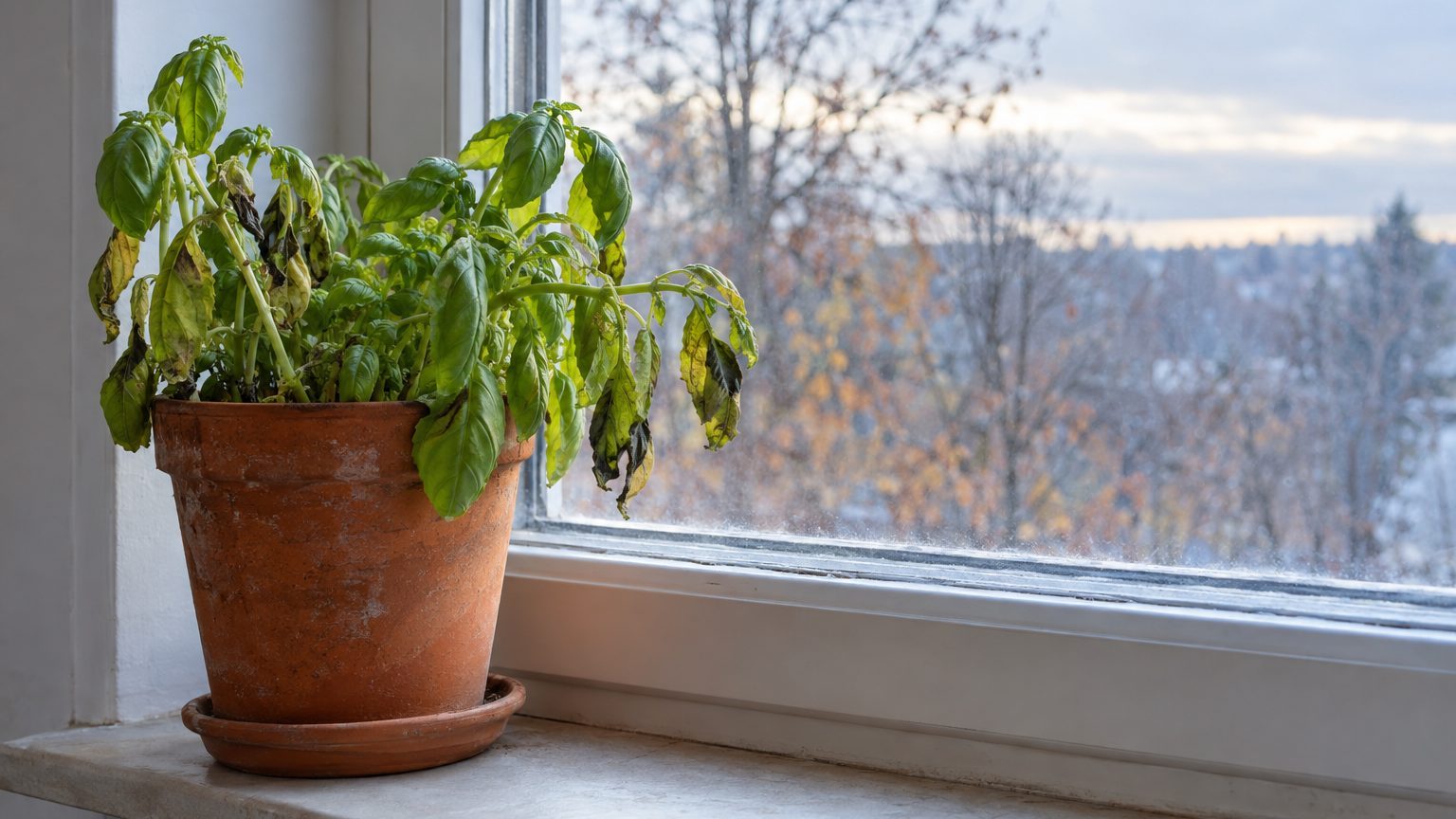
Basil can be damaged by nights in the 40s°F, well before any frost shows up. It is a true warm-season herb that thrives in heat, so a pot left outside “just until the weekend” may already be compromised by the time it comes in.
That is the first lesson of bringing herbs indoors for winter.
- Basil is damaged by nights in the 40s°F, well before frost arrives.
- Perennial herbs like thyme, mint, and chives can stay outdoors and regrow in spring.
- Raising basil’s daily light from 7 to 15 mol/m²/day increased its fresh mass by 144%.
Sort the herbs before the first cold night
Not every herb needs rescuing. Frost kills tender annuals like basil, cilantro, and dill, but perennials like thyme, lavender, chives, mint, bergamot, and tarragon can stay outdoors and regrow from the roots in spring. Your hardiness zone decides the rest. Most rosemary is hardy to zone 7, perhaps zone 6 with protection, so colder gardens should bring it in.
Container herbs are the easy cases, since they only have to walk through the door. Digging up in-ground plants is harsher. They face transplant shock plus an entirely different climate, and they may die back almost completely before pushing out new growth. A gentler route is cuttings: snip pieces 3 to 4 inches from a growing tip, strip the bottom leaves, dip the cut in rooting hormone and plant in a soilless mix. The outdoor plant can then be left to its fate, and you can transplant the rooted cuttings into regular potting soil.
Herb by herb: what each one expects from a living room
Basil is the diva. It wants 10 to 12 hours of bright light, and an artificial lighting system is usually needed to deliver that. The payoff for adding light is large: Iowa State research found that raising basil’s daily light integral from 7 to 15 mol/m²/day increased its fresh mass by 144%. Even then, basil is an annual, and once it flowers and sets seed it dies, even indoors. Pinch off flower buds early.
Rosemary is a different sort of fussy. It needs bright light (a south window or grow lights for 10 to 14 hours), a cool room, and a top inch of soil that dries out before the next watering.
Lemongrass, being tropical, comes in too.
The easygoing group is larger than most people expect. Parsley, mint, and chives tolerate somewhat less light, while rosemary, thyme, and bay laurel may need a full-spectrum LED or fluorescent grow light. Mint is the one to watch for moisture, because indoors it needs bright light and consistent moisture, and the pot shouldn’t dry out completely. Sage deserves a close look under the leaves, since mites and whiteflies like to hide on the undersides.
A two-week transition beats a one-day move
Think of it as hardening off in reverse. Start 7 to 10 days before the move by putting plants in a shadier, more sheltered spot, and if nights dip below 50°F, bring them in overnight and back out by day. Garden.org suggests a slower version for plants that have been in full sun: partial shade for two to three weeks, then deeper shade for another two to three weeks. The goal is to let the leaves adjust to dimmer light before they hit a window, because the drop from July sun to a December sill is brutal.
Use the pot as a checkpoint, too. Choose one with drainage holes, fill it with bagged potting mix rather than garden soil, which tends to be heavy and may harbor disease, and add sharp sand or perlite to improve drainage. Inspect every plant for aphids and spider mites before it crosses the threshold, because a single hitchhiker can colonize your houseplants.
Expect some leaf drop anyway.
Winter care: light first, water second
Iowa State’s extension service calls light often the most limiting factor for indoor herbs. It recommends four to six hours of direct sun a day and, where windows fall short, a grow light on a timer for 12 to 16 hours. Long, lanky stems are the plant’s way of asking for more.
Water is where kindness backfires. Garden.org advises watering sparingly and skipping fertilizer, since most herbs grow slowly or not at all indoors in winter. Some growers do feed lightly every 4 to 6 weeks with diluted fertilizer once plants have settled, but with low light that can cause weak, leggy growth, so I’d hold off until you see steady new leaves. Keep pots away from dry heat vents and drafts. Penn State Extension recommends 65 to 70°F during the day and 55 to 60°F at night.
Harvest with restraint. Take what you need but leave some leaves so the plant survives, and expect a rebound in late winter when stronger light and longer days return.
A realistic yield is a few sprigs of thyme or a handful of chives a week, not a bowl of pesto. If basil is what you really crave, a fresh batch of seedlings under a lamp will outperform the tired pot from the patio every time.
Sources : garden.org | herbsathome.co