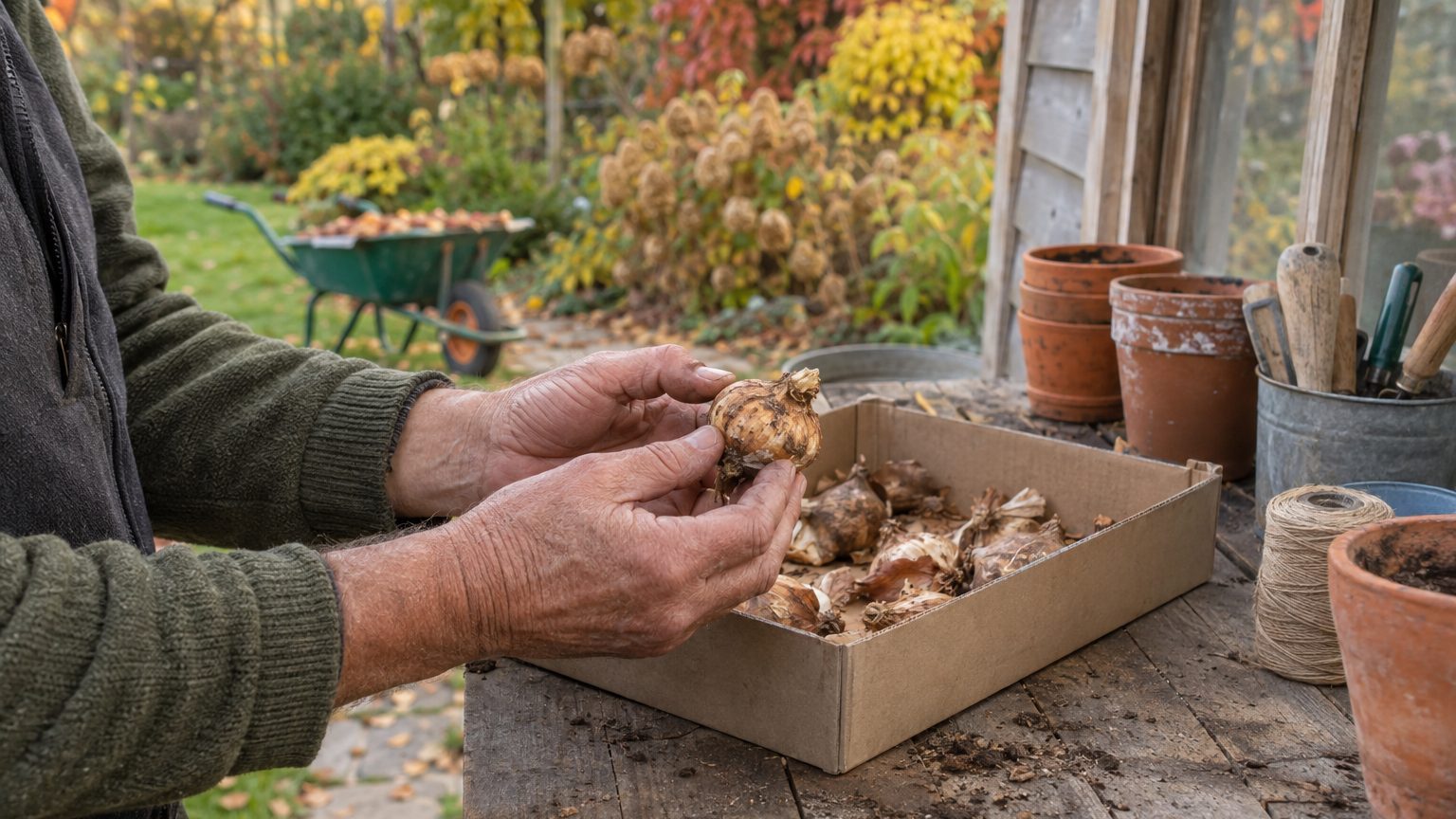
A plastic bag looks like a tidy home for bulbs. It isn’t. Gladiolus corms sealed inside one trap their own moisture, and moisture trapped inside will lead to rot, usually by midwinter.
Some of those corms may still be alive.
- Plastic bags trap moisture, which leads to rot by midwinter.
- Firm, heavy corms with dry husks are worth keeping; soft, moldy or hollow ones are not.
- Curing for 2-3 weeks in a single layer toughens the skin before storage.
- Cool, dark storage at 35-45°F with about 50% humidity is the target.
Rescuing the shriveled ones
Pick up each corm and squeeze it. A firm, heavy corm with a dry, papery husk is worth keeping, even if it looks a bit rough. Anything soft, sticky or fuzzy with mold goes straight to the compost, and so does a corm that feels hollow and light as a walnut shell. Shriveling has other causes too: temperatures above 50°F may cause the corms to shrivel or start growing too early, and air that is too dry will do the same.
The bag likely failed for a simple reason. Putting “wet” corms directly into storage is the number one cause of rot, and even a small amount of condensation can lead to a mold outbreak that ruins the whole batch. Purdue Extension adds that fluctuating temperatures cause moisture condensation on the corms. A bag on a garage shelf, warm by afternoon and cold by night, is a condensation machine.
One shriveled corm is normal, though. The wrinkled “pancake” at the base of a dug clump is last year’s mother corm, spent after feeding the new one. That one is supposed to look dead.
Drying first: the curing step most people rush
Dig after the foliage yellows or a light frost hits, using a fork so you don’t bruise the corms. Cut the stems back to 1 or 2 inches, and do not rinse or wash them.
Curing is the slow drying that toughens the corm’s outer skin. It creates a protective “skin” that prevents the corm from losing too much moisture over the winter and protects it from fungal infections. Spread the clumps in a single layer on a screen, a mesh tray or newspaper-lined cardboard so air reaches every side. Advice on temperature varies. Longfield Gardens suggests 60°F to 70°F, while Purdue’s horticulture specialists recommend 80-85°F for 2-3 weeks for best results. Either way, keep them out of direct sun, which can cook them.
Skip this step and rot becomes the likeliest outcome.
You’ll know the job is done when the husks feel like onion skin, the leftover soil brushes off as dust and the old corm snaps away from the new one with almost no effort. Throw the old corm out. Pull off any tiny cormels clustered at the base too, though Iowa State Extension says you can save these for propagation or discard them. Expect the cormels to take a few seasons before they flower.
How to store gladiolus bulbs for winter
The container matters as much as the curing. Open paper bags, old onion sacks, cloth bags and wooden trays with screen bottoms all work, and Purdue recommends stacking or hanging the containers so air can move among them. Old nylon stockings are a gardener’s classic: drop a corm into each toe, knot between them and hang the whole string from a rafter. Cardboard boxes also work if you keep the corms in a single layer or separate them with dry peat moss or shredded newspaper, so one bad corm can’t infect its neighbors.
Cool and dark is the target. Purdue puts storage at 35-40°F in low humidity, while most other guides stretch the range to 45°F. Longfield Gardens suggests holding humidity near 50%, since air that’s too dry shrivels corms and air that’s too damp invites mold. An unheated basement, a crawl space or a frost-free garage fits the bill, and corms must never freeze. A spare refrigerator’s crisper drawer is another option, provided it holds no apples.
Apples matter because ripening fruit releases ethylene gas that can damage the flower buds inside the corm. Mice, meanwhile, treat stored corms as a winter snack, which is another reason to hang the bags.
Label every bag before it goes anywhere.
Winter checkups, and who can skip all this
Open the storage area once a month. Remove any corms that show signs of rot before they contaminate the rest. A steady 40°F has a side benefit: thrips cannot survive or reproduce at these low temperatures, so a cold cellar does some pest control for free.
Gardeners in milder regions can skip much of this. In USDA Zones 8 through 11, corms can often stay in the ground under thick mulch, but in Zone 7 and colder the soil usually freezes deep enough to kill them. Container-grown gladiolus are best lifted regardless of zone. Potting soil stays soggy through winter, which makes rot more likely if the corms stay in the pot.
Keep the stored bags somewhere out of reach, too. Gladiolus corms can be toxic if ingested by pets or children, so a high shelf in the basement beats a low box by the garage door.
Sources : nagelglads.com | longfield-gardens.com