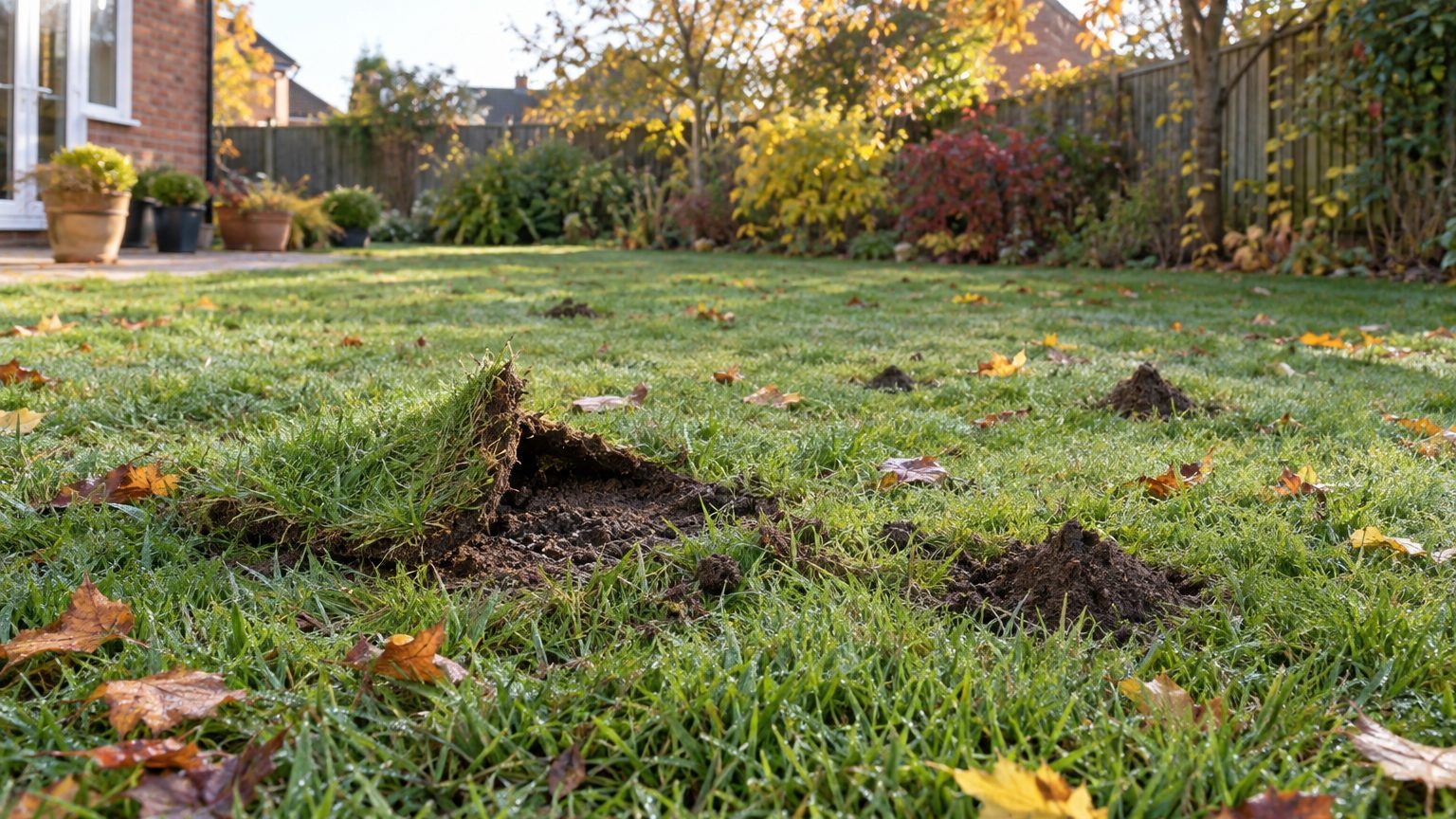
Shape settles the question faster than any trail camera. Dozens of small, shallow, cone-shaped holes scattered across the turf point to a skunk. Sod peeled back in flaps like a rolled-up carpet points to a raccoon.
Same meal, very different table manners.
- Skunks leave small, shallow, cone-shaped holes about 3 to 4 inches wide.
- Raccoons peel back strips of sod by gripping and pulling backward.
- Grubs at about five per square foot are enough to attract both animals.
- Beneficial nematodes and full-lawn grub treatment remove the food that brings them back.
Reading the damage at first light
Start with the skunk, because its work looks almost tidy. Skunks create holes by pushing their noses into the lawn and then using their front paws to dig out the area. The holes usually run about 3 to 4 inches in diameter, shallow, and cone-shaped, and they cluster because the animal works methodically through one grub-rich patch. Dig enough of them and they can coalesce into an area that looks like it has been tilled.
Raccoons play by different rules. Their claws and strong hind legs give them leverage, so they grip the grass and pull backward, peeling back the grass in search of grubs and churning the soil as they go. A raccoon or two can do a lot of damage to a lawn in one night. A mother traveling with grown kits can do far worse. What you find in the morning looks less like holes and more like a strip of sod someone tried to roll up and carry off.
A few other suspects muddy the picture. Squirrels dig to bury food, not to find it, and their damage is the least of the three. Moles leave raised ridges and tunnels rather than open holes, so if the soil is humped instead of pocked, look elsewhere.
Both skunks and raccoons work at night, so the evidence simply appears while you sleep.
Why they picked your lawn
The calendar matters. Damage peaks in late summer and fall, and spring runs a close second, when white grubs are large and close to the surface. Here is the part that surprises people. Grubs only need to hit about five or more per square foot to attract skunks and raccoons, a density lower than what it takes for the grubs themselves to visibly damage turf. That gap explains how a lawn that looked fine in August can be shredded by September.
Confirm before you spend money. Cut a square-foot flap of turf on three sides, peel it back, and count the pale, C-shaped grubs in the top couple of inches. Grub populations are patchy, occurring in irregular and isolated spots, so sample several places, especially next to the damage. If you find none, earthworms are the likelier draw, since digging does not always mean there are grubs in the lawn.
One more pattern is worth knowing. Skunks and raccoons remember productive ground, so a spot that paid off once tends to get revisited. Damage along a curb or fence line often means the animal is traveling a regular route and stopping at the same buffet.
Stopping a repeat visit
Grub control is the real fix, because it removes the reason for the visit. Beneficial nematodes, microscopic roundworms that hunt down, penetrate, and kill soil-dwelling insect larvae, are the non-chemical route. Conventional grub products work too, but timing counts: older turf research warned that some preventive insecticides are slow against large grubs, and that treating only part of a property can push digging toward untreated, leftover patches. Treat the whole lawn, and match the product to the season.
Don’t count on repellents.
Coyote urine, a popular choice at garden centers, has been described as not effective for discouraging lawn diggers. A better short-term tool is physical. Netting or wire fencing staked over the worst area makes each dig frustrating, and that can be enough to send the animal elsewhere. A determined raccoon can lift wire fencing or claw through bird netting, so anchor the edges firmly and expect to remove it for mowing. An organic fertilizer called Milorganite is also said to give temporary relief, apparently due to its unique odor.
Thick turf is the long game. A dense lawn is much more difficult for skunks and raccoons to overturn, which is why extension guidance suggests treating for grubs for a year or two while the stand fills in. Overseed thin spots, mow high, and water deeply so roots grip the soil instead of just the surface.
By now, early November, the pressure usually eases. As soil cools, grubs typically retreat deeper, and the nightly digging tapers off with them. That makes this a decent window for repairs. Flip any displaced sod back into place, press it down with your foot or a roller, and water it. Rake loose soil over small holes and scatter seed on the bare spots, or wait for spring if the ground is already frozen where you live.
Plan on a return visit next August or September, because animals that found a good grub patch once will check it again. Walk the lawn then and run the square-foot test before the first hole appears.
Sources : thecritterguy.ca | wegmansnursery.com