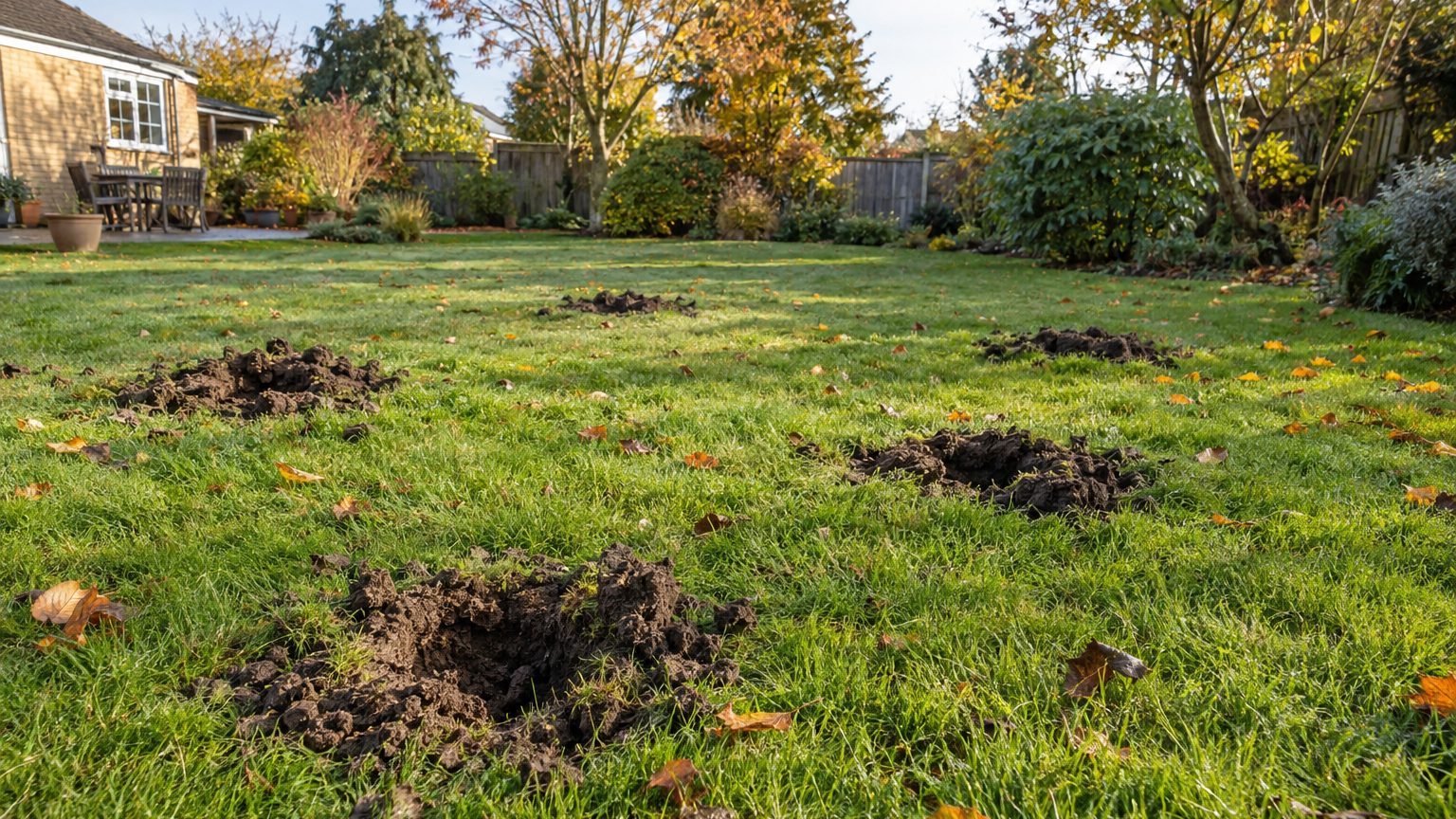
Skunks and raccoons top the list of animals that dig holes in a yard at night, and armadillos join them across the South. If you’re asking what animal is digging holes in my yard at night, the holes themselves usually give it away. Their shape, their size and the mess around the edges tell you more than the hour does.
Autumn is prime time for this.
Michigan State University Extension’s lawn and garden hotline gets the “what’s digging up my yard?” question constantly. Damage often increases in the fall and spring, with animals driven by two primary motivations: food and shelter. Late October fits that pattern. Animals are fattening up before cold weather, and a lawn full of grubs and earthworms is an easy meal.
- Shallow craters ringed with loose soil, about 1 to 4 inches wide, usually come from skunks digging for grubs and earthworms.
- Raccoons lift and flip sod like a rug and enlarge holes to make dens.
- Armadillos dig 3 to 5 inch holes overnight, and more than 90 percent of their diet is insects.
- Moles leave raised ridges and conical mounds, not open holes.
Read the Hole Before You Blame the Animal
Start with the small, tidy craters. Shallow holes surrounded by a ring of loosened soil, about the size of a skunk’s nose, come from digging for earthworms, grubs and other soil insects. Estimates of the hole width run from about 1 inch to 4 inches. In extreme cases, the ground may look tilled, with numerous small holes in the same area. A lawn that looks rototilled in patches is a classic skunk signature.
Raccoons work differently. They have strong, dexterous front paws, and they may neatly lift and flip sod over, and enlarge existing holes to create a new den. If you find a flap of turf peeled back like a rug, suspect a raccoon. They’re opportunistic feeders, eating plant and animal matter, garbage, pet food, bird seed and vegetable gardens. So the lawn isn’t always the real target. The bird feeder or trash can may be what drew the animal in.
Armadillos leave a different calling card. A hungry armadillo can dig numerous holes 3 to 5 inches wide and 1 to 3 inches deep in a lawn overnight. Texas A&M AgriLife Extension reports that more than 90 percent of an armadillo’s diet is insects, along with earthworms and other invertebrates. Look for three-toed tracks with claw marks in soft soil nearby.
A single armadillo can pockmark a lawn in one night.
The Suspects That Look Guilty but Usually Aren’t
Moles get blamed for everything, yet they don’t leave holes so much as mounds. Their digging produces conical mounds around their holes and raised ridges over their tunnels. If your yard has ridges snaking across the grass, you’re looking at a mole, not a skunk.
Voles are another case. They often get lumped in with night diggers, but they feed and tunnel day and night. The giveaway is runway paths an inch or two wide connected to neat round holes near your home’s foundation, walkways, or slabs. They are usually after roots and bulbs, so they matter a lot if you’ve just planted tulips.
Groundhogs make the biggest holes, but they are daytime animals. Their main burrow entrance is 10 to 12 inches across, with burrow systems that can run 30 feet. A hole that size appearing overnight probably means a groundhog moved in recently, or an animal took over an existing den. University of Missouri wildlife specialists point out that opossums, snakes and even coyotes are more likely to use existing animal holes for their dens than to dig their own.
Then there’s the least dramatic suspect. As one extension wildlife specialist put it, “It could just be your neighbor’s dog.”
Catch It in the Act, Then Take Away the Reason to Dig
Holes alone don’t always name the culprit. The cheapest way to settle it is a trail camera aimed at the damaged bed overnight, since a camera watching the bed overnight shows which animal is visiting it. A basic model costs less than a single pest control visit. Two or three nights of footage usually ends the guessing.
Once you know the animal, go after what’s attracting it. Skunks, raccoons and armadillos are mostly there for grubs and other soil insects, so a lawn full of them is a standing invitation. Treating the grubs, or having a professional do it, takes away the menu. Motion-activated lights and sprinklers can also startle nocturnal visitors into moving on.
Cleaning up the free snacks matters just as much. Bring pet food in at dusk, latch trash can lids and rinse the seed hulls off the patio beneath the feeder. One nuance on shelter: skunks may build a home if an area is rich in food sources by burrowing or digging a hole. That makes porches, decks and sheds the next places to check. Make sure a burrow is empty before you block it, because sealing in a mother and her young creates a bigger problem.
Trapping is a last resort, and the rules vary by state. In Florida, for instance, the state wildlife agency keeps a list of licensed nuisance wildlife trappers. Your county extension office can tell you what’s legal locally and can often identify the animal from a few photos of the holes. And leave skunks alone. They only spray when they’re threatened, so a calm retreat indoors is the safest response.
Patience also helps, since skunk digging often fades on its own once the grubs under a patch run out. If fresh holes keep showing up for more than a couple of weeks, the animal has probably found a steady food source or a den nearby. That’s the point to call your extension office or a licensed wildlife professional.
Sources : yahoo.com | smithspestmanagement.com