Spider mites on houseplants are about the size of a period on this page, and the “red spider” nickname is misleading. The usual culprit, the twospotted spider mite, ranges from light green to orange-red, with two dark spots on its sides. Most growers never spot the mite itself, only what it leaves behind.
The first sign is a stipple.
Mites pierce leaf cells and drink the contents, chlorophyll included. Light infestations show up as tiny yellowish-green speckles, often starting on the lower leaves. Heavy ones turn foliage greenish-yellow, then tan or brown, and the plant drops leaves. Fine webbing between leaf and stem usually means the colony is already large.
Confirming the culprit before you spray anything
Dust, sunburn and thirsty roots can all cause speckled leaves, so confirm before you treat. Hold a sheet of white paper under a suspect leaf and tap the foliage firmly. Tiny specks that crawl slowly across the page are your answer.
Then crush one with a finger. A green streak points to a plant-feeding mite, while a yellow or orange streak suggests a beneficial predator that you want to keep.
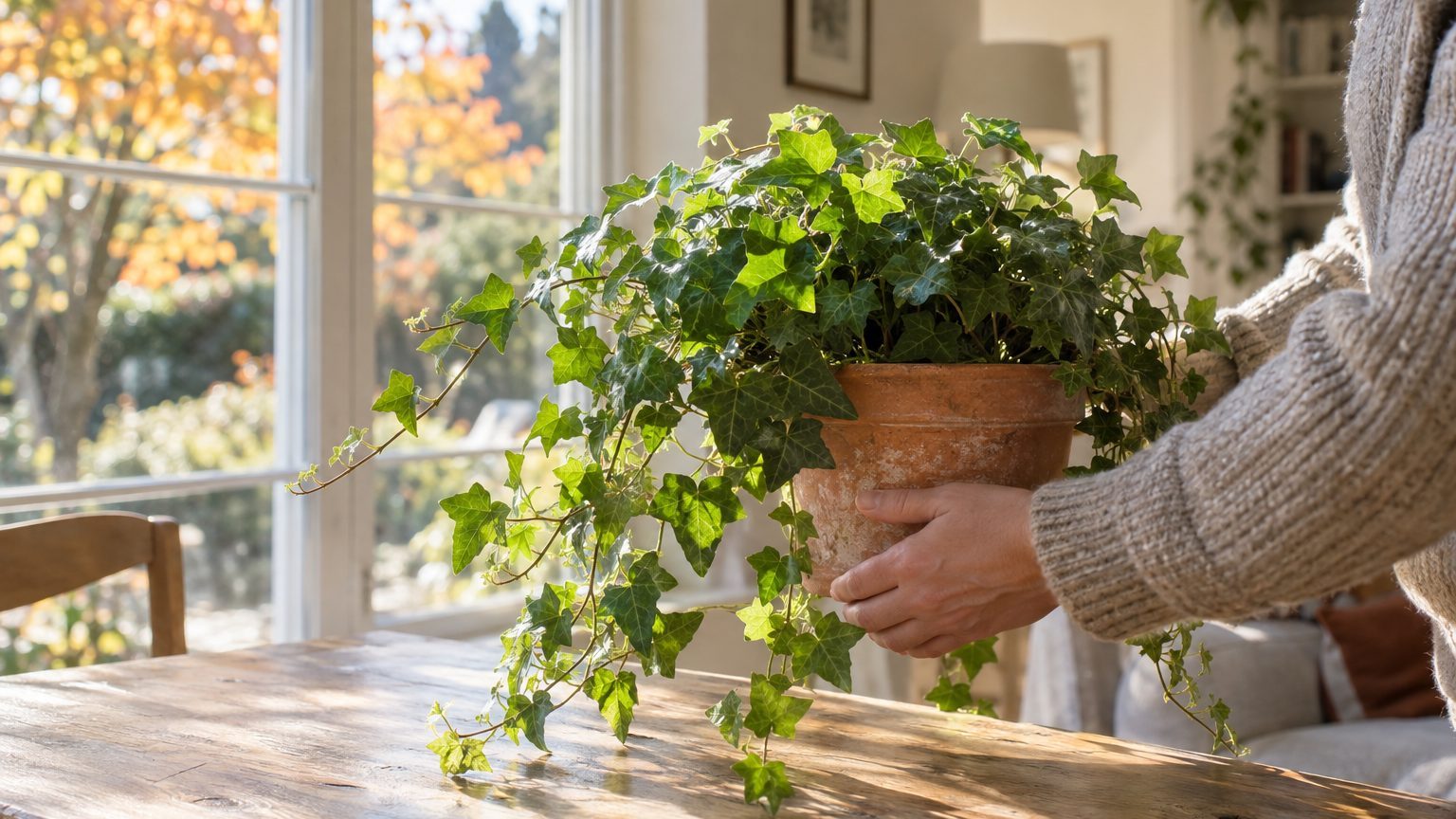
Outdoor landscape guidance treats ten or more mites per sample as the point to act. Indoors, with no weather to knock populations back, I’d treat any confirmed colony. Ivy and Norfolk Island pine are especially susceptible, and palms and calatheas are frequent hosts too. A mite can feed on nearly any houseplant, so no plant is safe.
Why a heated living room suits them
Mite populations climb fastest between roughly 68°F and 86°F with relative humidity of 30 to 50 percent. That describes a typical American home with the furnace running. Mites are not a summer-only problem indoors; they can persist all year.
The math is unforgiving. Eggs hatch in as few as three days, and egg to adult can take as little as five days in warm, dry conditions. A female can lay up to 20 eggs a day and over 100 in her lifetime.
Females don’t even need a mate to reproduce.
Other triggers are easy to overlook. Plants stressed by missed waterings are more attractive to mites, and a new plant from the nursery is a common way to bring them home. Some insecticides make things worse: pyrethroids and malathion can cause flare-ups by killing the mites’ natural enemies. Systemic products can do the same.
Treatments that work, in order of escalation
Start with isolation. Move the plant away from healthy neighbors, then take it to the shower or bathtub and blast it with a forceful spray of lukewarm water, underside of every leaf included. Prune the worst-hit leaves first. Repeat the rinse every few days, because water alone rarely clears an established colony.
When rinsing stalls, switch to insecticidal soap or horticultural oil. Soap is often the first choice for most spider mite problems. Both products kill by contact only and leave no residue, so you need to coat the upper and lower leaf surfaces. Plan on two to three applications about five to seven days apart to catch the eggs that hatch between sprays.
Test first on a single leaf. Some plants are sensitive to soaps and oils, and water-sensitive species like African violets dislike a soaking.
The chemical aisle is less helpful than the labels suggest. Few insecticides control spider mites, resistance develops quickly, and products labeled only for “mite suppression” tend to be weak. True miticides are hard to find or not sold to homeowners. Predatory mites are an option, but in hobby setups they only work well when humidity stays above 70 percent, which is rarely true in a living room.
Sometimes the kindest move is to let go. If mites cover most of the plant, discarding it is the recommended call. Slip a plastic bag over it before carrying it out so the survivors don’t hitchhike to your other plants.
Making your home less inviting
Prevention is mostly about air and attention. Grouping plants, using pebble trays or running a humidifier can push humidity toward 50 percent or higher, which slows mite reproduction. Keep plants away from heating vents. Water when the top half inch of soil is dry, so the plant is never stressed.
Check weekly, and make the underside of the leaf the first place you look. Keep new arrivals in a separate room for a few weeks before they join the collection. A damp cloth wipe now and then removes dust, which also favors mites.
One last detail explains a lot of failed treatments: spider mites are arachnids, not insects, so many standard insecticide labels simply don’t apply to them.
Sources : greenerynest.com | extension.umn.edu