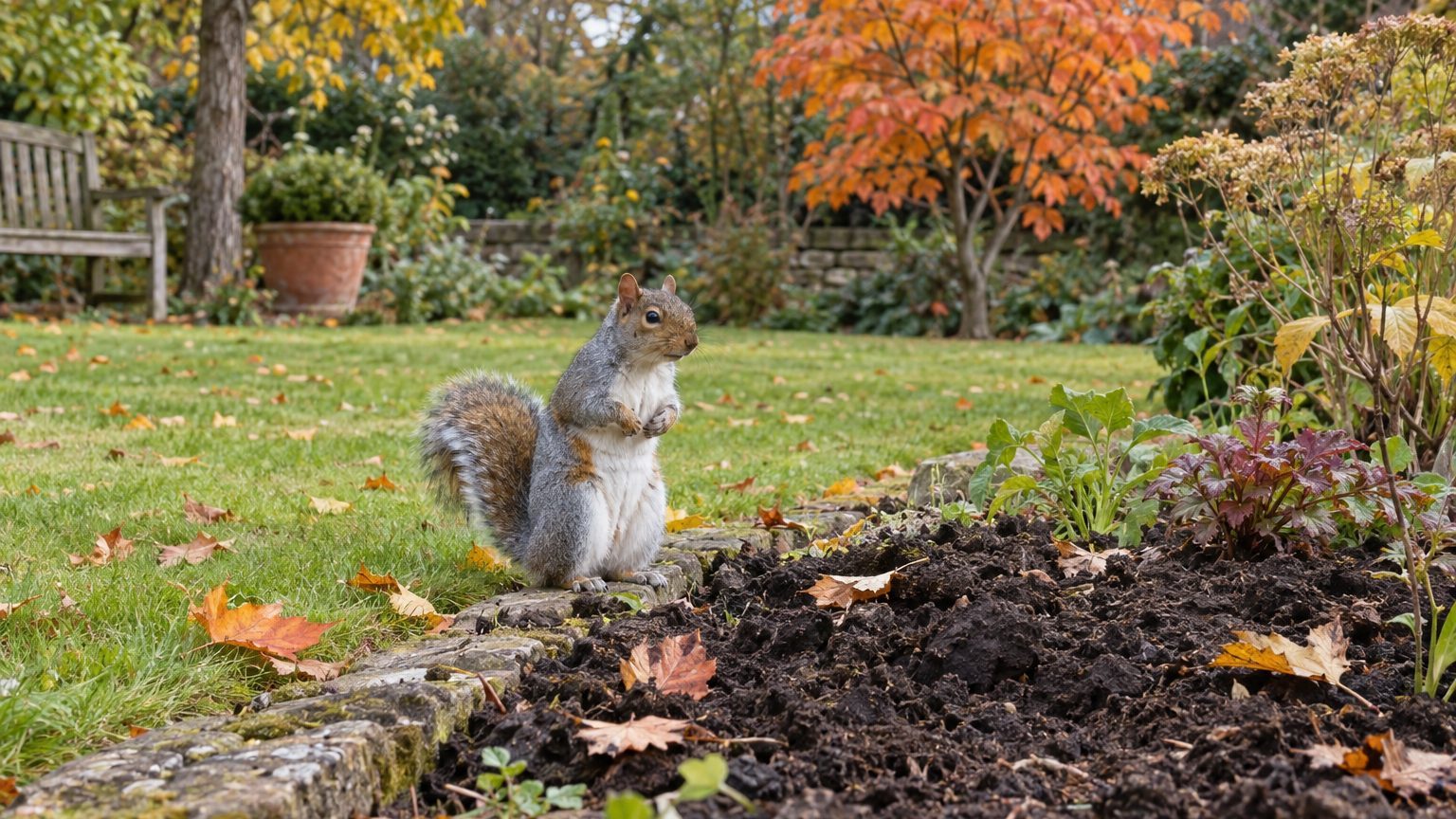
Squirrels dig up tulip bulbs for two reasons: they are hunting for food, and they are burying their own stash nearby. Tulips just happen to look, smell and feel like something worth stealing. The good news is that a handful of simple tactics, mostly done at planting time, will keep most of your bulbs in the ground.
Why tulips get singled out
Fall is peak caching season. Gray squirrels bury thousands of acorns and nuts each autumn, and freshly turned garden soil is an irresistible invitation. Loose, bare dirt is easy to dig, and a newly planted bed announces itself like a sign.
Then there’s the bulb itself. Tulip bulbs are packed with starch, which makes them a calorie-dense snack when other foods run short. Squirrels often dig one up, take a bite or two, and leave it lying on the surface to rot.
Tulips and crocuses are the usual victims. Daffodils, alliums, hyacinths and fritillarias, by contrast, contain compounds that taste bad or irritate mouths, so squirrels mostly leave them alone.
Not every missing bulb is a squirrel’s doing. Voles and chipmunks tunnel under the surface and eat bulbs from below, leaving no visible hole. If the bulbs vanish without a crater, suspect them instead, and plan on a barrier that works underground.
Seven ways to keep the bulbs where you planted them
1. Plant deeper. The standard advice is about three times the bulb’s height, which usually means 6 to 8 inches for tulips. Going toward the deep end makes the bulbs harder to find and more work to reach. It also helps the plants stay perennial in many climates.
2. Lay wire mesh over the bed. Chicken wire or hardware cloth pressed flat on the soil, then pinned down with landscape staples, stops digging cold. Cut holes or leave the edges open so shoots can come through in spring. Or remove the mesh in early spring, once the squirrels have lost interest.
Cheap. Effective. Ugly, for a few months.
3. Build a bulb cage. For a small planting, bend wire mesh into a basket or a lidded tray, set the bulbs inside and bury the whole thing. The roots grow through the openings, and the bulbs stay protected on every side. This is also the best answer to voles, since the cage covers the underside.
4. Cover the surface after planting. A layer of stones, pine cones, or prickly cuttings such as holly leaves or rose canes makes digging unpleasant. Squirrels dislike unstable, spiky footing. A 2-inch layer of mulch over the area helps too, though it works best when combined with something harder to move than leaves.
Tamp the soil firmly first. Fresh, fluffy dirt is the cue that tells a squirrel something was buried here.
5. Use a taste or scent deterrent. Cayenne pepper, crushed red pepper flakes, or commercial repellents based on capsaicin can be sprinkled over the soil or dusted directly on the bulbs. Results vary. Rain washes the stuff away, so reapply after every storm, and expect to repeat it weekly during the worst weeks of fall.
Spraying bulbs with a repellent before planting adds a layer of protection that rain can’t reach. Wear gloves, and keep it away from your eyes.
6. Plant what they dislike alongside tulips. Interplanting daffodils, alliums or fritillarias among the tulips won’t make a wall, but it can break up the foraging pattern. Squirrels poking around a bed of bad-tasting bulbs sometimes give up before reaching the tulips. A border of strongly scented plants such as garlic or hyacinths adds a little more insurance.
7. Give them something better to do. A feeder stocked with corn or peanuts, placed well away from the bed, can redirect a squirrel’s attention. Some gardeners swear by it, others find it just brings in more squirrels. Test it on a small scale before committing, and keep the food a good distance from anything valuable.
Timing, and what to do when it fails
The worst window runs from planting through the first hard freeze. Once the ground freezes, squirrels stop digging, and the bulbs are mostly safe until spring. In much of the northern US, that means waiting to plant until late October or November, when the soil is cool enough that bulbs won’t sprout early. A later planting also shortens the time your bed sits exposed.
Clean up after planting. Papery bulb skins and scattered soil are scent trails, so sweep or rake them away. Squirrels also notice disturbed ground, so smooth the surface and press it down.
Combining two methods works better than relying on one. Deep planting plus a wire cover, for example, handles most of the damage even in neighborhoods with lots of squirrels.
If a bulb does get dug up, don’t panic. Replant it right away at the proper depth if it’s still firm, since bulbs can survive a few hours of exposure. Discard anything soft or moldy.
Be realistic about the odds, too. Some losses are normal in a yard with oak trees, and a few missing bulbs rarely ruin a display. Plant a few extras, and think of them as a tax paid to the neighborhood wildlife.
One last detail for next fall: squirrels cache hardest in years with heavy acorn crops, so a big nut harvest on your street is a good signal to add the wire mesh before the first bulb goes in.