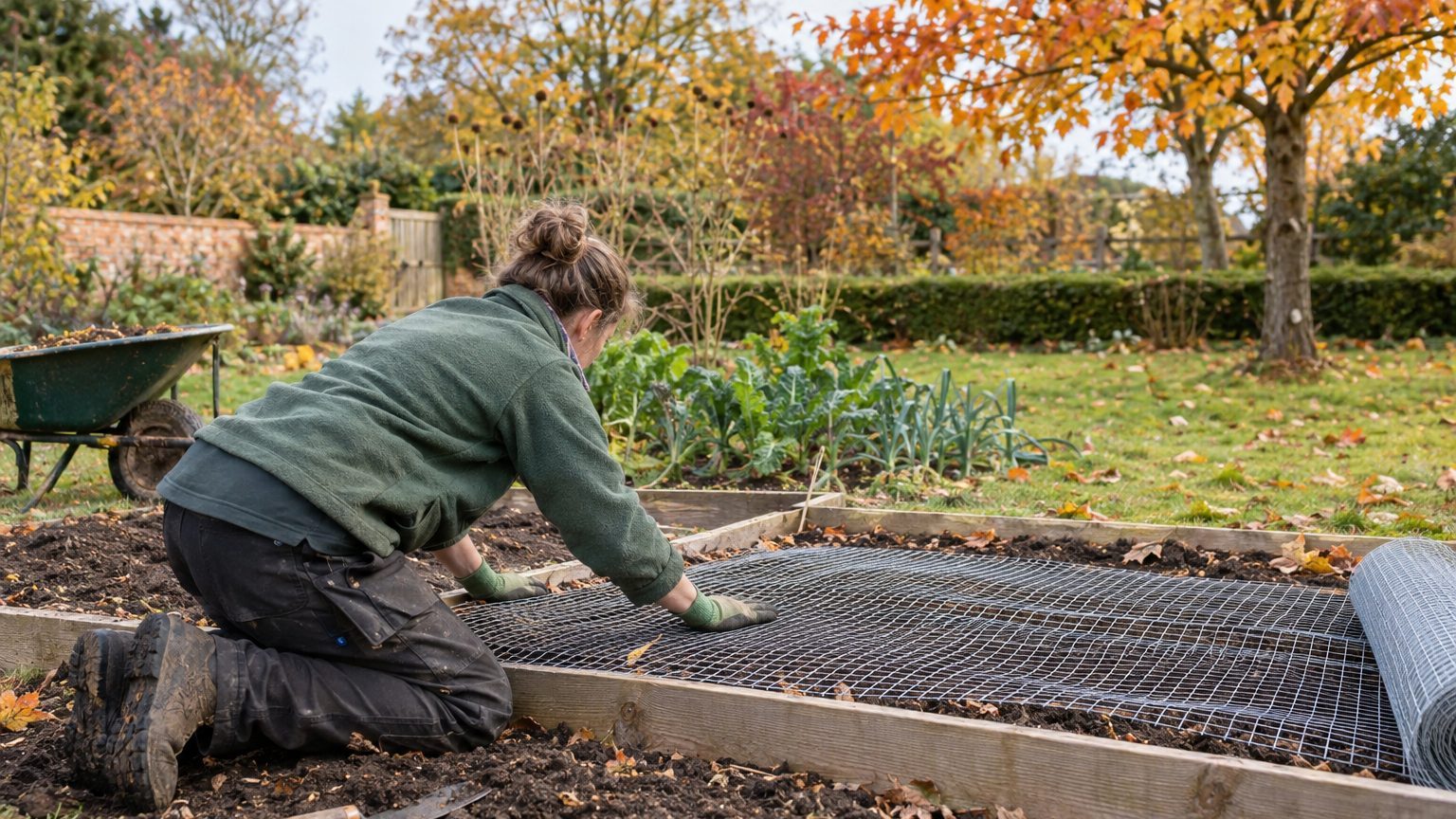
The most reliable way to stop squirrels from raiding a freshly planted bulb bed is a flat sheet of wire mesh. Iowa State University Extension calls chicken wire or hardware cloth the best way to prevent digging, with bricks or other heavy objects holding it in place. Everything else is backup.
Wire first, then layers of insurance.
- Flat wire mesh laid over or under the bulbs is the most reliable protection, according to Iowa State University Extension.
- Planting at least 6 to 8 inches deep keeps squirrels from reaching large tulip bulbs.
- Daffodils contain lycorine, which makes them toxic and unappealing to squirrels, so planting them around tulips helps.
Why Fresh Bulb Beds Attract Squirrels
Bulbs are most vulnerable in fall right after planting, when the soil is still soft and worked up. Squirrels often chance upon bulbs while burying nuts in loose ground, or they get drawn in by planting debris like bits of papery bulb skin and scented scraps from the bag. Your tidy new bed looks, to a squirrel, like a pantry with the door left open.
Cleanup matters as much as planting. Sweep up every husk before you leave the bed, then tamp the soil and water it in. Wet dirt packs down and makes digging less fun. Daffodils get skipped because they taste terrible to squirrels, while tulips and crocuses are worth the effort of sniffing out.
Wire Mesh: Three Ways to Install It
The simplest approach is the sandwich. Dig the hole or trench to the proper depth, set the bulbs, cover them with a couple of inches of soil, lay the mesh, then fill in the rest. Tulip shoots find their way through the holes in spring, but squirrels can’t dig down to the bulbs. Half-inch hardware cloth is the standard recommendation, and looser chicken wire also does the job.
The lazy version goes on top of the soil. Cut a piece that extends about 6 inches past the planting area, then secure the edges with garden staples or heavy rocks. A thin layer of mulch hides it. Iowa State suggests removing it promptly in early spring before the tulip foliage begins to emerge, although mesh with holes of at least 1 inch lets most tulip and daffodil shoots grow through without trouble.
Scattered clumps call for bulb cages. These small mesh boxes hold one to three bulbs. You can buy them, or cut a piece of mesh, fold it into a box, add the bulbs with a bit of soil, and bury the whole cage at the recommended depth.
Old window screens work too.
Garden writer Judy Glattstein lays old screens in frames on the ground over newly worked soil. They weigh enough to foil a squirrel, yet air and rainfall still get through. For a one-weekend project, that beats a trip to the hardware store.
Don’t plan on guarding the bed all year. Once shoots emerge and the bulbs start growing, squirrels typically lose interest.
Depth, Mulch and Other Ways to Hide the Evidence
Depth is the quiet defense. For most large tulip bulbs, Longfield Gardens recommends planting at least 6 to 8 inches deep. Gardening Know How goes further, suggesting 8 to 10 inches instead of the usual 4 to 6, since the extra soil keeps paws out. Check your drainage first, because deeper planting in soggy ground trades one problem for another.
Mulch can disguise the freshly disturbed dirt. Fluffy straw or leaves are easy for squirrels to paw through, so bark chips or a heavier mulch are better.
Repellents come next, and the evidence is thinner. Gardening expert Melinda Myers says some gardeners report success with cayenne pepper, applied before the digging starts and reapplied as needed. Rain washes it away, so expect to refresh it every couple of weeks. Longfield Gardens notes that pepper can be painful if it gets into a squirrel’s eyes, and it suggests a mix of garlic powder and black pepper as a gentler scent warning.
Kitchen-cabinet tricks are shakier. Coffee grounds may deter pests briefly, but there is little scientific evidence that they work long term. Grated, strongly scented soap gets enthusiastic reviews from some gardeners, yet results can vary. I’d treat all of these as a bonus on top of mesh, never a replacement for it.
Plant a Bodyguard Squad
Some bulbs defend their neighbors. Daffodils contain a bitter substance called lycorine, which is toxic if eaten, and most animals, including deer, rabbits and squirrels, leave them alone. Plant a border of daffodils around your tulips, or mix them together in the same hole. Alliums add a sulfur-based scent barrier, and crown imperial fritillaries give off a musky odor that rodents find strongly repellent.
Tulips tucked among daffodils get protection by association.
Pots need their own plan. Leave about two inches between the soil surface and the rim, then cut a circle of hardware cloth that fits inside the rim. Set it over the soil and top it with decorative gravel or mulch, and the tulips will grow through the mesh while squirrels can’t dig. A pot on a porch is easy to cover, so it should be the easiest part of the whole job.
One last nuance for stubborn yards. Squirrels find most tulip varieties tasty, but they tend to be less interested in species tulips, the smaller, wild-type kinds. If the neighborhood squirrels have already hit your garden once, pair those species tulips with a ring of daffodils and a sheet of mesh, and you’ll have covered every angle.
Sources : gardeningknowhow.com | yardandgarden.extension.iastate.edu