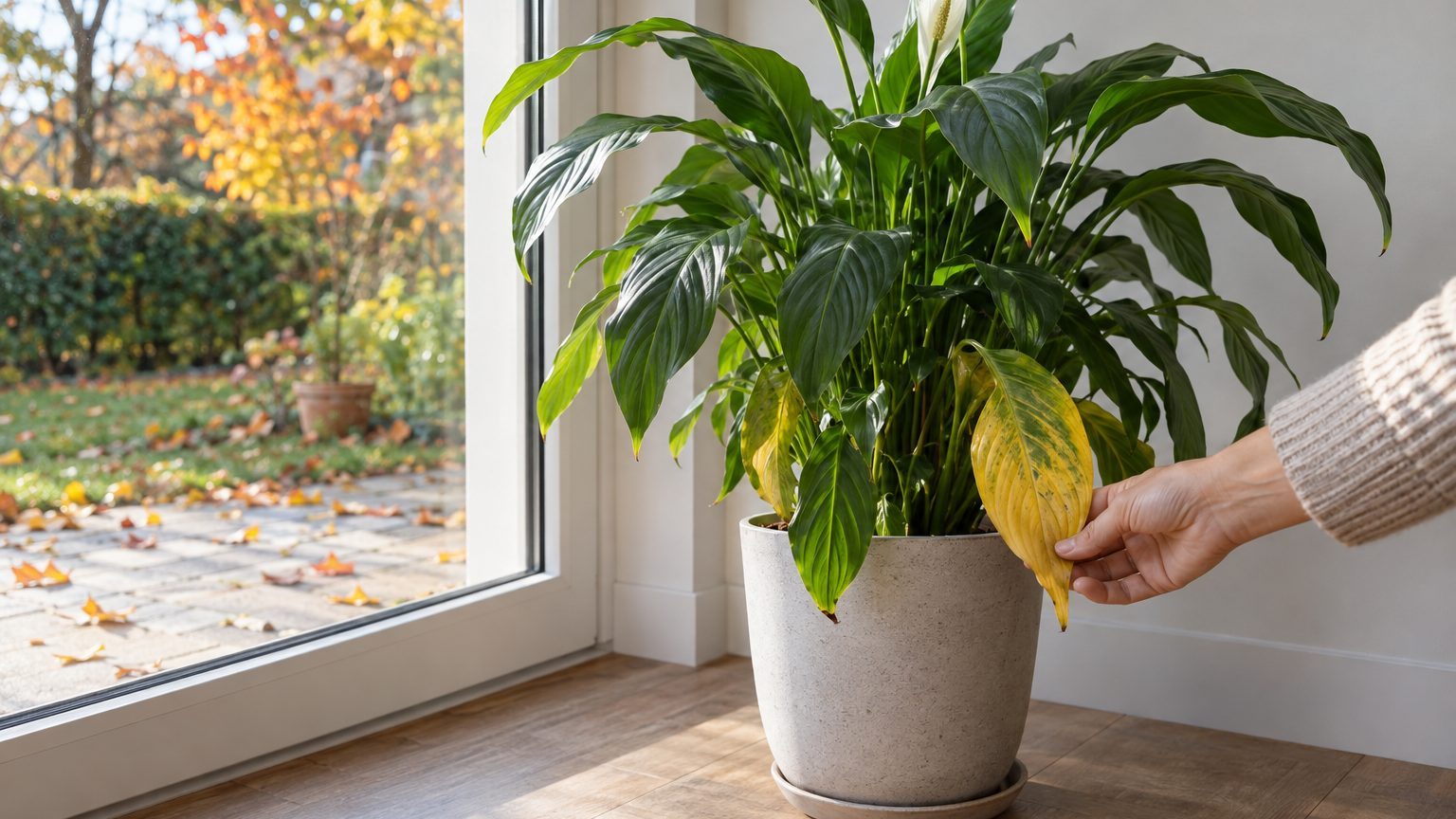
The question of why are my houseplant leaves turning yellow has a frustrating answer: it depends. A University of Florida extension specialist compares yellow leaves to coughing in humans. Neither one is a definitive diagnosis, since a variety of issues can cause both.
The pattern tells you more than the color.
Start with where the yellow shows up
Look at which leaves are changing before you touch the watering can. One older leaf near the bottom can yellow while the rest of the plant looks healthy. That’s often just age, because lower leaves get less light as new growth fills in above them. Nothing to fix there. Pluck it and move on.
Several lower leaves at once is a different story, and the shade of yellow matters. Nitrogen deficiency turns older, lower leaves a uniform pale green to yellow, because the plant pulls this mobile nutrient out of old leaves to feed new growth. Iron deficiency leaves a distinctive pattern called interveinal chlorosis, where the tissue between the veins goes yellow while the veins stay green. Magnesium deficiency causes the same vein pattern but hits older leaves first. So the vein test is quick: green veins on yellow leaves mean a mineral problem, not a watering one.
If every leaf fades to pale green or yellow uniformly, the usual culprit is too little light. Yellowing on new growth can point to root problems, moisture or light that isn’t quite right, nutrient issues, or pests. That’s a wide net, which is why new-leaf yellowing deserves a closer look at the roots.
Then there is the stippling test. Pest damage tends to show up as a fine scatter of pale dots across the leaf rather than one solid yellow, because sap-sucking insects drain individual cells. Flip a leaf over before you decide it’s a watering issue.
Water, light and drafts: the usual suspects
Overwatering tops nearly every list. When soil stays too wet, roots suffocate and can’t deliver nutrients, so lower leaves yellow and feel mushy. University of Illinois Extension notes that indoor plants use water slowly in low light, so soggy soil rots roots and yellows leaves faster than almost any other mistake. That matters right now. As days shorten, the same watering schedule you kept in July delivers far too much water for a plant that has nearly stopped growing. Push a finger two inches into the mix, and water only when it feels dry at that depth.
Underwatering looks different: dry, crispy and yellow rather than soft.
Light cuts both ways. A plant that gets too little light often yellows and drops its lower leaves, which receive the least light. Too much is just as possible: intense sun can turn leaves pale yellow or even bleached white, and sunburn often appears as crispy, brown patches. In winter, when light levels drop, houseplants benefit from brighter positions such as a south-facing windowsill.
Temperature and container size get blamed less often than they should. Yellowing in large numbers can come from overpotting (a container that’s too big), a spot that’s too cold, a sudden drop in temperature or exposure to drafts. A pot near a leaky window or a blast from a heating vent can cause it. A plant you just brought home or rearranged may also yellow a few leaves while it adjusts to changes in light, temperature and moisture. Give it a few weeks before you panic.
Pests, disease and the false alarms
Spider mites, aphids and mealybugs suck sap from leaves, causing them to yellow and weaken. Look closely on the leaf undersides for tiny webs, sticky residue or small insects. A shower rinse, a wipe with a damp cloth and a week of isolation from your other plants handle most light infestations. Insecticidal soap covers the rest.
Disease is the scarier explanation, and the rarer one. Dark spots with yellow margins may be fungal leaf spot. The University of Florida specialist says that when something is wrong with a houseplant, the explanation is most likely abiotic, meaning environmental rather than infectious. Most diseases can’t be treated, so keeping the plant healthy should be the priority. If you do spot infected leaves, pinching them off helps keep the pathogen from spreading.
Feeding is the last piece. If the yellowing fits the nutrient pattern above, a light, balanced houseplant feeding usually corrects it. Heavy doses on a stressed plant make things worse, and a plant with rotting roots can’t use fertilizer anyway.
A ten-minute diagnosis
Run through the same short checklist each time and you’ll rarely guess wrong:
- Note which leaves yellow: old, new or all of them.
- Check the leaf texture: mushy points to too much water, crispy to too little or too much sun.
- Poke the soil two inches down and lift the pot to judge its weight.
- Inspect the leaf undersides and stems with a flashlight for pests.
Start with the cheapest explanation, and that’s usually water. If the soil is soaked and the plant has been sitting in it, slide the root ball out of the pot. Healthy roots are firm and pale, and rotted ones are brown and soft. Trim the bad ones, repot into fresh mix with drainage holes, and hold off on watering for a bit.
A yellowed leaf won’t turn green again, so judge your fix by the new growth. Remove the damaged leaves if they bother you, but leave partly yellow ones in place while they still feed the plant. If fresh leaves unfurl a healthy green over the next month, you found the cause.
Sources : deepgreenpermaculture.com | plantfix.org