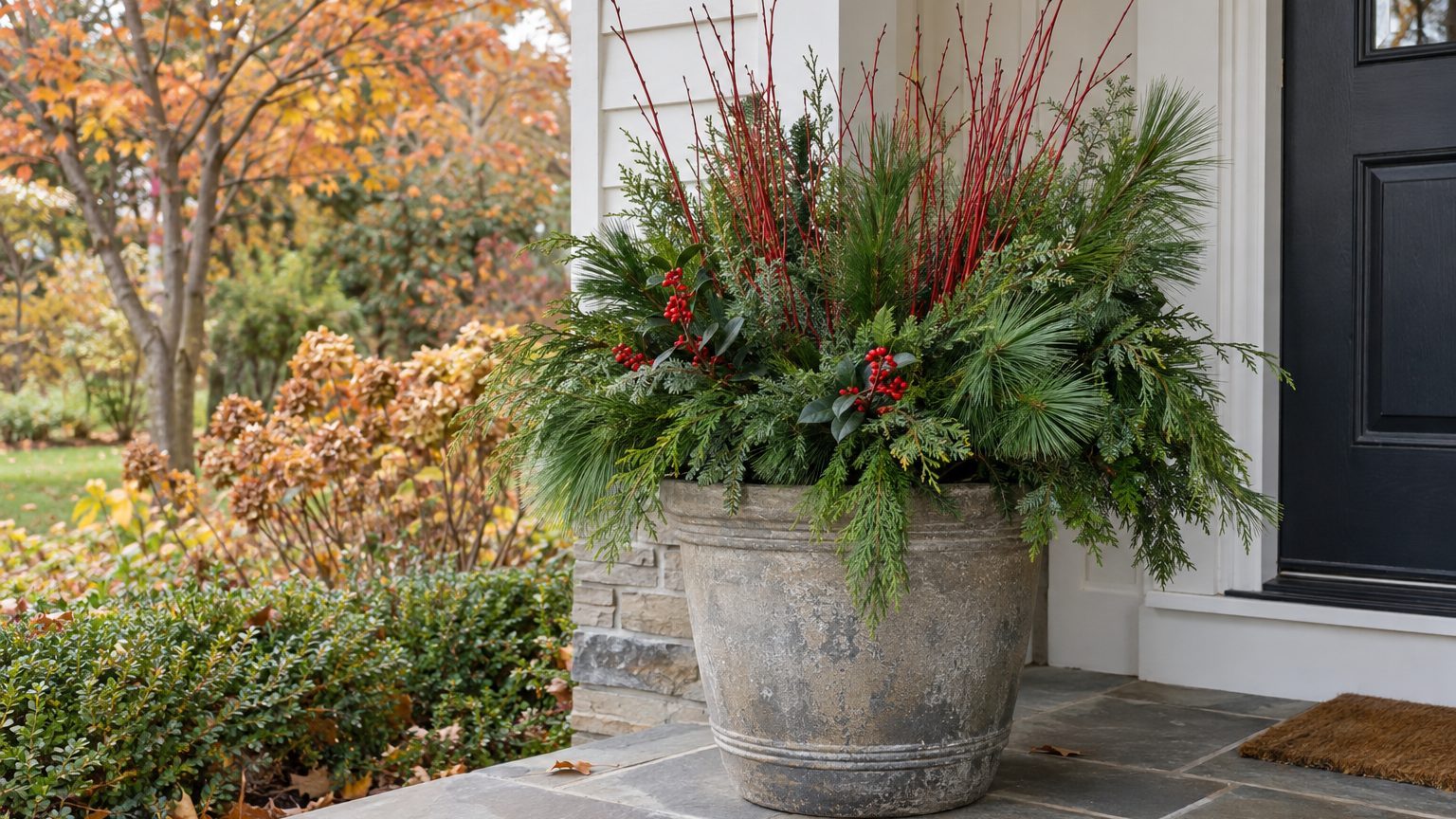
The mums are finished, and the pot on your porch is a tangle of brown stems. Pull them out. A winter container built with evergreen boughs, bare stems and berries can look good from late November until the potting mix thaws in spring, which is roughly four months of curb appeal from about an hour of work.
Winter pots are built, not planted.
Start with the pot and the soil
Whatever you use needs to be frost-proof, and that rules out a lot of the thin glazed ceramic pots people keep on the patio in July. Thick resin, fiberglass, wood and heavy stone survive freeze-thaw cycles far better. If you’re reusing a pot from the growing season, cut back what’s left of the fall plants and keep the soil as your base. With a new container, use a dense potting mix, water it thoroughly, and let it settle before adding any stems, as Penn State Extension advises.
Timing matters more than most people expect. Evergreen boughs typically go in during mid to late November and stay until spring. The potting mix will freeze solid, so you can’t rework the arrangement in January. Whatever you build now is what you’ll live with, which is a good reason to take your time.
Here’s a trick that makes the whole thing sturdier. Fit a piece of chicken wire over the soil, then push stems through it. Cut stems about 8 inches long and roughly finger-width thick, and the wire acts like a florist’s frog, holding everything at the angle you set. Without it, the first windy day can tip your careful design sideways.
Choosing branches, conifers and berries
Conifers are your foundation, and the choice is wider than the usual spruce tips. University of Illinois Extension lists white pine, yew, fir, arborvitae, holly and spruce as cut evergreens that hold up for many weeks. Mixing two or three textures works better than one. Long, feathery cedar or juniper can spill over the rim, while a stiffer fir gives structure. A living, conical dwarf spruce planted in the center of a larger pot gives you an anchor that outlasts the cut greens and can go into the ground in spring.
Stems come next, and they need a dark backdrop to show.
Redtwig dogwood, birch branches and curly willow are the classics, and the Illinois horticulturists recommend them specifically for winter pots. Pussy willow adds a softer, fuzzier note. Thin branches vanish against a bare wall, so pack a solid layer of evergreen behind them. Then the scarlet or yellow bark pops, even on a gray day in February.
Berries are where a pot goes from tidy to memorable. Winterberry holly (Ilex verticillata, hardy in zones 3 to 9 depending on the cultivar) keeps its red fruit after the leaves drop, which makes it the standard choice for cut branches. If you plan to grow it rather than just cut it, you need both male and female plants nearby to get fruit. For small pots and window boxes, American wintergreen forms tight clumps of evergreen leaves with large red berries. Northern bayberry offers smoky blue fruit, and songbirds will eat it.
Cut responsibly. Take a few stems from each shrub rather than stripping one plant, and never gather berries or seed heads from invasive species, a warning Penn State Extension makes explicitly.
Assembly and keeping it fresh
Work from the outside in and from big to small. Start with the largest stems, push the cut ends through the wire and deep into the soil, and move roughly from bottom to top. Put the tallest branches or birch poles in the middle, then ring them with shorter greens angled outward so the pot looks full from every side. Fill gaps last with pinecones, seed pods and berry clusters. Giving each stem a clean, fresh cut before it goes in helps it take up moisture, and that extends its life.
Push stems deeper than feels reasonable.
Stems that sit an inch or two in frozen mix will lean, droop or blow out within a week. Three or four inches of contact with the soil keeps them standing through ice and wind. Penn State’s advice is to keep a few spare branches on hand and tuck them in the next day, once you see how the arrangement settles. Gaps often show up only after you step back.
Evergreen cuttings lose moisture fast in cold, dry wind. Many gardeners spray them with an antidesiccant such as Wilt-Pruf once the pot is finished, which slows that loss. When a hard freeze is forecast, a frost cloth over the arrangement gives it extra protection, and wrapping the pot itself in burlap adds some insulation for the roots of any living plants. Place the pot where it gets some shelter, such as a porch corner or beside the house, rather than at the end of an exposed driveway.
One color caveat. Yellow-fruited hollies like Japanese holly cultivars look gorgeous next to gold-toned sawara cypress, but their berries tend to form earlier and fade sooner on the branch than red winterberry. If you want color through February, go red.
Sources : aol.com | stylednestliving.com