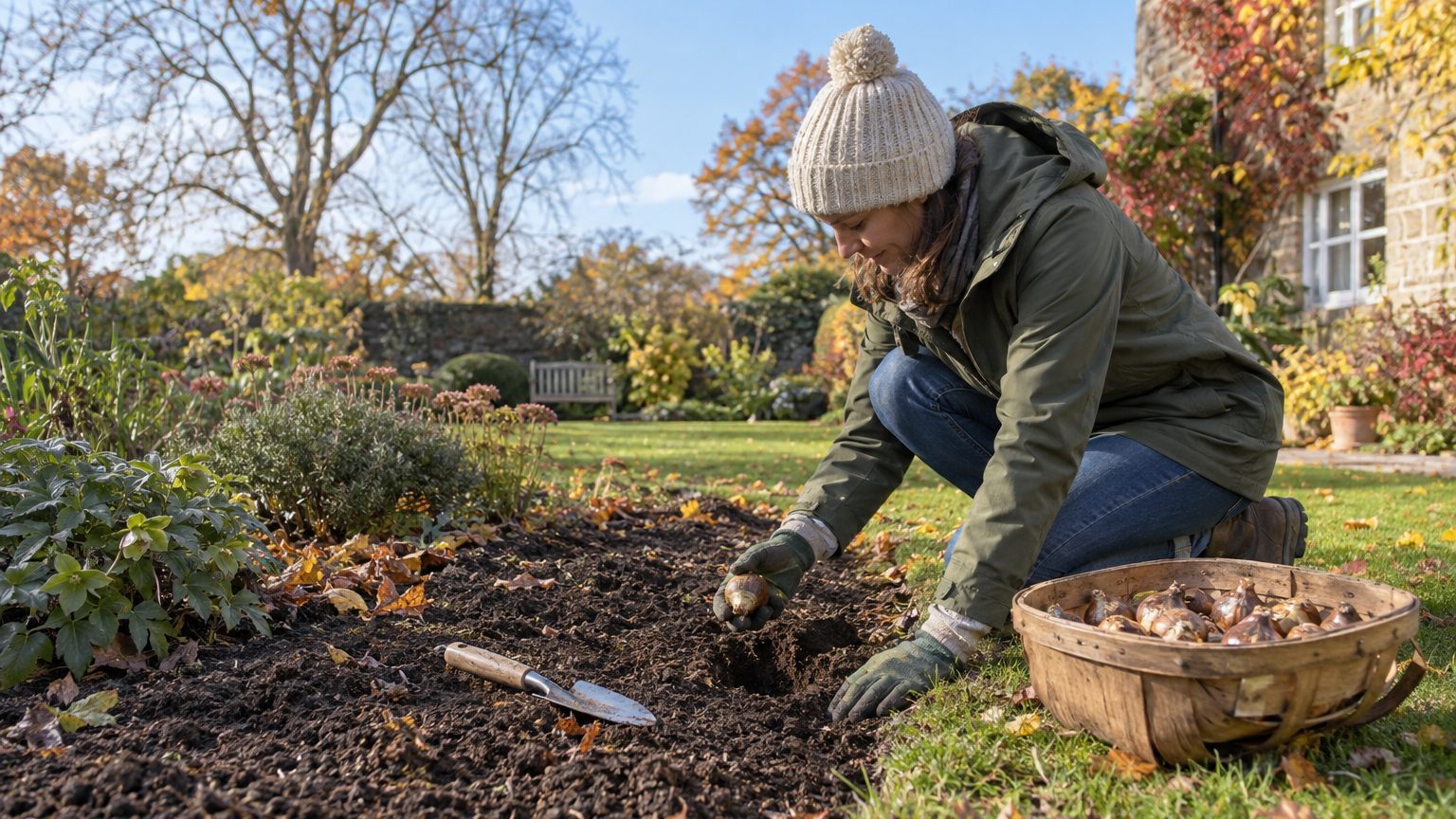
Plant daffodil bulbs in fall, once the soil has cooled to roughly 55 to 60°F and at least two to four weeks Before the Ground Freezes hard. For most gardeners in the United States, that window runs from September to late November.
The calendar matters less than the soil.
- Plant daffodil bulbs when soil at about 6 inches deep reaches 55-60°F.
- Aim to plant two to four weeks before the ground freezes hard.
- Daffodils need 12 to 16 weeks of temperatures below 45°F to flower.
When to plant daffodil bulbs: let the soil set the date
Garden suppliers disagree slightly on the exact number. Some say daffodils want soil consistently at 55°F or cooler, while others put the ceiling at 60°F. Either way, the reading should come from about 6 inches down, where the bulb will sit, not from the surface that cooks in afternoon sun.
Plant too early and the bulb gets confused. Warm soil can push shoots up prematurely, and it can also make bulbs more susceptible to rot. A bulb that spends October growing leaves has less energy for the roots it needs before winter. The result is a weaker plant in April.
No soil thermometer? Look at the trees. When deciduous trees begin dropping their leaves, the earth is cooling down, and that usually lines up with the start of bulb season. Frost dates work too: Ohio State’s extension service answers this question for home gardeners by advising planting about four weeks before the first expected frost, with soil between 50 and 60 degrees.
Cold is part of the recipe.
Daffodils need a long stretch of winter to flower. Most varieties need about 12 to 16 weeks of temperatures consistently below 45°F, which is why the bulb has to be in the ground, not on a garage shelf, when winter arrives. In most of the country, an ordinary winter supplies that chill without any help from you.
Your region moves the dates by two months
“Fall” means different things in Maine and Mississippi. In northern climates the planting window may open in late September or October, while warmer southern regions may need to wait until November or even December.
In between sit the moderate zones. In Zones 6 to 7, such as the Mid-Atlantic or the Pacific Northwest, October and November are the main planting months. A gardener in Philadelphia and one in Minneapolis can both be right to plant on the same weekend in October, but only one of them is anywhere near the deadline. The Minneapolis gardener may be days from a hard freeze. The Philadelphian probably has weeks of margin.
The deadline is where most procrastinators get caught. The rule of thumb is to aim for a planting date about two to four weeks before the ground is expected to freeze hard. That buffer is the time the bulb needs to send roots down into cool soil while the top stays dormant. Count backward from your average first hard freeze, not forward from the day the bulbs arrive in the mail.
The ground is already cold. Is it too late?
Probably not. Extension experts say that if frost has already come and the ground is below 50 degrees, it is not too late, but you should plant sooner rather than later. A bulb in cold soil is in a far better spot than a bulb in a bag.
Here is the test that matters.
Can you push a shovel into the dirt? Getting bulbs in late is almost always better than leaving them in the box, and you can plant after the first frost as long as the soil is workable. Late planters should expect less root growth before winter, so water the bulbs in well and add a layer of mulch once the ground is properly cold. A thorough watering settles the soil around the bulb, removes large air pockets, and encourages roots to start growing. Skipping that step is the easiest way to waste a late planting.
Spring is not a second chance. Daffodils need that long cold period to develop flowers, and bulbs sold in spring have likely dried out and won’t grow. If you missed the whole fall window, store nothing and buy nothing until next September.
Once the timing is right, the planting is easy
Depth follows a simple rule: plant at three times the bulb’s height, which works out to about 6 inches for standard bulbs. Set each one pointed end up, in a sunny spot with well-draining soil. One planting guide suggests spacing the bulbs four to six inches apart in clusters of five to seven, which looks far better than a lonely row of soldiers.
A trowel works for a handful of bulbs. For a whole drift, dig one wide trench instead of fifty separate holes, drop the bulbs in, and backfill. It takes a fraction of the time, and the bulbs end up evenly spaced.
Next spring, resist the urge to tidy up. Leave the foliage until it turns yellow so the bulb can recharge, because those leaves are building next year’s flowers. Braiding or cutting them early is a common mistake.
One last tip for anyone shopping this week: mixing early, mid, and late-season varieties can stretch your daffodil season from the start of spring well into early summer. If the bulbs are still sitting in a bag by the back door, that choice is already made for you, so get them in the ground before the first hard freeze.
Sources : spearheadspade.com | longfield-gardens.com