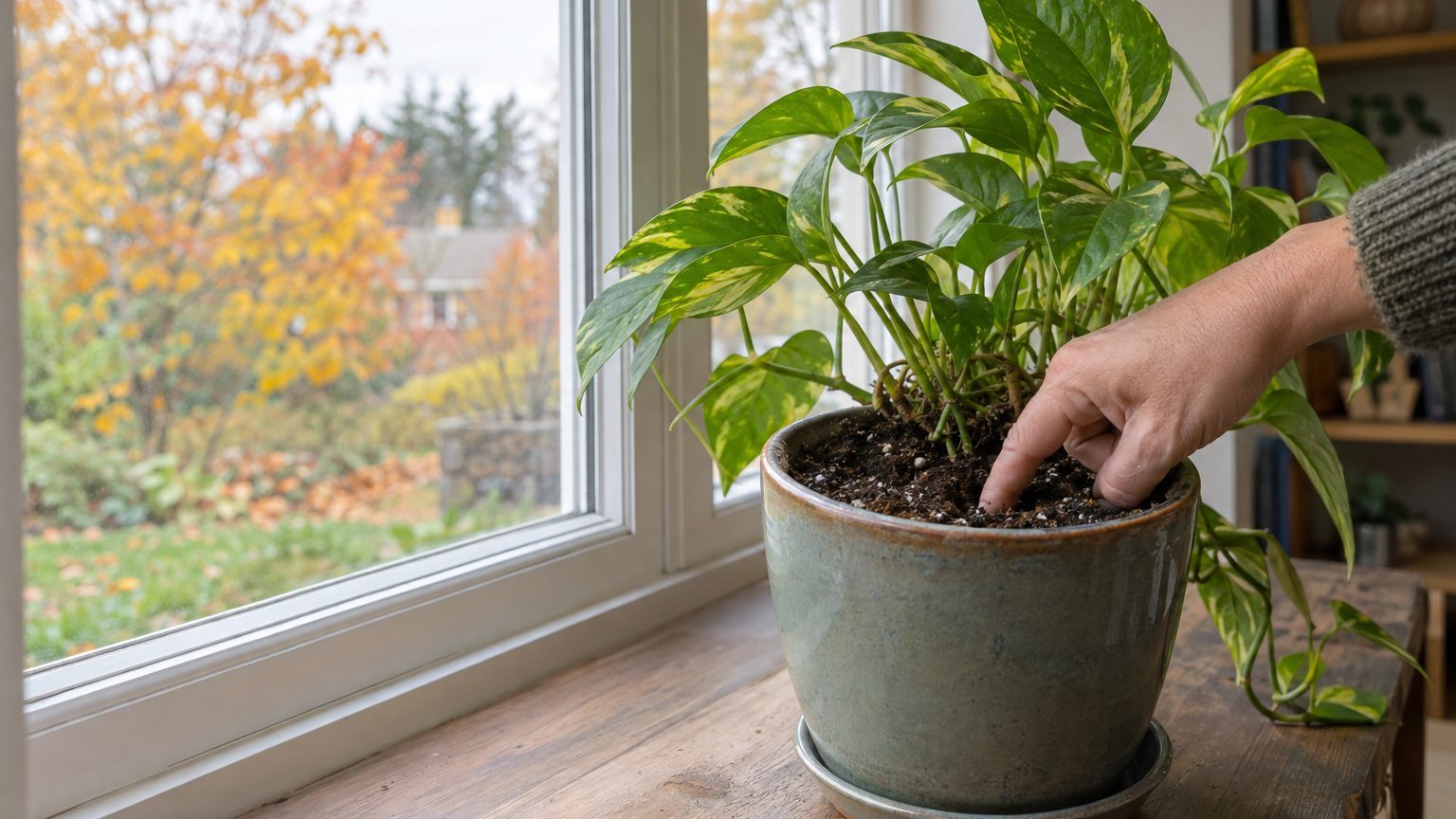
Every two to three weeks. That’s how often many houseplants want a drink in winter, according to Kentucky extension guidance, and it’s a long way from the Sunday-morning watering routine most of us run all summer. Kentucky Extension says many houseplants need water only every two to three weeks in winter, but check often, because dry indoor air can speed drying. No calendar, including that one, can replace a quick check of the pot.
Overwatering, not neglect, is what kills houseplants in winter.
University of Maryland Extension calls overwatering the number one reason houseplants die in winter. Soggy soil suffocates roots, and root rot can damage roots so badly they cannot move water to the leaves. The result is a wilting plant that looks thirsty, which tempts its owner to pour on more water. A vicious circle, and a common one.
- Many houseplants need water only every two to three weeks in winter.
- Overwatering, not neglect, is the leading cause of winter houseplant death.
- Soil should be dry about an inch down before you water most plants.
Why the summer routine stops working in November
Plants drink in proportion to how fast they grow. Shorter days, weaker light and cooler soil slow growth to a crawl, so pots dry out much more slowly. A plant that was soaking up sun on a patio in July is now sitting behind glass in a room that gets maybe six hours of weak daylight.
Nebraska Extension offers a handy yardstick. A plant watered daily outdoors in summer may need water only once a week or less indoors in winter. Even within one house the gap can be wide, because a plant moved to a shadier spot uses water more slowly.
Light, not the date, sets the pace.
Pot size, soil mix and room temperature all feed into the equation too. A fat ceramic pot with dense potting mix can stay damp for three weeks, while a small Terracotta pot beside a heating vent may dry out in ten days. For common tropical foliage plants like pothos and monstera, a typical winter range runs every 10 to 21 days, but treat that as a sanity check rather than a schedule.
Let the soil make the call
The most reliable tool you own is your index finger. Iowa State says to check by touch and water when the mix is dry about an inch down. Maryland Extension puts it more vividly, suggesting you let most of the mix dry out until it feels like a wrung-out dish towel. In a deep pot, a wooden skewer pushed to the bottom (damp soil clings to it) or simply lifting the pot to feel its weight tells you what your finger can’t.
Some plants break the pattern. ZZ plants and corn plants prefer their soil to dry out completely between drinks. Cacti and succulents go even further: they rest hard in winter, and Nebraska Extension suggests keeping them cool, around 55 to 60°F, and above 45°F. One popular guide pegs their winter interval at roughly four weeks, double the summer gap.
When you do water, do it properly. Soak the whole root ball until water runs out of the drainage holes, then let it drain fully and empty the saucer. Many people think winter means smaller sips, but for most plants the fix is watering less often, not shorting the volume. Use room-temperature water, since cold water can shock roots that are already stressed by low light.
If you’re unsure, wait another day.
The logic is simple. A plant that’s a day late for water recovers in hours, while a rotted root system often never does.
Dry air, cold glass and other winter wrinkles
Heating season creates a strange paradox: the soil stays wet longer, yet the air is parched. Homes can fall to 10 to 20% humidity, while houseplants prefer 40 to 50%, according to North Dakota State University. Leaf tips browning and crisping is the usual giveaway. If your house is especially dry, or the soil is very fast-draining, you may need to water a bit more often than the winter averages suggest, though still well below summer levels.
Misting won’t fix it. Iowa State, NC State and others point instead to humidifiers, grouping plants together, or pebble trays, with a humidifier doing the heaviest lifting. Grouping is free, and it takes about thirty seconds.
Temperature matters as well. Most houseplants do best at 65 to 75°F, so a leaf pressed against a frigid window pane or parked in a drafty hallway is asking for trouble. Pull plants a few inches back from the glass at night. Hold off on fertilizer too, since resting plants can’t use it, and wait until spring growth picks up.
Plants that summered outdoors need the most careful handling. They arrive indoors with big leaf canopies built for bright sun, then lose most of their light overnight, and they drop leaves in protest. That’s normal, and it’s a signal to cut back on water, not add more.
A last benchmark worth keeping: if a tropical plant’s soil stays damp for more than ten days, water less frequently. Jot the date on a sticky note when you water, and within a month you’ll have a schedule built from your own windowsills rather than someone else’s rule.
Sources : plantgrail.com | plantwateringguide.com