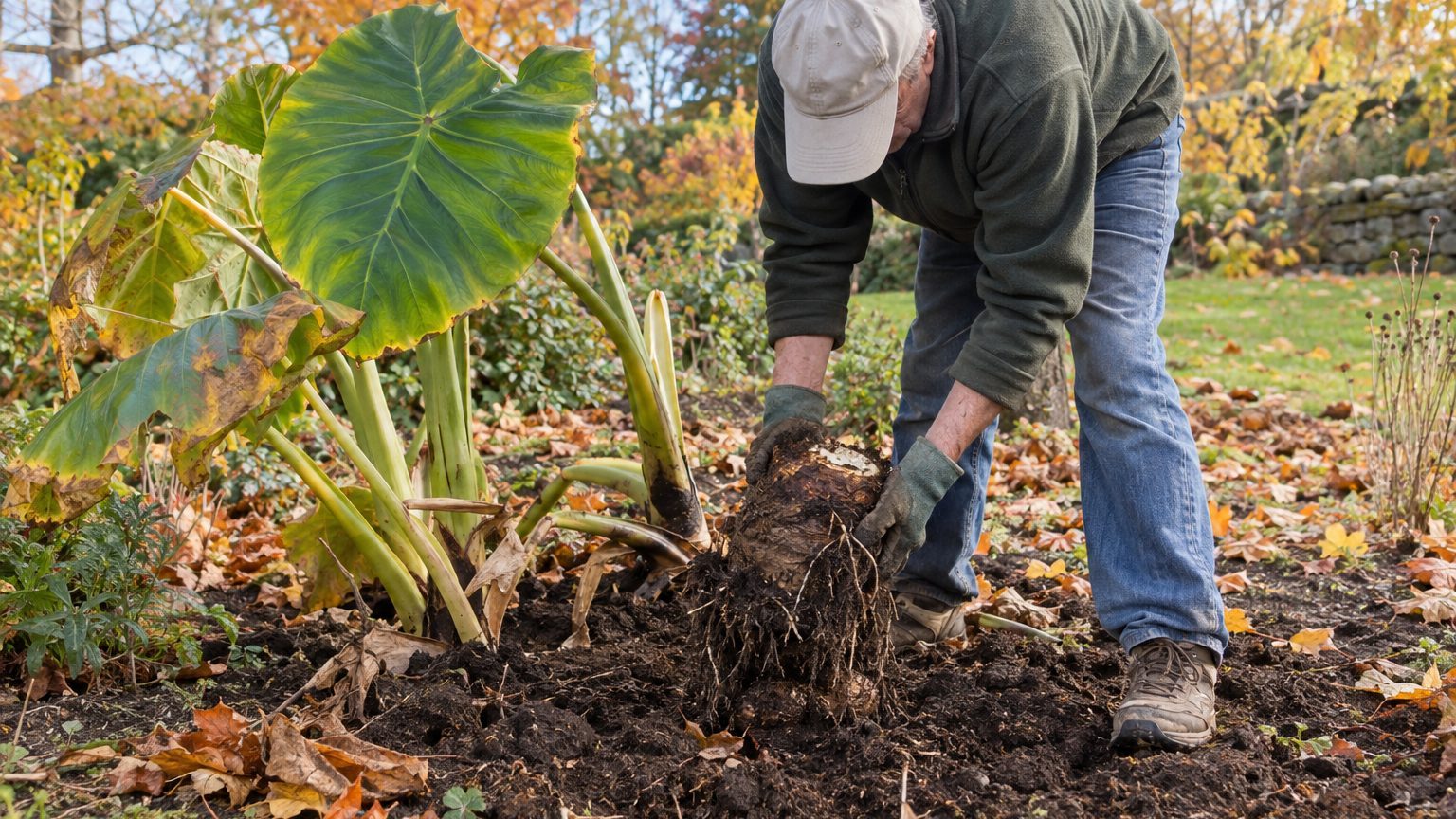
Elephant ears do not forgive a frost. The big, heart-shaped leaves collapse into a slimy heap, and anyone who has left the plants in a zone 5 bed and hoped for the best knows how spring ends: with a patch of bare dirt. Learning how to overwinter elephant ears takes about an hour of work in fall, and it saves you the cost of buying new tubers every May.
- Colocasia is reliably hardy only in USDA zones 7 to 11.
- Tubers should be dug just before or after a light frost, not after a hard freeze.
- Curing tubers in a warm, dry spot for 1 or 2 weeks helps prevent rot in storage.
- Tubers store best in a breathable container packed with coco coir or wood shavings.
Check your zone before you pick up the shovel
Hardiness decides everything. Colocasia is only hardy in USDA zones 7 to 11, and even there it needs some added protection to stay in the ground. Melinda Myers puts the safer line at zones 8b through 11, and says colder regions need special winter protection. If you garden in zone 6 or below, digging is the only reliable plan.
Gardeners in zone 7 and warmer can gamble on mulch. The advice from American Meadows is to let the stems die back naturally with the frost, because cutting them can lead to rot. After that, cover the plants with chopped leaves and lawn grass to insulate them through winter.
Shred the leaves first. Myers recommends shredded leaves rather than whole ones, and suggests ringing the planting with a cylinder of hardware cloth so voles can’t feast on the tubers.
Voles love a warm, cozy mulch pile. Plan for them.
Even gardeners in marginal zones may do better by digging. One zone 7b gardener on Garden.org left her plants in the ground for years, then learned from a friend that they would do better the next year if dug and stored over winter. She reported that hers seemed to do better when she set them out in spring. That is one gardener’s report, not a controlled trial, but it matches what many growers say.
Digging, trimming and curing the tubers
Timing matters more than technique. Extension guidance says to dig the roots after the first frost has killed the foliage, because the cold sends the tuber into dormancy, which helps prevent decay in storage. Myers is a little more flexible and says to dig the tuber just before or after a light frost. A hard freeze is a risk, so don’t wait for one.
Start about a foot from the center of the plant and work around it. Dig carefully from roughly 12 inches out, then lift the plant out of the ground or pot and move it somewhere warm, dry and frost-free. Slicing a tuber with the spade invites rot later, so go wide and slow.
Next comes cleanup. Cut the foliage back to within a few inches, trim the small roots off the tuber, and brush or knock off most of the soil. One grower cuts about 4 to 5 inches above the brown tuber. You can rinse the dirt off with a hose, but don’t scrub. Scrubbing can damage the tubers.
Then wait.
Curing is the step most people skip, and skipping it is the usual reason tubers turn to mush by January. Iowa State Extension says to dry the tubers in a warm, dry location for 1 or 2 weeks. The Ask Extension expert adds that the tubers need good air circulation, and that the curing period helps prevent rot and fungus in storage. A garage shelf or a laundry basket in the basement works. A sealed bag or closed bin does not.
Packing them for winter
Think of the storage container as a pantry for something that is still alive. Choose a sturdy box that still allows airflow, such as strong cardboard or a paper bag. Plastic is the thing to avoid, because it can cause rot.
For packing material you have plenty of options. Peat moss, sawdust, vermiculite, coco coir, dry potting soil, shredded paper and wood shavings all work. Peat has an ecological downside, and the same source notes that choosing one of the other options is a more sustainable choice. Coco coir or wood shavings are what I’d reach for. Another grower on Garden.org says peat moss and newspaper work about the same.
Space the tubers so they never touch. Nestling them in the material cushions them and keeps them apart, so if one decays it won’t affect the others. Wrapping each one in its own sheet of newspaper does the same job.
Where to keep the box is the one point where the experts disagree. Ask Extension recommends a cool, dark spot between 40 and 60°F. American Meadows says 50 to 60°F. Myers suggests around 60 degrees. Iowa State, on the other hand, suggests 70 to 75°F. An unheated basement, closet or interior garage that stays in the 50s is the safest compromise, and it sits within most of those ranges.
Check the box every few weeks. Look for pests and rot. If the tubers look too dry, mist them lightly, but too much water can start rot. Expect some losses. One Michigan grower who stores tubers in peat moss in a dirt cellar says about 75% make it. Planning for a few failures is realistic, and you can store extras for that reason.
Keeping potted plants growing indoors
Containers give you a second option, and it’s easier if the plant is small enough to fit near a window. Move potted elephant ears indoors before the danger of frost, and grow them like a houseplant in a cool, bright spot. Water sparingly. The plants are somewhat dormant in winter, so overwatering is the main thing to avoid.
Myers says this is the best way to preserve elephant ears that don’t form a tuber. A third route sits between the two. One Connecticut gardener in zone 6b suggests moving the whole pot into an unheated basement and letting the plant go dormant, checking the soil moisture from time to time and looking over any foliage for insects.
Bring pots in before the cold arrives. American Meadows puts the cutoff at below 40°F for moving containers to a sheltered spot, but a houseplant moved inside with its leaves intact may bring aphids or spider mites along. Look over the undersides of the leaves before the pot goes near your other plants.
When spring arrives, give the tubers a head start. Garden.org members suggest starting them in pots indoors in late March and moving them outside after all danger of frost has passed. Look for pointed, pale nubs that signal a tuber is awake. A firm one that has sprouted will grow fast, and a soft or hollow one gets tossed.
Last fact, and a small comfort. Container Crazy CT notes that what gardeners call a tuber may technically be a corm. The plant doesn’t care what it’s called, and the storage method is the same either way.
Sources : melindamyers.com | gardeningknowhow.com