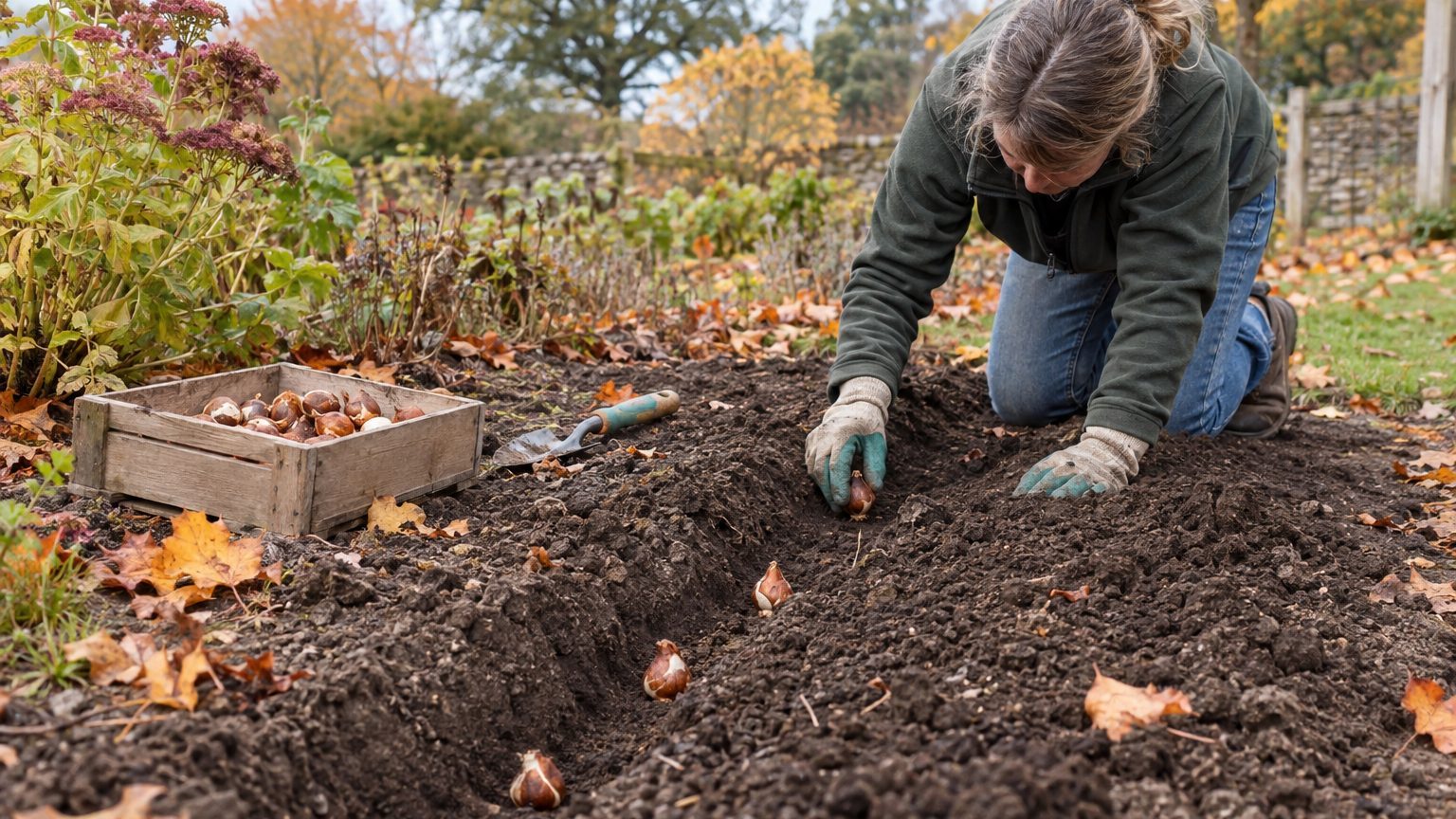
Tulips are generally planted about six to eight inches deep, measured from the base of the bulb. That’s how deep to Plant Tulip Bulbs in the ground for most standard varieties. It’s also roughly double what I used to dig, back when I tucked bulbs in barely under the surface and called it done. Shallow planting is the most common tulip mistake, and I made it for years.
Depth is most of the job.
- Most standard tulip bulbs should be planted 6 to 8 inches deep, measured from the base of the bulb.
- Species tulips are smaller and do well at 4 to 6 inches deep.
- In pots, bulbs can go 4 to 6 inches deep, provided the container is at least 10 to 12 inches deep.
The rule behind the number
Extension services and bulb growers agree on one rule of thumb. Plant two to three times as deep as the bulb is tall. Most standard tulip bulbs are about two inches tall, so the base should sit roughly six to eight inches below the soil surface. University of Illinois Extension is on the deeper end of that range, putting large bulbs like tulips and daffodils at about 8 inches.
Where you start measuring matters. Planting depth is measured from the bottom of the bulb, not from its tip, so a bulb with its shoulders at 6 inches is already too shallow for a big hybrid. Species tulips, the small wild-type ones, play by different numbers. Scotts puts them at 4 to 6 inches deep, and another grower’s guide says four to five inches is usually sufficient. A quick look at the bulb before you dig tells you which camp it belongs to.
The reason for going deep is mostly about winter. Temperatures can swing wildly between freezing and thawing, and that cycle can make the soil “heave,” sometimes pushing shallow bulbs right out of the ground. Bulbs planted less than 6 inches deep are more vulnerable to fluctuating soil temperature. Depth also gives the stem an anchor, which matters when a tall tulip is carrying a heavy, rain-soaked flower. Six inches of soil is cheap insurance against a bulb that sits on the surface by February and a stem that flops by May.
Shallow bulbs pay for it in winter.
The old advice isn’t untouchable, though. Brent & Becky’s Bulbs notes that gardeners were long told 8 inches was the gold standard, but a Cornell University study found tulips bloom just as well planted less deeply. The same retailer adds a catch: squirrels and rodents like the taste of tulip bulbs and will dig them up. Deeper planting makes the bulbs a little harder to find, which is one more argument for staying in the 6 to 8 inch range. Going too far has its own cost, since beyond 10 or 12 inches, tulips might bloom much later than expected.
Adjusting for soil, timing and water
Your soil can nudge the number. In sandy soils that don’t hold water well, plant a little deeper than usual. In clay soils, plant a little less deeply so the bulbs don’t stay waterlogged.
Timing matters as much as the trowel. Plant when the soil temperature 6 inches down reaches 50 to 60°F. In zones 3 to 5 that’s typically September, in zones 6 and 7 October, and in zones 8 and 9 November or December. If you’re reading this in mid-October, a lot of the country is in the window right now.
Digging the hole is only half the work. The best method is to dig and loosen the entire bed to the proper depth rather than punching individual holes into packed soil. The bulbs may sit 6 to 8 inches down, and the water needs to soak to that depth, so a quick sprinkle after planting won’t do it. A cooperative extension office in North Carolina recommends a 2 to 3 inch surface mulch after planting. As for spacing, about four inches apart is a safe default in beds, though you shouldn’t plant in straight lines. Clusters look more natural and fill in better.
How deep to plant tulips in pots
Containers loosen the rules slightly, and the advice varies. Some growers say four to six inches, while others hold to 6 to 7 inches. Longfield Gardens says that in a pot you can plant a bit shallower, around 4 to 5 inches, as long as they’re covered by a few inches of soil. Several growers also say that in a pot the bulbs can go as deep as they would in the ground.
The pot itself sets the limit. You want a container at least 10 to 12 inches deep, with several inches of soil beneath the bulbs for roots and several above them for protection. Do the arithmetic and a 6-inch planting depth plus 2 to 3 inches of soil underneath already needs a pot of about 9 inches, before you leave room at the rim for watering. A squat 8-inch bowl simply can’t do the job. A 12-inch-deep pot works better, and wide is better still, because a wider pot lets you plant more bulbs for a fuller look.
Drainage holes are non-negotiable.
Pots also let you break the spacing rule. Bulbs can go “shoulder to shoulder,” about an inch apart, as long as they aren’t touching each other or the sides of the pot. Skip garden soil in containers and use fresh potting mix each season. Fresh mix every season, and no heavy topsoil.
For a longer show, try layering. The “bulb lasagne” method means starting with your largest, latest-blooming tulips on the bottom layer, about 7 to 8 inches deep. Cover them with a few inches of soil, add a middle layer of mid-season tulips, then finish with early bloomers like crocus or grape hyacinths on top. One pot then flowers in sequence rather than all at once.
One expectation to set before you buy bulbs by the dozen. Most modern hybrid tulips are at their most spectacular in their first year, so don’t be surprised if deep planting still yields a thinner show in year two. After blooming, the most important rule for saving potted tulips is to keep the leaves until they die back on their own.
Sources : longfield-gardens.com | brentandbeckysbulbs.com