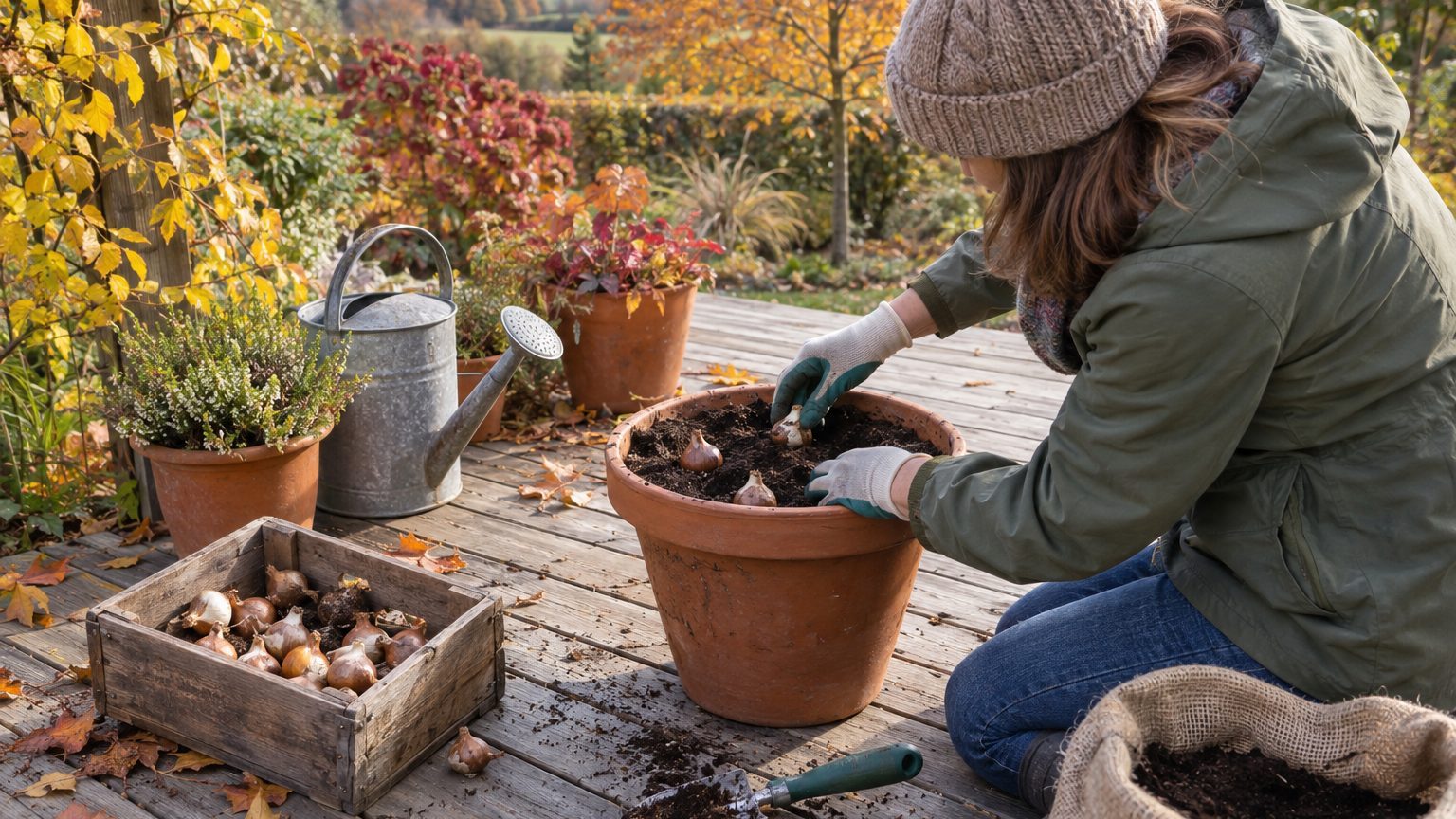
Tulips don’t need a greenhouse or a heated garage to bloom on your patio next April. They need cold, and plenty of it. Most tulips need between 12 and 16 weeks of consistent cold. Early November is right on schedule for planting them.
Skip the cold and you get leaves with no flowers.
- Tulips need 12 to 16 weeks of consistent cold to bloom.
- Pots freeze far more than soil in the ground, with temperatures up to 20 degrees colder.
- Potted bulbs should be planted in early November, around 4 to 6 inches deep, with drainage holes.
- Pots kept in unheated garages between 35 and 45 degrees F overwinter well.
Why the pot changes the rules
In the ground, soil works as a blanket. The soil acts like a heavy, insulating blanket for your tulip bulbs, and that is why tulips are rated hardy in USDA hardiness zones 3 through 8. A pot has no such cushion. Its walls expose the root ball to wind and air on every side.
The numbers show the gap. Soil temperatures in pots left outside in a Zone 5 winter can easily be 20° colder than the ground nearby. In very cold regions, a pot left completely out in the open might freeze solid and thaw repeatedly, which can be hard on the bulbs. It’s the repeated thaw that does the damage, more than any single cold night.
Gardeners in zones 8 and warmer have the opposite problem. Winters there are often too mild to supply the chill, so keeping bulbs over the winter often involves a dedicated chilling period in a controlled environment. Cold storage in a spare refrigerator is the usual route. Keep the bulbs away from ripening fruit.
Potting up: depth, spacing and the right container
Start with the pot. A 12 to 14 inch container, at least 8 inches deep, gives tulips room to root. Drainage holes are non-negotiable, because soggy soil rots bulbs faster than frost ever will. If you want the pot to survive winters outdoors, choose a sturdy one. Flimsy pots will struggle in the winter, and Terracotta can sometimes crack in extreme cold.
Pack the bulbs tighter than you would in a bed. Bulbs in pots are typically planted much closer together and less deep than bulbs in the ground, but they should not touch. A 12-inch pot can hold 15 to 22 tulip bulbs, set pointed end up and covered with about 4 to 6 inches of soil. One small trick from extension horticulturists: arrange tulip bulbs with their flat side facing out. The first big leaf of each bulb tends to grow toward that side, so the leaves frame the pot instead of crowding the center.
Want more than one act? Try a bulb lasagna. Small-bulbed early risers go toward the top, mid-size bulbs in the middle, and large ones at the base. Tulips sit at the bottom, a layer of soil goes over them, then crocus or grape hyacinth on top. The result is a pot that flowers in waves from late winter into May.
There’s also a smarter container strategy. Plant your bulbs in small 6-inch or 8-inch plastic pots and overwinter them under protection, then as they start to bloom, sink the pots into larger display containers. The decorative planter stays pristine and can be moved easily. Plastic nursery pots are also far easier to shuffle into a garage than a 60-pound ceramic urn.
Where the pots spend winter
Your zone decides the answer. In zones 3 to 6 the pots need protection. In zones 6 to 8, you can often leave your pots outside all winter.
An unheated garage or shed is the easiest fix. These spaces usually stay between 35°F and 45°F, a range cold enough to satisfy the bulbs without a deep freeze. A cold frame works too, as does a spot hard against a house wall. No garage? Wrap the containers in several layers of burlap, bubble wrap, or even old blankets. You can also bury the pots in a garden bed up to the soil line. That way the pots are getting some rain fall through the winter to make sure they don’t dry out too much.
Cluster pots tightly together. Grouped containers shelter each other, and a heap of straw or shredded leaves around the outer ring adds a few degrees of insurance. In the harshest climates, one grower’s advice is to surround the pots in tightly packed straw or bury them in sawdust and put a good 18 inches of mulch on top.
Don’t let the pots go bone dry.
Winter care, and the spring wake-up
Most failures in a pot aren’t from cold at all. One of the biggest risks for potted tulips in winter isn’t actually the cold, it is drying out. A pot parked against a wall or in a garage gets no rain or snowmelt, so water once after planting and check the soil about once a month. Aim for barely moist. Damp soil holds more heat than dry soil, so a light drink before a hard freeze actually helps.
Come late winter, green tips will poke up, sometimes in February, which can alarm first-timers. Don’t panic. Tulip leaves are remarkably frost-tolerant, so a cold snap won’t undo them. Move the pots into the open once the danger of hard frost has passed or when the bulbs in the ground are starting to emerge. Once shoots appear, put the containers in full sun. If a hard freeze is forecast after they’re out, drag them back under cover for the night.
Bloom lasts about two weeks, depending on weather, so staggering early, mid and late varieties stretches the show. Pairing a few pots of different timing is the cheapest way to get a patio that looks planned rather than lucky.
Plan for the ending too. Tulips forced in containers rarely perform as well the second year, so many gardeners follow this routine: plant all the bulbs except for the tulips in the garden after the flowers fade, and compost the tulips. Daffodils, crocus and grape hyacinth, on the other hand, settle into a bed and return for years. Budget for a fresh set of tulips every October, and treat the pot as a one-season stage.
Sources : gardeningknowhow.com | merrifieldgardencenter.com