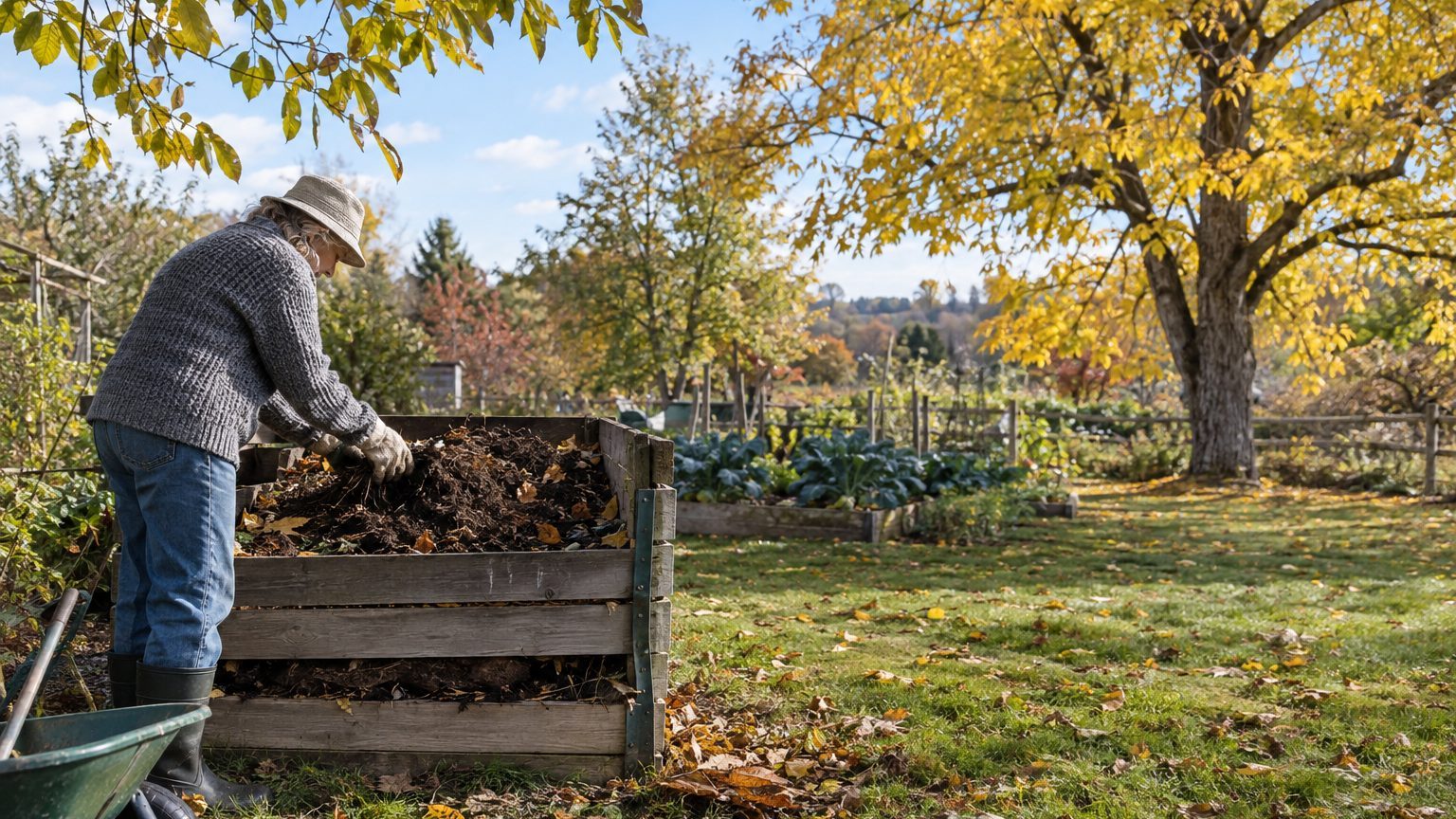
Yes, you can compost black walnut leaves. The juglone they carry
breaks down during normal composting, as long as the pile is hot, turned and moist
. The catch is finishing the job. Half-rotted leaves with recognizable pieces still in them are the real risk to your tomatoes.
Can black walnut leaves be composted?
The chemistry works in your favor.
The juglone toxin breaks down when exposed to air, water and bacteria
, which is exactly what a working compost pile supplies. Oregon State University Extension’s advice to a gardener with a large walnut tree was blunt:
yes, you can apply compost made with black walnut leaves to your vegetable garden
.
Timing matters more than most people expect.
Walnut leaves carry the most juglone in spring, and while fall leaves still contain it, they hold less.
That makes the leaves you’re raking right now a better compost candidate than a pile of green clippings from a June pruning.
Distance from the tree is the other variable. Oregon State points out that
juglone moving into the soil through the roots is the greatest concern
, and the University of Maryland Extension notes that
it can be found throughout the tree’s entire root zone, on average 50 to 80 feet in diameter for a mature tree
. If your vegetable beds sit inside that circle, the root zone may be doing more damage than your compost bin ever could.
Nothing here is a health warning for people. The same Maryland guidance states that
juglone does not pose any threat of toxicity to humans
. The concern is mainly about which plants will tolerate the finished compost, although black walnut shavings are dangerous to horses, so keep walnut wood and shavings out of stable bedding.
Are black walnut leaves bad for compost?
For the pile itself, no. Microbes don’t care about juglone the way a tomato does. The trouble starts when the material leaves the bin before it’s done.
Sensitive plants react in recognizable ways.
They often yellow, grow poorly or look stunted, and may eventually die
, while
less sensitive plants may yellow slightly or grow more slowly but are rarely killed
. Tomatoes are the classic casualty, which is why gardeners with a walnut tree and a vegetable plot tend to lose sleep over this.
Not everyone in the horticultural world is relaxed about it. One veteran plantsman’s account, quoted in a university library’s plant-answer archive, describes
a 15-year-old rhododendron killed a few weeks after its owner mulched it with black walnut husks, and roses injured by compost containing black walnut sawdust
. Note what those materials are, though: husks and sawdust, not leaves. They break down far more slowly, and that distinction likely explains much of the contradictory advice you’ll find online.
The recommended waiting periods vary, and the spread is worth knowing:
- Leaves: one university summary says the
toxic effect can be degraded in two to four weeks
. - Composted bark:
a minimum of six months
gives a safe mulch even for plants sensitive to juglone. - The cautious end: Maryland suggests that if leaves, twigs or nuts go into compost for the garden, it
should be aged at least one year before being applied
.
Which number should you trust? The weeks figure most likely assumes a hot, well-managed pile under good conditions. The one-year figure probably builds in a safety margin for a cooler, less-managed pile. If you’re growing tomatoes, peppers or other sensitive crops in the finished compost, lean toward the longer end.
Raw leaves are a separate issue. Purdue Extension’s walnut toxicity guidance advises
keeping beds free of black walnut leaf litter or nuts
. Don’t dig fresh walnut leaves into a vegetable bed as a shortcut. Composting them first is what removes the problem.
Are walnut leaves good for compost?
Once they’ve fully broken down, they appear to be perfectly respectable ingredients. A trial published in the National Library of Medicine’s PubMed Central archive grew lettuce in soil amended with composted walnut leaves.
The highest yields came from the compost control and from two walnut-leaf composts that had a composting agent added, one of them also made with grass
. The authors concluded that
dry walnut leaves and cut grass can be used for composting
.
Keep the scale in perspective. It was a single trial, on lettuce, in a controlled setup after two years of composting, and walnut-leaf compost made without a composting agent was not among the top-yielding treatments, so treat it as supporting evidence rather than a guarantee for your tomato bed. It also carried a useful warning: dry hazelnut leaves in the same study
still contained allelochemicals after two years
and hurt growth. Different trees, different timelines. Don’t assume what’s true of one leaf is true of another.
As a raw material, walnut leaves behave like any other “brown,” meaning carbon-rich and low in nitrogen. They’ll sit in a heap doing very little unless you balance them. That’s the same principle behind how to compost leaves of any kind, and the walnut version simply raises the stakes on getting it right.
How to compost black walnut leaves safely
Start by treating the leaves as one ingredient, never the whole recipe. Oregon State recommends
including a diverse group of plant materials rather than only walnut leaves
. Then feed the heat:
compost that heats up will best break down juglone, and nitrogen is essential for the pile to heat up
. Fresh grass clippings, kitchen scraps and manure are the usual nitrogen sources. If your lawn is still producing clippings this fall, the walkthrough on how to compost leaves and grass clippings covers sensible ratios.
Shred the leaves first. Running a mower over the pile before it goes into the bin exposes more surface to microbes and shortens the whole process. It also helps with the requirement that matters most for walnut:
complete composting, with no leaf pieces remaining, followed by a curing or resting phase
. For other ways to speed things along, see how to compost leaves faster.
Moisture and turning come next. Keep the pile as damp as a wrung-out sponge and turn it regularly so oxygen reaches the center. A walnut-heavy pile that’s dry and left alone is the one most likely to disappoint you.
Before you spread it, run a simple bioassay. One university answer suggests
testing it first with a few tomato plants for a few weeks to reveal its level of toxicity
. Pot up two or three seedlings in a mix of your compost, keep a control pot with store-bought mix beside them, and compare. Yellowing leaves or stalled growth in the compost pot mean the pile needs more time.
If you feel timid, start small. Extension specialists suggest
using the compost sparingly or in only one area at first
. And if symptoms do show up,
save that compost for the landscape, near plants more tolerant of juglone
, rather than throwing it out.
One last nuance for anyone who also has a hickory, pecan or English walnut: those relatives make juglone too, but Purdue notes they
produce such limited quantities compared to black walnut that toxicity to other plants is rarely observed
. Black walnut leaves are worth composting in their own bin, with their own calendar.
Sources : extension.oregonstate.edu