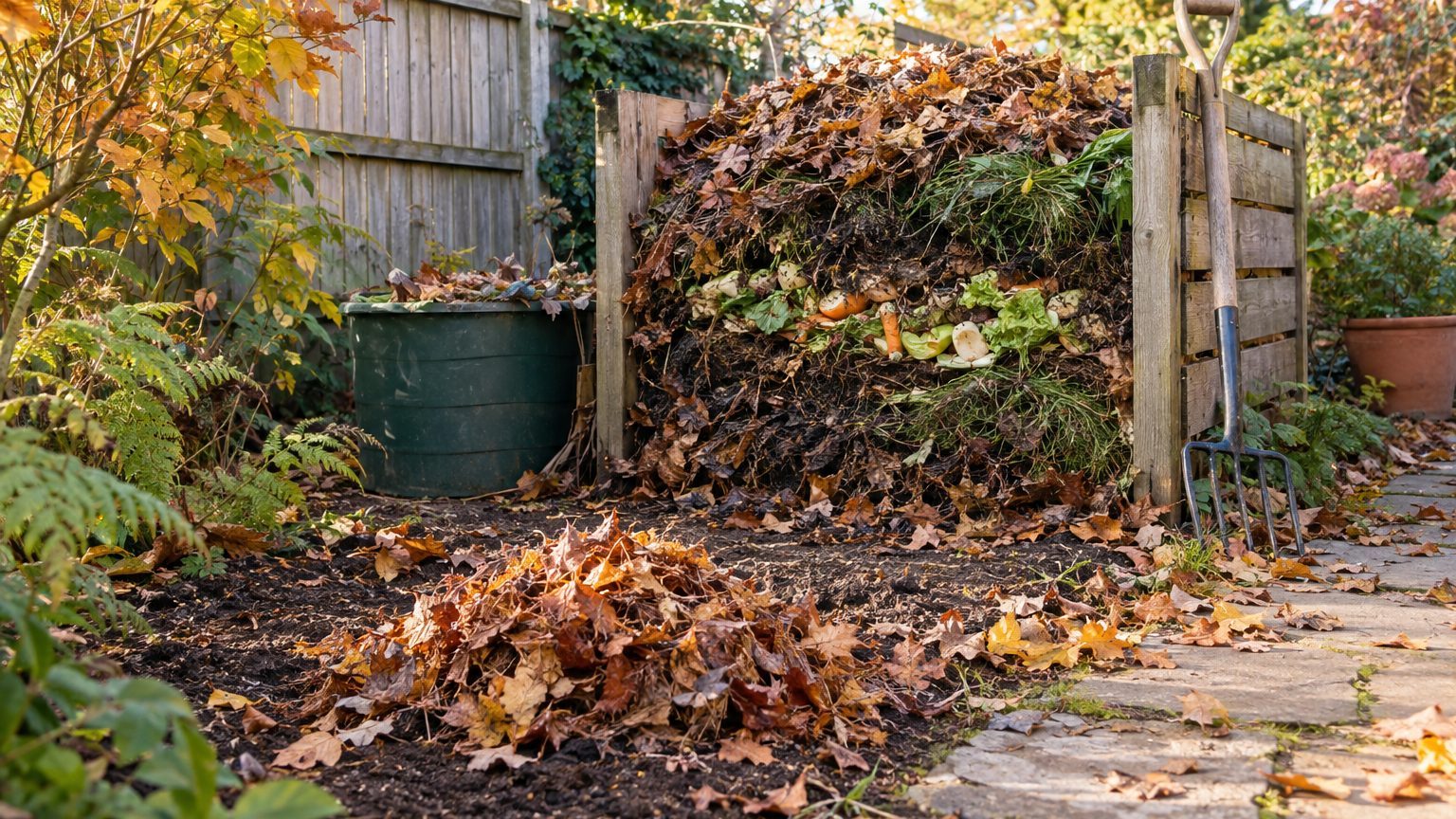
Shred the leaves, mix them with a nitrogen source, build a pile at least 3 feet high and 4 feet across, and keep it damp and aerated. Those four moves do most of the work. Whole, dry leaves piled alone can take a very long time to break down. Some sources say years, and the cause is chemistry more than laziness.
Tree leaves run about 60:1 in carbon to nitrogen, according to
University of Georgia Extension, which puts the ideal ratio for bacterial decomposition at 24:1
. A raw leaf pile is therefore roughly two and a half times too carbon-heavy for the microbes that make compost fast. Each of the fixes below attacks that imbalance, or the surface area and air that go with it. For the full start-to-finish method, see how to compost leaves. This page covers only the speed levers.
Shredding leaves for compost
Shredding is one of the cheapest ways to speed things up.
Iowa State University Extension advises shredding leaves before composting, since the smaller the material, the faster it decomposes.
Rutgers agrees and notes that
shredding generally speeds up composting
.
Whole leaves have a second problem besides having less exposed surface. Wet, they can settle into dense, matted layers.
Oxygen has difficulty moving through those layers, which slows aerobic decomposition.
Shredded leaves stay fluffier and mix more evenly with kitchen scraps and clippings.
You do not need a dedicated machine. Missouri Botanical Garden suggests that if you don’t own a shredder, you can
rent one or use your bagging lawn mower to chop the material
. A mulching blade chops finer still. Run the mower over a windrow of leaves two or three times, and a pile that would have mashed down into a wet mat becomes loose, confetti-like material.
Keep the leaves dry while you shred. Missouri Extension notes that
all chipper-shredder units work best when the materials are dry
. Wet leaves clog chutes and gum up mower decks. Wear protection, too: UF/IFAS Extension recommends
hearing protection and a face shield, because leaf bits and possibly twigs can fly
.
One caution about the opposite shortcut. Don’t skip the pile and till raw leaves straight into the vegetable bed. UGA Extension says it
is not recommended because of the high carbon-to-nitrogen level
, and a related extension fact sheet explains that soil microbes then
use up soil nitrogen trying to break the leaves down, which can leave plants deficient
.
How to compost leaves quickly in the garden
Nitrogen is the next lever to pull after shredding. Iowa State’s guidance is blunt:
a pile made mostly of leaves decomposes slowly because the leaves don’t have enough nitrogen for the microbes
. The remedy is to
mix leaves with grass clippings or other nitrogen-rich materials
. Fresh clippings from the last mow of the season are the obvious candidate, and the specifics are covered in how to compost leaves and grass clippings. Vegetable scraps and coffee grounds work in the same role. Because leaves are so carbon-heavy, you will use far more leaves than clippings by volume, and the exact proportions are laid out in the browns and greens compost ratio guide.
Store-bought nitrogen is a fallback. Rutgers says that while it is generally unnecessary, a high-nitrogen fertilizer can speed things up. Their figure is
5 ounces (about ½ cup) of 10% nitrogen fertilizer per 20-gallon can of hand-compacted leaves
. Their reasoning for not fussing is practical:
leaves fall for only about two months a year, which leaves ten months for decomposition before the space is needed for the next batch
.
Pile dimensions matter as much as ingredients.
Rutgers recommends at least 4 feet in diameter and 3 feet high, because a smaller pile struggles to hold the temperature needed for rapid decomposition.
At the other end,
about 5 feet high and 10 feet across is the maximum, past which the interior is starved of oxygen
. If you have more material than that, make the pile longer instead of taller.
Layering is one of the places where sources disagree. Iowa State suggests building in layers,
topping each 6- to 8-inch layer of plant material with 1 inch of soil or compost
. Rutgers, for its part, says it has
not found added soil necessary, since leaves already carry plenty of microorganisms
. Either approach works. Layering mostly helps you eyeball the mix as you build.
Then comes air. Missouri Botanical Garden lists it as the final factor beyond nitrogen, water and pile size, and says
sufficient air in the pile encourages microbial growth and speeds decomposition
. Its advice on timing is useful:
turn the pile periodically, and do it just after the pile has completed a heating cycle
. Turning a pile that is still heating up wastes effort and releases the warmth you just built. And
avoid packing the materials too tightly, because compaction limits airflow
.
Species make a difference too. Leaves lower in lignin and higher in calcium and nitrogen compost best. Epic Gardening lists
ash, maple, fruit tree, poplar and willow leaves, which typically break down in about a year
. If your yard drops tough, leathery leaves, shredding and extra nitrogen matter even more, and it may help to blend them with a softer variety.
The other option is to skip speed. Leaf mold, the fungus-driven version made from leaves alone, is
a cold process that is less labor-intensive than hot composting but slower
. One source says it could take
up to three years to decompose properly
. Leaf mold is a fine soil conditioner, but if the goal is fast, nitrogen-fed compost is the route.
Compost pile in winter
Cold slows everything. Microbes are less active, and a pile that is too small simply matches the air temperature. The fix is mass. Univ. of Minnesota Extension says
piles of at least 3 feet by 3 feet retain heat better, and small piles can be combined to stay warm enough to keep breaking down
. Gather scattered heaps into one before the first hard freeze. Some cold-climate composters go bigger still, but 3 feet by 3 feet is the minimum Minnesota Extension gives, and Rutgers asks for 4 feet across for leaf piles.
Insulation is the second lever, and leaves are a good material for it. Minnesota Extension suggests
surrounding a pile with straw bales, leaves or old blankets to trap heat and keep the microorganisms active
. Bagged leaves stacked around the pile make a cheap windbreak. That is a sensible use for the surplus that never fit in the pile.
Moisture is the winter trap.
A tarp reduces snow buildup, maintains moisture levels and makes the pile easier to reach.
Minnesota also advises you to
clear away some snow occasionally to let air circulate, without exposing the pile entirely to the cold
. A waterlogged winter pile goes anaerobic, and no amount of shredding rescues that.
Winter reverses the usual balance. In summer you scramble for carbon, but in cold months kitchen scraps often outrun your supply of dry browns. A bag or two of shredded leaves kept beside the bin, dry and ready, lets you add each batch of scraps with enough carbon to prevent a soggy, smelly mass. That stockpile is the reason shredding in October pays off in February.
Don’t expect miracles from a January pile. Even in a well-built pile, cold-weather decomposition is slow, so measure success by whether the center stays unfrozen and the pile doesn’t turn sour. When spring thaws things, you can turn it, add a fresh nitrogen layer, and let the real work resume. The timeline Rutgers cites, ten months of decomposition after two months of leaf fall, should stay in mind: a pile that sits through winter is not behind schedule.
Sources : extension.psu.edu