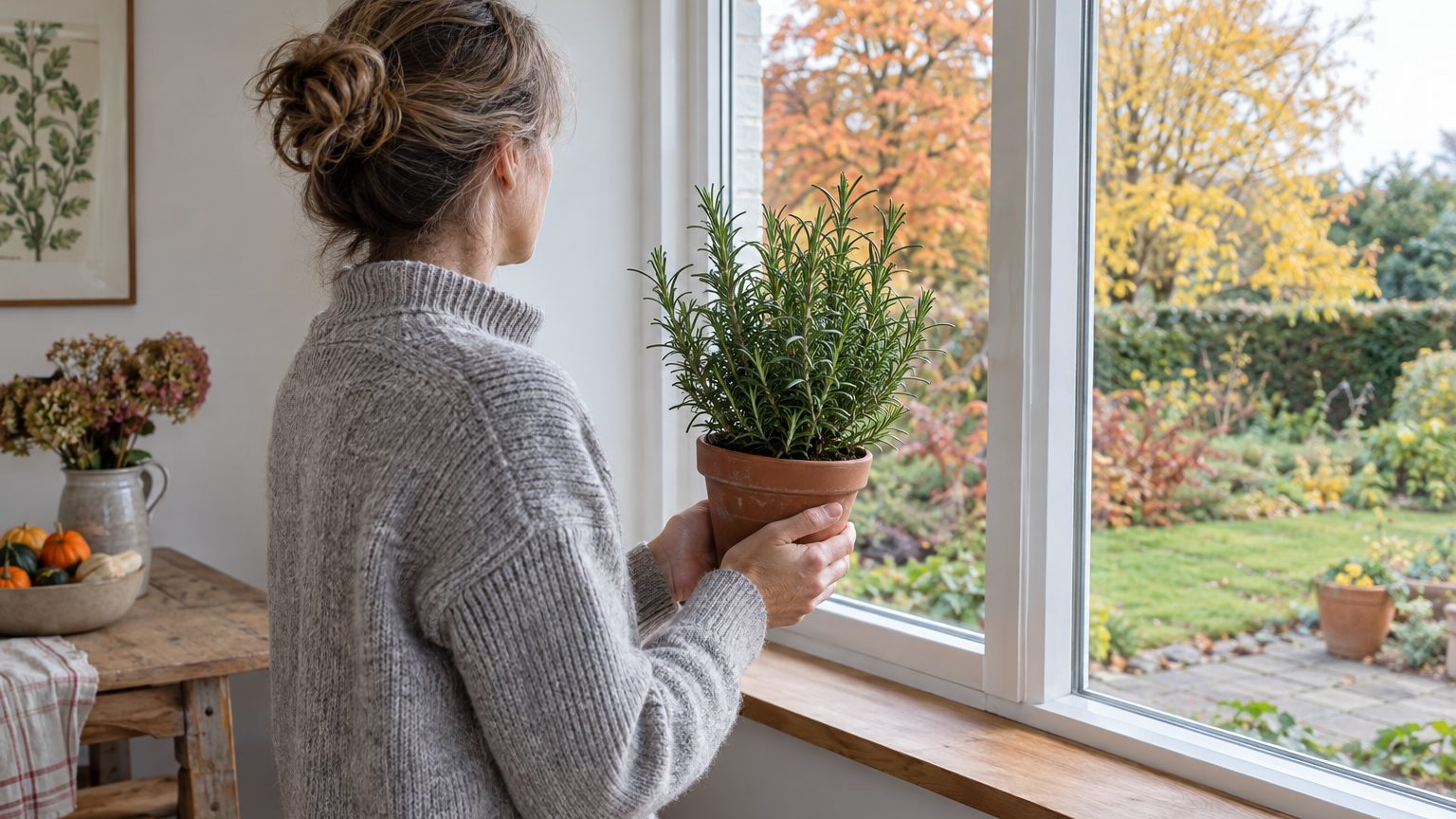
The USDA describes rosemary as a zone 7 plant, which means it will probably not survive temperatures below about 15°F. That’s a Mediterranean shrub meeting a Midwestern November. Single-digit temperatures are often fatal.
Move before the first hard freeze, not after.
- Rosemary is reliably hardy only in USDA Zones 8-11.
- Potted rosemary is exposed to conditions one zone colder than plants in the ground.
- Rosemary indoors needs 6 to 8 hours of bright light daily and cool temperatures of 40° to 60°F.
- Water rosemary only when the top inch or two of soil is dry.
Start with your zone, not your calendar
Your hardiness zone decides the whole strategy. Rosemary can survive winters outdoors in USDA Zones 8-11, while anyone in zone 7 or below should consider overwintering it indoors. Zone 7 is a gray area, though. Gardeners there may still want to shelter the plant from the worst of winter, depending on their microclimate. Zone 6 and colder is where rosemary is not reliably hardy, so indoors is the better bet, and in the Midwest it often doesn’t make it through a winter outside at all.
Variety changes the math a little. ‘Arp’ and ‘Hill Hardy’ (also sold as ‘Madalene Hill’) are noted as hardy to zone 6. One seed company owner reported that her ‘Arp’, planted 25 years ago, survived minus-7 degrees F once. Treat that as a happy outlier, not a promise.
A pot in your yard lives one zone colder than the soil.
That’s the rule of thumb some experts use: plants overwintered in pots are exposed to conditions one zone lower than plants in the ground, so a zone 7 gardener’s potted herbs effectively sit in zone 6. A rosemary in a terracotta pot by the back steps is far more exposed than one planted along a house wall.
Keeping rosemary outdoors through the cold
In milder zones, the job is insulation. After the first light frost, trim small plants to about 6 inches above the ground without cutting into the woody stems, then pile 4 to 6 inches of chopped leaves, straw or another natural mulch over the plant. Rosemary is dormant in cold weather, so it tolerates the blanket. Scoop the mulch away early in spring so growth can restart.
Colder gardens call for more drastic measures. North Carolina’s extension service recommends cutting plants to within 2 inches of the ground after the first hard frost, covering the stump with soil, then adding 4 or 5 inches of mulch. Illinois Extension suggests a sunny, south-facing wall of the house as the planting spot. A Colorado State extension agent went another route and surrounded potted-then-planted rosemary with water-filled plant protectors, putting them up in late October, before the first drop below 30°F. The protectors fit plants up to about 18 inches across.
Wet feet are as dangerous as cold. One grower with decades of experience says the hardest thing for woody plants like rosemary is wet soil followed by temperatures that drop near zero, then warm and drop again. Good drainage matters as much as mulch. And snow cover can actually insulate plants from extreme lows, so a thick blanket of snow isn’t cause for panic.
Potted plants left outside need their Containers wrapped, too.
Burlap, bubble wrap or old blankets work, because frost can break the pots themselves.
How to overwinter rosemary indoors without killing it
Bringing the plant inside is where most people lose it, just more slowly. Dig or lift it before the First Frost and pot it up with fresh soil. A mature in-ground shrub is much harder to move, so for those plants, outdoor protection is the better call. If you grew it in a container all summer, you’re already ahead.
Light comes first. Rosemary wants at least 6 to 8 hours of bright, direct sunlight daily, and a south-facing window is best. Most windows fall short in December. A grow light fixes that, and 12 to 14 hours daily on a timer makes up for artificial light being weaker than midday sun. One grower who hangs an LED about a foot above the plant says new growth stays tight and green instead of stretching into leggy stems.
Then cool the room down. Cool temperatures of 40° to 60°F are ideal, which makes an unheated bedroom or a bright stairwell better than the living room. One gardener’s rosemary sailed through 50°F nights with no problem on a library windowsill after the heat failed. The real killer is the warm, dim room, where 20°C-plus temperatures and low light dry the plant out and cause leaf drop.
Water by touch, never by calendar. Wait until the top inch or two of soil is dry, which usually works out to every 1 to 2 weeks, and then soak the pot thoroughly. Overwatering in December is the classic mistake, and the opposite error is just as deadly: a dry rosemary is a dead rosemary. Bottom-watering a terracotta pot, with the saucer emptied afterward, splits the difference nicely.
Powdery mildew is the other winter threat, showing up as a white film on the needles. Skip the misting that well-meaning guides still recommend, because misting encourages the powdery mildew that kills overwintered rosemary. Run a small fan nearby, thin out crowded interior growth and crack a window on mild days. Clip off affected branches if the film appears.
A small fan costs less than a replacement plant.
Take cuttings as cheap insurance
Even experienced growers hedge. At one public herb garden in zone 7A, gardeners take cuttings from the collection in case winter causes unforeseen havoc. The same trick works for anyone short on windowsill space. Take 5-inch stem cuttings, which will root in water, especially in a dark-colored vase that blocks light. By spring they’re rooted and ready to plant.
Spring brings its own timing question. One guide puts the move back outdoors at late April or early May, after the last frost, though your last-frost date may differ by weeks depending on where you live. Check your local date first. A plant that spent five months in a cool window will scorch if it jumps straight into full afternoon sun, so give it a few days in partial shade first.
Sources : modernsprout.com | oliviasgarden.net