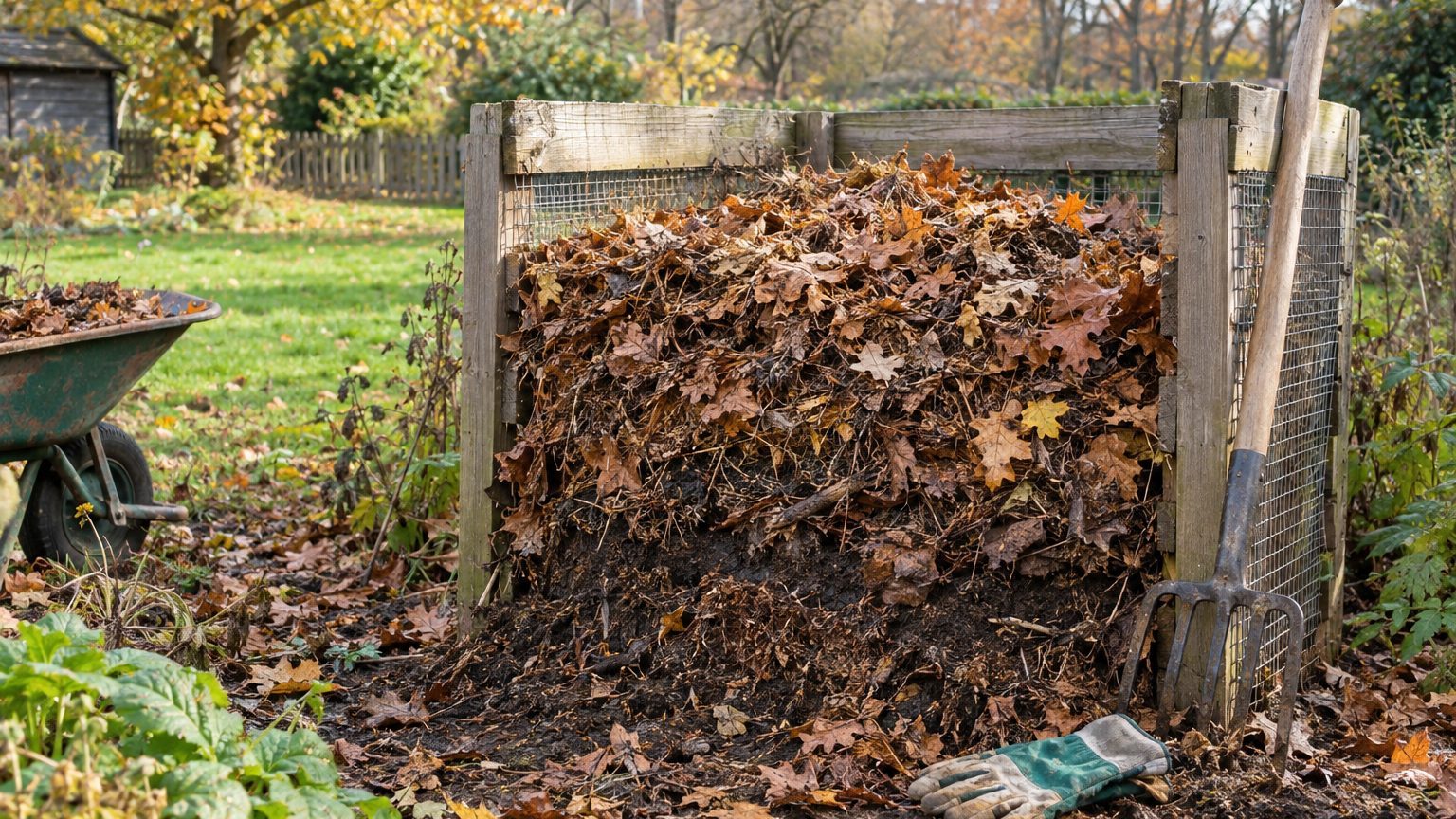
Yes, you can compost oak leaves, and they make good compost. They’re slow, that’s all. Whole oak leaves are tough and leathery, with a high carbon content, so they can sit in a pile for two to three years without much progress. Shred them, mix them with something rich in nitrogen, and keep the pile damp. Then they turn into the same dark, crumbly material you’d get from any other leaf.
Oak leaves in compost pile
Oak’s reputation as a problem leaf comes from speed, not toxicity. Thin leaves from dogwoods and birches rot in the course of a winter. Thicker oak or magnolia leaves, by contrast,
may take two years or more to make the transition from fallen leaf to morsels of humus
. That gap explains why so many gardeners say oak “doesn’t compost.” It does, on a different clock.
Two things slow oak down. The first is chemistry. NC State Extension puts the carbon-to-nitrogen ratio of oak leaves at
about 60:1
, while
the ideal ratio for decomposition runs from 25:1 to 35:1
. Oak leaves sit well above the top of that range. Microbes starve for nitrogen, and the pile idles. The second is texture. Whole leaves mat down like wet cardboard, and
matted leaves create a barrier to air and water
. Air-starved piles turn sour and slow.
The fixes are mechanical and cheap. Run a mower with a mulching blade over the leaves, or use a leaf shredder. Iowa State Extension notes that
oak leaves can be shredded with a lawn mower or a leaf shredder
. The payoff is big. One leaf-composting guide reports that
shredded leaves become leaf mold in about a year, versus two to three years for whole leaves
. That’s the difference between finished leaf mold by next fall and waiting until the fall after next, or longer.
Then add nitrogen. Fresh grass clippings, vegetable scraps, coffee grounds and manure all pull the overall ratio toward the sweet spot. If you have a lawn, the pairing is natural, and the full method is laid out in how to compost leaves and grass clippings. Alternate layers of shredded oak and green material, wet each layer until it feels like a wrung-out sponge, and turn the pile when you can. For the basics of building a leaf pile from scratch, start with how to compost leaves.
Oak makes a good “brown” for another reason. Because it lasts, it keeps a pile airy through a wet winter instead of collapsing into slime the way soft maple or grass-heavy piles can. A handful of whole leaves mixed into a shredded batch adds structure. A bin made only of whole oak leaves is the one to avoid.
How long should you expect to wait?
It depends on how you handle the pile. Shredded oak in a well-fed, regularly turned pile can break down in several months, though a year is a safer plan for a cool, passive heap. Whole leaves left alone to become leaf mold can take two to three years. Climate, leaf size and oak species all shift the timeline. If you want results sooner, the techniques in how to compost leaves faster (smaller pieces, more nitrogen, steady moisture, regular turning) apply directly to oak.
Oak leaf compost pH
Fresh oak leaves do measure on the acidic side. Figures commonly cited run from about 4.5 to 5.5. That’s roughly where blueberries like their soil, and it explains the worry. But a leaf’s pH on the day it drops is a snapshot of something that’s about to change.
Decomposition rewrites the numbers. Microbes break down the organic acids in the leaf tissue, and the finished product moves toward neutral. Landscape writers who track this commonly cite a finished range of about 6.5 to 7.5, which is friendly to most vegetables, lawns and perennials. I’d treat that range as a typical result, not a promise. Your own compost will vary with what else went into the bin, and a cheap soil test kit will tell you more than any chart.
Finished compost in general leans mildly alkaline instead of acidic. Illinois Extension’s composting guidance says
the pH of compost is slightly basic (or alkaline)
, and that’s the reason it advises keeping compost away from acid-loving plants such as azaleas and hollies. Oak compost isn’t exempt from that rule. It’s simply not the acid bomb its reputation suggests.
Testing is straightforward if you’re curious. Take a sample from the center of the pile once it looks dark and crumbly and smells like forest floor. Mix it with distilled water according to the kit’s directions and read the result. If the compost is still pale, stringy and recognizably leaf-shaped, it isn’t done, and the reading will reflect that. Wait a few more weeks and test again.
Are oak leaves too acidic for compost
No. Illinois Extension answers the question plainly, saying that
oak leaves in compost will not create an acidic soil
. Iowa State Extension reaches the same conclusion about oak leaf mulch, which is the harsher test because the leaves are raw and sit directly on the soil. It says that
while oak leaves are slightly acidic, an oak leaf mulch should have little effect on the soil pH
. If unrotted leaves can’t move soil pH much, finished compost is unlikely to acidify it either.
Soil has a built-in defense, called buffering. Clay, minerals and the existing chemistry of the ground resist swings in either direction. A thin layer of leaf litter doesn’t overpower that. Long-term evidence backs it up: a Michigan State study, cited by a nursery horticulturist, found
no change in soil pH after six seasons of mulching oak leaves into a lawn
. Six seasons is a lot of autumns of oak.
A related myth deserves a quick correction. Oak leaves are sometimes lumped in with black walnut, which really does cause trouble. The walnut problem is a chemical called juglone, and Illinois Extension warns that
walnut leaves contain a growth inhibitor to which some plants are sensitive
, adding that
they must be thoroughly composted before they go on the garden
. Oak has no such reputation among extension specialists. As one nursery horticulturist put it,
oak leaves are just oak leaves
.
There’s one small exception worth keeping in mind. If your garden soil already tests quite acidic and you add very large amounts of compost made almost entirely from unfinished oak leaf material, you could nudge it further. That’s a narrow case. For most yards, the realistic risk is the opposite problem: impatience. People spread half-rotted leaves, see them mat on the surface, and blame the oak.
When acidic oak leaves are actually useful
Gardeners growing blueberries, azaleas or rhododendrons sometimes want an acid-leaning mulch. Shredded oak leaves spread as a surface layer around those plants make a fine mulch for them, but don’t count on the leaves to lower soil pH, since oak leaf mulch has little effect on it. A soil test is still the way to know whether those beds need adjusting.
A practical plan for this fall
Start now, while the leaves are still dry and crisp enough to shred cleanly. Wet leaves clog a mower deck and mash instead of chopping. Rake a layer a few inches deep, run the mower over it until the pieces are about the size of a quarter or smaller, and bag or rake the shreds into your bin. Build the pile in layers with a nitrogen source, wet it as you go, and cover it if your winter is rainy enough to flood it.
Three habits carry most of the weight:
- Shred first. It’s one of the biggest speed-ups available.
- Pair oak with greens or manure so the mix isn’t all carbon.
- Keep the pile as damp as a wrung-out sponge, not soggy and not dusty.
Surplus shredded oak doesn’t have to go into the bin at all. Iowa State Extension calls shredded leaves
an excellent mulch for vegetable gardens, raspberry plantings, perennial flower beds and around trees and shrubs
. Spread it a couple of inches deep over beds before the ground freezes, and it protects the soil all winter while it breaks down in place. Save a corner of the yard for a whole-leaf pile as well, so the leaves you don’t have time to shred are still working toward leaf mold in the background.
One last point about timing. Finished oak compost is gentle enough to use as a top-dressing on lawns and vegetable beds, but if you’re feeding acid-loving shrubs, remember Illinois Extension’s caution that compost in general runs mildly alkaline. Mulch those plants with the shredded leaves themselves, and keep the finished compost for the rest of the garden.
Sources : gurneys.com