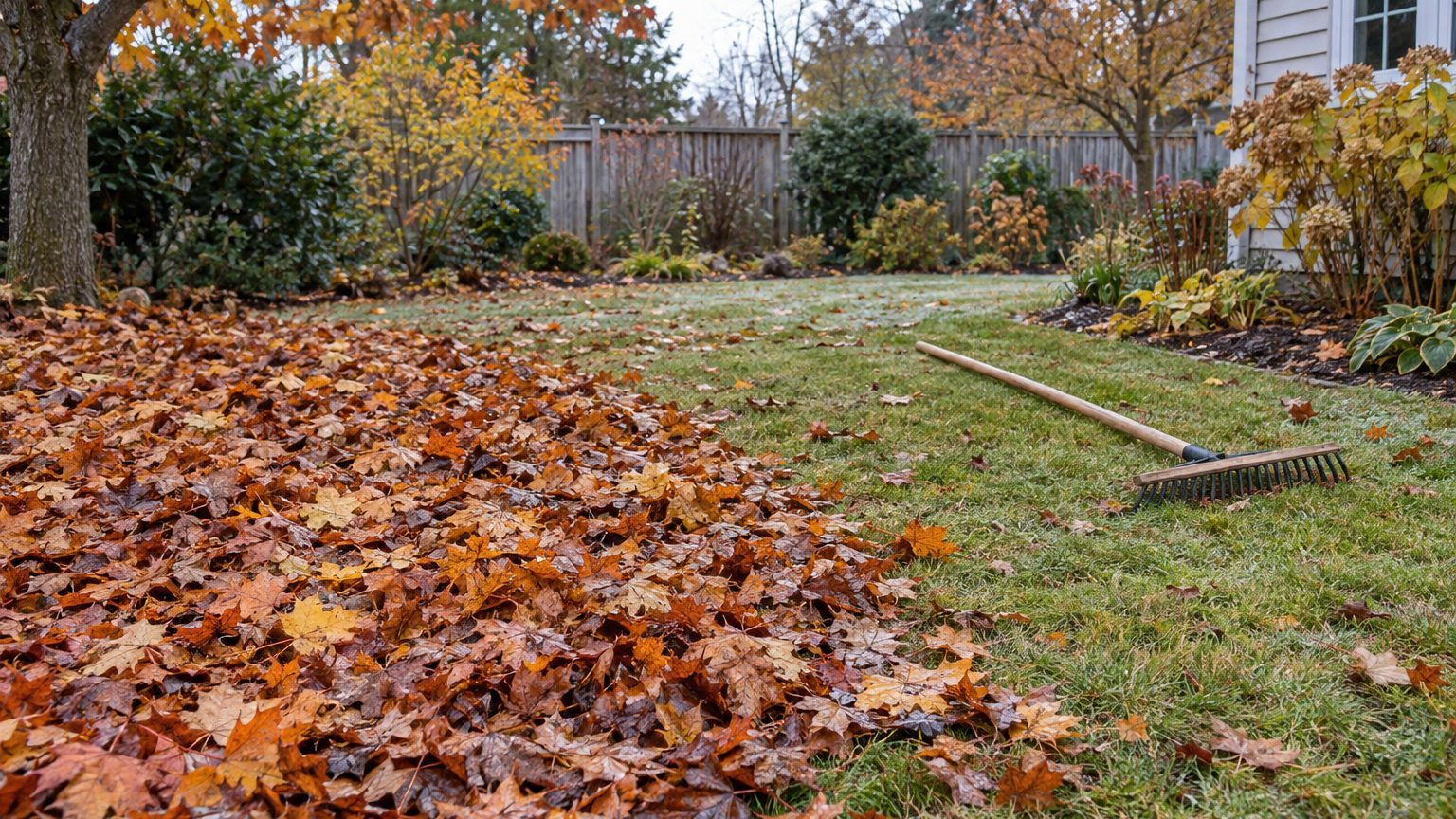
Yes, for any stretch of lawn where leaves have packed into a thick, matted layer. A heavy mat blocks light and air, holds moisture against the grass, and can leave thin or dead patches by spring. In cold, snowy climates it also invites snow mold. You don’t have to clear every leaf. A light scatter that breaks up or blows around can stay, and garden beds and the ground under shrubs can keep theirs. Time the last pass for after most leaves have dropped and before the ground freezes or snow stays down.
Here we focus on the final weeks before dormancy and snow. For the broader question of when to rake and when to leave leaves alone, see Should I Rake Leaves? When to Rake and When to Leave Them.
Should i rake leaves off my lawn
Cool-season grass is still working in autumn.
Lawns keep making carbohydrates through photosynthesis and store them in the roots, which carry the plant through dormancy.
A leaf mat cuts off the light that feeds that process. Colorado State extension advises that
leaves on turf should be removed if they are more than a few inches deep.
Wide, flat leaves like maple and sycamore lie down like shingles, and once rain glues them together the mat sheds air as well as water.
A thin, loose scatter is a different story. Purdue’s turf specialists note that
mowing right up to dormancy mulches late-fallen leaves and may help prevent snow mold.
Dry leaves chop up more easily, and
if the debris is too thick, a rake, blower or similar equipment is the answer.
University research is often cited as allowing roughly 6 inches of finely shredded leaves to be mulched into turf, but that assumes a capable mower and dry leaves. It is not permission to leave whole leaves 6 inches deep.
Should i rake leaves in the fall
Rake once, at the very end, and you may face a soggy, compacted blanket. Purdue suggests
mulching leaves with a rotary mower several times throughout fall
as a way to keep up without raking, blowing or bagging. Then plan one deliberate final pass once the late droppers, oaks especially, have let go.
Where you rake matters more than how much. Leaves pile along fences, foundations, and lawn edges, and shady spots stay damp longest. If time is short, work those places first and let a thin scatter in open sun fend for itself.
Leave the leaves
Beds and shrub borders are the easy yes. The National Wildlife Federation suggests
moving leaves from sidewalks, driveways and turfgrass into garden beds and under native trees in 3-to-4-inch layers, with a few inches of space around trunks.
It adds that
many moth and butterfly caterpillars overwinter in fallen leaves before emerging in spring.
Shredding them will kill some of those insects, so leave at least part of the pile whole.
Some spots are usually worth clearing. Wet leaves on walkways and steps are a slip hazard, and leaves in storm drains block runoff. Evergreen groundcovers such as ivy or pachysandra need light all winter, so a leaf blanket shades and soaks them. A newly seeded lawn has fragile seedlings that a mat can bury. Even the wildlife guidance keeps leaves off turf, because
a layer of leaves blanketing turfgrass will smother it.
How do I know if I need to rake before winter?
The check takes a few minutes. First, look at the grass: can you see blades through the leaves? A common rule of thumb says to act when leaves hide most of the grass. Second, reach in and lift. A loose layer that fluffs apart and lets air through can stay. Leaves that cling together, hold their shape as a sheet, and feel wet underneath have bonded into a mat. Large flat leaves mat more than small, crisp ones. Cool-season lawns, such as Kentucky bluegrass, tall fescue and perennial ryegrass, are the ones at stake. And snow cover decides how long the mat stays damp.
Warm-season lawns are more forgiving. For dormant Bermuda or zoysia after a snowy winter, Virginia Cooperative Extension says
to do nothing, since the disease has mostly infested dormant leaves and won’t cause long-term problems.
Heavy leaf cover can still shade the first spring growth, so a mat is worth clearing there too.
| Situation | Grass or climate context | Action before winter | Reason or risk |
|---|---|---|---|
| Light, loose scatter on the lawn | Any lawn, any climate | Leave in place (or mulch-mow) | Breaks up or blows around; grass stays visible |
| Moderate layer, grass still visible | Cool-season lawn still growing | Thin the layer | Keeps light reaching the blades during fall energy storage |
| Thick, wet, matted layer | Any lawn, worst on cool-season grass in snowy climates | Rake fully before snow stays down | Blocks light and air; damp, dark pocket under snow favors snow mold |
| Warm-season or dormant lawn in a mild climate | Bermuda or zoysia, little snow | Thin or leave a loose layer | Dormant grass is less affected, but a mat can still shade spring growth |
| Leaves on walkways and drains | Any yard | Rake fully | Slip hazard and clogged drains |
| Leaves in garden beds and under shrubs | Any yard | Leave in place | Natural mulch and winter habitat for insects |
What happens if you leave leaves on grass all winter?
Leaves don’t cause snow mold on their own. The fungi are already there:
they lie dormant in the soil and turf canopy for most of the year, then become active in high humidity just above freezing.
Iowa State extension says
extended snow cover on ground that is not completely frozen is conducive to snow mold.
A wet leaf mat under that snow supplies the damp and dark. Purdue confirms that
lawns with heavy leaf debris through winter are more susceptible to snow mold.
Gray snow mold needs snow. Pink snow mold, as Utah State’s pest factsheet puts it,
does not require snow cover
, so a cool, wet, leafy lawn can get it anyway.
The damage shows at melt.
Circular, straw-colored patches appear as the snow recedes
, from a few inches across to a few feet. Most of the time the grass survives:
snow molds can kill turf to the crown, but they most often attack only the leaves, leaving an eyesore with potential for regrowth.
Smothered patches without mold often follow the outline of a leaf pile and come up pale or yellow once the leaves are lifted. Leaves rarely kill a whole lawn, but they can thin patches, and thinned turf gives weeds an opening in spring.
When is it too late to rake leaves before winter?
Not at the first frost. Plenty of trees drop their last leaves afterward. The real deadline is when the ground freezes or snow stays down, and that date varies by weeks, even months, between the northern tier and the Gulf Coast. Check your local first-frost and snow-cover averages instead of trusting a calendar date, and let frost thaw off the blades before you walk out there.
Once the soil is frozen, think twice. University of Nebraska extension warns that
dormant turf cannot repair damage until spring
, and that
traffic on frozen or partially frozen soil can increase compaction.
If a dry, thawed day comes along, use a blower or a flexible rake to clear what you can. If snow has settled in, leave it, then rake gently at the first spring thaw and expect gray snow mold patches to green up on their own as temperatures rise. Pink snow mold spots may need overseeding.
How do I clean up leaves before winter without raking everything?
Work in this order when daylight and weather are short:
- The lawn itself, starting with shady spots, edges, and under trees.
- Walkways, steps and driveways.
- Storm drains and gutters near the yard.
- Evergreen groundcovers and new seedlings.
Everything else, from beds to under shrubs, can wait or stay.
A flexible leaf rake is gentle on turf, and a blower is quickest for pushing leaves into beds or a heap for the curb. A tarp saves your back when hauling to the compost pile. Run a mower over dry leaves, since
dry leaves mulch more easily and you shouldn’t shred too many in a single mowing.
Check your town’s rules on curbside pickup, bagging, and burning before you pile anything.
Frequently Asked Questions
Can I rake leaves in the winter?
You can, but be careful. Dormant, frozen turf can’t repair itself until spring, and walking on it compacts the soil. Rake only on a thawed, dry day, and leave snow-covered leaves for the spring thaw.
Do I need to rake leaves if it’s going to snow?
If the leaf layer is thick or matted, yes, get it off before snow stays down. A light, loose scatter is fine to leave.
Is it bad to leave wet leaves on grass?
Wet leaves are the bigger worry. They flatten and bond into a mat that holds moisture against the blades and blocks light. Rake them off on a dry day, or let them dry before you mulch-mow.
Should I rake leaves after the first frost?
Yes, if leaves are still falling. The last pass belongs after most leaves are down. Wait for the frost to melt off the grass first, and finish before the ground freezes or snow stays.
Will leaves on the lawn kill the grass over winter?
A thick mat can thin or kill patches, and cold, snowy climates add snow mold risk. Most snow mold damage is to the leaves, though, and the grass often regrows. A thin, loose layer is unlikely to do harm.
Sources: aces.edu | ag.purdue.edu | archive.lib.msu.edu