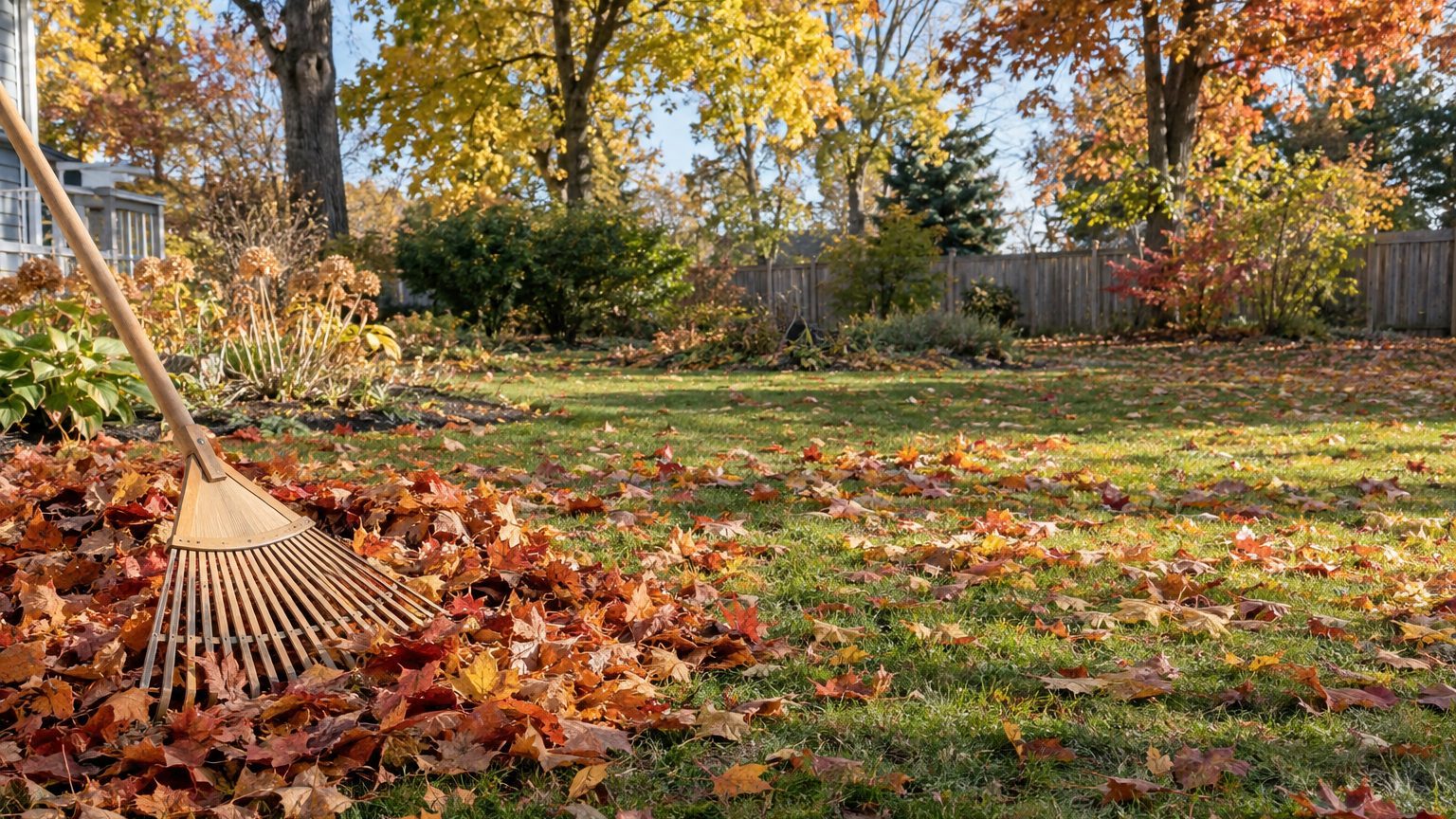
Rake when the leaves have buried the grass and a mulching pass won’t fix it. Skip the rake when the layer is thin enough to see turf through it, because a mower can handle that. University of Wisconsin Extension guidance says that
a lawn with about 20 percent leaf cover can be ignored, and even 50 percent coverage doesn’t call for raking
. Past that point, the answer depends on three things: how deep the leaves are, what kind of lawn you have, and what you plan to do with the leaves afterward.
Should I rake leaves in the fall?
Not every leaf, and not every week. The old habit of clearing the yard down to bare turf is no longer the default advice, but neither is the opposite extreme of leaving everything where it falls.
The case against total cleanup comes mostly from wildlife biology. The National Wildlife Federation points out that
94 percent of moth species rely on the leaf layer to complete their lifecycle
, and that
luna moths, great spangled fritillaries, woolly bear caterpillars and red-banded hairstreaks all overwinter in it
. Fireflies spend much of their lives down there too. Their larvae
often sit beneath fallen leaves or just under the soil
, and the same federation notes that
they can end up in yard waste bags and get hauled away
. Birds forage in the same layer.
Thrushes, sparrows and juncos are the usual suspects
, scratching for the insects and seeds hiding underneath.
Then there’s the nutrient angle. A tree spends a season pulling minerals out of the soil and packing them into its foliage. Bag the leaves and you ship that capital off your property, and often to a landfill. The federation estimates
about 30% of yard waste bags go straight to the landfill
.
Turf specialists push back, and they have a point. Mississippi State University Extension acknowledges the popular argument that leaves insulate grass through hard freezes, then says plainly that
leaves left on turf can damage your lawn’s health
. Its specialists recommend you
periodically rake leaves or mulch them down rather than letting them pile up
. The University of Minnesota’s turf program lists the consequences of a heavy cover:
snow mold diseases and more extensive damage from voles and mice come spring
. If a matted layer did survive the winter, Should I Rake Leaves in the Spring? explains how to deal with it.
So the fall routine that works is a compromise with a clear trigger. Let leaves accumulate in places where grass isn’t the priority (under trees, along fence lines, in beds). On the lawn itself, act before the layer mats down. Wet leaves that have been pressed flat by rain for a couple of weeks are a different problem than a loose, dry scattering. One quick caveat:
raking and bagging may be required by some cities and homeowners associations
, so check local rules before you go fully hands-off. If you’re deciding on timing as winter approaches, Should I Rake Leaves Before Winter? covers the cutoff in more detail.
Should I rake leaves or mulch them?
For most lawns, mulch. Rake only if the pile is too deep to shred in a few passes.
That’s the common advice from land-grant universities. University of Georgia Extension puts it bluntly:
instead of raking leaves, it recommends mowing them
. Michigan State University Extension says running a mower over fallen leaves
saves money and reduces weeds
, and adds that the decomposing pieces
supply nutrients, so you need less fertilizer
. Minnesota’s turf specialist calls mulching his preferred option, noting that
some leaf types, including maples, have been shown to reduce weed seed germination when mulched into the lawn canopy
.
The size of the pieces matters more than the mower. A mulching blade isn’t strictly necessary (Georgia’s extension agent says
blades made for mulching are not absolutely necessary
), though
they cut leaves into smaller pieces that decompose faster
. A common benchmark among home-improvement writers is dime-size fragments. Michigan State’s advice is to make several passes so the pieces
settle down into the turf rather than mat together
. Minnesota warns that the method
requires more frequent mowing in the fall and possibly several passes
.
Mulching has limits, and they show up fast with certain trees. Large, tough leaves such as oak can resist shredding more than thin ones. If a mat is still visible after two passes, a third pass from a different direction usually helps. If it doesn’t, rake what’s left into garden beds rather than forcing the mower through it.
Scotts gives a practical test that matches the university advice:
keep the layer thin enough for grass to show through
, and mulched leaves won’t smother the lawn or invite disease the way a matted layer of whole leaves can. That test is easy to run with your eyes. Walk the yard after mowing. If green blades are visible, you’re done. If it looks like a brown carpet, the mower has hit its ceiling.
Where the raked leaves should go
Raking isn’t wasted effort if the leaves land somewhere useful. Michigan State suggests that if you have too many leaves to mow, you
collect the mulched leaves every other mowing and put them over cleaned-out vegetable beds
. The National Wildlife Federation recommends
using them as mulch in garden beds, aiming for a layer 3-5 inches thick
, where they suppress weeds and break down into nutrients. Mississippi State adds two more options:
blowing or raking them into shady areas where grass doesn’t grow well, or placing them in compost bins
.
For the surplus, how to compost leaves walks through the pile-building, and what to do with fallen leaves compares every disposal route side by side. Shredded leaves break down far faster than whole ones, which is why a quick mower pass before piling them is worth the extra time.
Should I rake leaves off my lawn?
Yes, in five situations. Outside those, the mower is usually enough.
First, when the layer is too deep to see through. A lawn-care trade site puts the threshold at
the point where you can no longer see your grass beneath the leaf layer
. Minnesota’s turf pages show a side-by-side of a leaf depth that
would not be practical to mulch, where removal is required
, versus a moderate one that
can easily be mulched into the lawn canopy
. If your leaf fall looks like the first photo, rake.
Second, when the leaves are already wet and matted. A lawn-care company advises that
leaves that have sat long enough to mat down or become wet and compacted are past the point of effective mulching
. In that case, rake or blow them off first, then compost or bag the excess. Dry leaves shred. Soggy ones smear.
Third, when you’re about to overseed. One lawn-care guide says to
always rake before overseeding, since fallen leaves can deprive new seedlings of the light and nutrients they need
. Seedlings have no reserves. Even a modest cover of leaves can block the light they need to get started.
Fourth, when thatch is already thick. The same guide explains that
decaying leaves add to thatch, and while under half an inch is beneficial, more than that can keep water, sunlight and nutrients from reaching the turf
. A lawn that spongy underfoot doesn’t need extra organic matter dumped on it.
Disease history is a fifth reason worth a mention. Mississippi State says the point of raking is to
reduce the chance that grass develops diseases or harbors damaging lawn insects
. If your lawn had snow mold or vole trouble last spring, you have a stronger reason than most to keep the surface clear of heavy cover going into winter.
Here is how the decision breaks down in practice.
- Light cover (grass clearly visible): leave them, or mow once.
- Moderate cover: mulch with the mower, two or more passes, and repeat as more fall.
- Heavy or matted cover: rake it off, then move the leaves to beds or the compost pile.
- Before overseeding: rake first, regardless of depth.
Timing interacts with all of this. If you mow and rake in the same weekend, the order changes how well each step works, and should i rake leaves before mowing sorts that out. And if you opt to leave a lot of leaves through winter, the spring cleanup matters. Matted leaves that survive until thaw have to come off before the grass can green up, a topic covered in should i rake leaves in the spring.
A practical split works for many yards. Treat the lawn as the zone where leaves get shredded or removed, and treat everything else as a leaf-friendly zone. The National Wildlife Federation’s own guidance is that
you can rake leaves off paths and lawn and move them to garden beds and the base of trees
. That way the grass gets its sunlight, the beds get their mulch, and the moth pupae and firefly larvae get their winter cover. The rake does its job in a few spots instead of the whole property, and the weekend takes a lot less time.
One last nuance: the federation’s own advice acknowledges the tension with lawns, noting that
a thick layer of leaves on a lawn will smother it
, and suggesting some owners shrink their turf and convert that ground to garden beds. Whether you take that step is your call. But if you’ve been raking the same under-tree patch every year and the grass there never looks good anyway, that patch may be a candidate for a bed instead.
Sources : turf.umn.edu | themiddlesizedgarden.co.uk