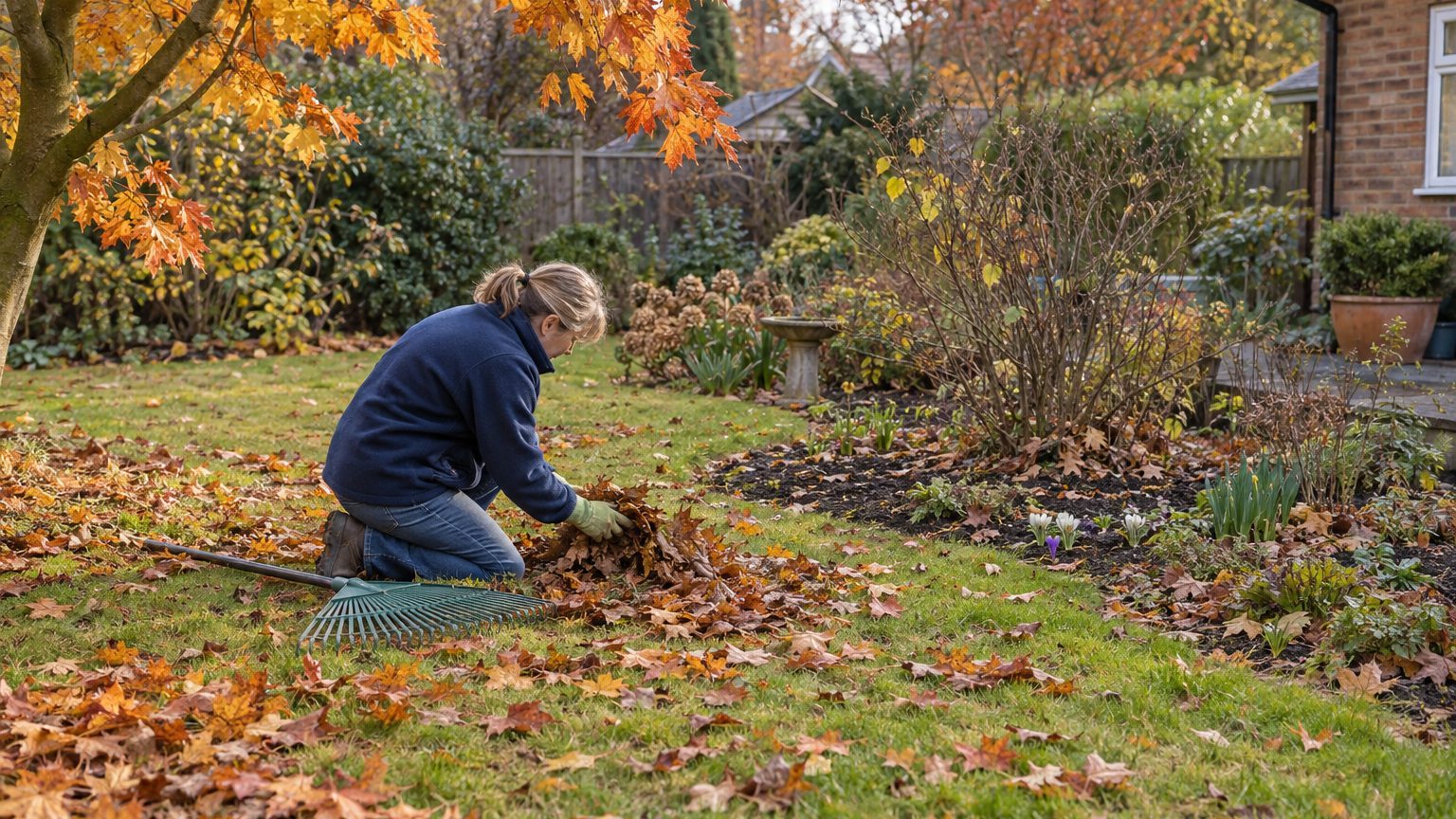
Usually yes, but only some of them, and not too early. In spring, rake or lift leaves that are matted on the lawn, because wet mats smother grass and set the stage for snow mold. Clear heavy layers off emerging perennials and bulbs. Leave thin, loose leaves in beds and under shrubs, where they break down and feed the soil. Then wait for the right conditions before a full cleanup: daytime temperatures consistently in the 50s°F and soil that no longer squishes.
This page covers the spring half of the question only. If you’re still weighing the general debate, start with should i rake leaves. For the fall version of the decision, see should i rake leaves before winter.
Should I rake leaves in my yard
The short answer for spring: rake only what is smothering something
Spring raking is triage, not housekeeping. The question for each patch of leaves is whether it’s blocking light and air from something alive. University of Missouri Extension puts the lawn tolerance at
10% to 20% of the lawn covered by a thin layer of leaves
, which will decompose and add nutrients. Past that point, grass can suffer.
Lawn, beds, under shrubs and hard surfaces: a quick decision guide
Walk the yard once and sort it by area. The table below does the sorting for you.
| Yard area | What to do in spring | Best timing or condition to wait for | Why |
|---|---|---|---|
| Lawn | Lift matted leaves; rake lightly with a flexible leaf rake | Soil no longer soggy and the surface firm | Prevents grass smothering and snow mold |
| Perennial beds and emerging bulbs | Thin heavy or matted layers by hand; leave loose leaves | New growth showing and temperatures steady in the 50s°F | Protects crowns and lets shoots reach light |
| Under shrubs and trees | Leave in place; move excess leaves here | Until warm weather has settled in | Wildlife shelter and free mulch |
| Vegetable and raised beds | Lift leaves aside, keep them nearby in a pile | Soil workable and temperatures steady, before planting | Lets soil warm; shelters insects still emerging |
| Paths, patios and driveways | Rake or sweep | Any dry day; no need to wait | Slip hazard and clogged drains |
Leaves in flower beds over winter
What to do with the leaf layer once spring arrives
Beds forgive more than lawns do. A loose layer of a few inches works as mulch, and Missouri Extension suggests that when plants start to grow in spring, you
remove enough of the mulch to allow the plants to emerge
. Whole oak leaves are common troublemakers. They can
become matted and impede bulbs and perennials from sending up shoots
. Fluff those mats by hand, or move a portion to a corner of the bed.
Keep your fingers close to the plants. A Colorado master gardener recommends a
small hand rake or gloved hands to clear leaves from around the crown of plants
, which cuts disease risk. A full-size rake tears tender sprouts.
How to tell when perennials are ready to be uncovered
Let the plants set the schedule. University of Minnesota Extension says to remove protective mulch
as it thaws in early spring to avoid crown rot
, but to keep a cover handy for a late freeze. Look for swelling buds, pale green tips at the soil line, or early bloomers such as crocuses and snowdrops. Seeing those means the layer above them should be thinned, not necessarily removed. Evergreen perennials such as hellebores are the exception, since you can
clear leaves and debris around them and trim winter-damaged foliage
for early blooms.
Leave the leaves for wildlife
Which insects are still sheltering in leaf litter in early spring
Plenty. University of Maryland Extension lists luna moths, which overwinter as pupae in cocoons within leaf litter, and great spangled fritillaries, which overwinter as caterpillars there. Bumble bee queens can overwinter as adults underground, and small carpenter bees overwinter in plant stems. University of Illinois Extension adds
mourning cloak butterflies and swallowtails, and notes bumble bee queens may also use leaves
. Even after queens emerge, they keep using leaf litter for protection. A warm afternoon in March doesn’t mean these insects have emerged. Illinois Extension advises holding off cleanup through March and early April, noting that many insects have emerged by around mid-April, and that the ideal start for cleanup is around mid-May, once lows are reliably in the 50s.
A compromise cleanup that protects wildlife and keeps the yard tidy
Stage it. Start with the lawn, since that’s where delay does harm. Next, tidy bed edges and the front of borders, and leave the less visible centers for later. Illinois Extension suggests that edges can be cleaned up while the less visible center or back waits. Whatever you pull,
stack it loosely somewhere
so insects can still emerge. Bagging it sends them to the curb. Missouri Extension also advises leaving the leaves whole, since shredding
may destroy hibernating critters
. Finally, keep one leaf pile in a back corner until warm weather has settled in.
When is it safe to rake leaves in spring?
Using temperature, not the calendar, as your signal
The guideline from conservation groups is daytime temperatures consistently around 50°F or higher, but the wording varies. One watershed group says about 50°F for at least 7 consecutive days. Other groups say several days or one to two weeks of mild nights. Treat 50°F as a starting point, then add cues from your own yard:
- Several consecutive days with daytime temperatures in the 50s°F, not one warm afternoon
- Lawn visibly greening and growing; cool-season grasses start spring growth once soil reaches roughly 50° to 65°F
- Soil firm underfoot, with no standing water
- Perennials and bulbs showing new growth
Why soggy soil is a reason to wait
Snowmelt leaves the top layer of soil spongy. University of Minnesota Extension says to wait until the soil is no longer soggy, then
avoid aggressive raking, which can damage soft turf and wet soil
. A quick test: if your footprints fill with water, it’s too early.
Can matted leaves hurt my lawn in spring?
How to spot smothered grass and snow mold patches
Yes, they can, and a thick mat left from fall is the usual cause (for how leaves and mowing interact, see should i rake leaves before mowing). Gray snow mold shows up at snowmelt as
white or tan crusted patches of dead and matted leaf blades, similar in appearance to papier mâché
. Pink snow mold is the more stubborn one and can leave dead spots. Smothered grass looks pale, flattened and yellowed under the leaf mat, without the crusty fungal look. Normal winter dormancy is uniformly straw-colored across the lawn, with no sharp patch edges or matting.
When a light raking is enough and when to lift the whole mat
For snow mold, light raking is the standard advice. Penn State Extension notes that mature turf
tends to recover quickly when temperatures warm and leaf growth resumes
, and that raking breaks up the matted leaves. Fungicide applied once symptoms appear
is of no value
. If leaves cover more than a thin fraction of the turf, lift them off completely and move them to a bed. If grass is still dead after several weeks of warm weather, reseed that patch.
How do I rake leaves in spring without damaging the lawn?
The right tool: flexible leaf rake vs. stiff bow rake
Use a leaf rake. Its flexible tines are
flexible enough to lift debris without tearing up the turf underneath
, while a stiff bow rake digs into thin turf and rips out crowns.
Raking wet leaves and soft turf without tearing up grass crowns
Wet leaves are heavy, and raking them on wet turf pulls plants out with them. Minnesota guidance warns that raking snow mold when wet means
you’ll end up pulling out your grass plants
. Rake on a dry day, work gently, and stop when the ground feels soft. Common mistakes include:
- Raking on saturated soil
- Using a stiff metal rake on thin turf
- Clearing everything on the first warm day
- Bagging leaves that could stay on site
Frequently Asked Questions
Is it too late to rake leaves in spring?
Not really, but the cost of waiting changes. Once grass is growing, a thick mat of leaves can smother it, so lift those first. For beds, the main risk of waiting too long is that
new insects are likely to move into the leaf litter and make summer homes there
.
Should I rake wet leaves in the spring?
Wait if you can. Wet turf and soft soil tear and compact easily, so choose a dry day and a flexible leaf rake. If you must clear wet leaves from a path or drain, that’s fine, since hard surfaces can’t be damaged.
Do I need to dethatch or rake my lawn in spring after leaving leaves all winter?
Usually a light raking is enough. One Minnesota guide says
light raking and time are usually all that’s needed
. Save vigorous dethatching for lawns with excess thatch, and wait until the turf is firm and growing.
Can I leave leaves on the lawn over winter and clean up in spring?
You can, as long as the layer is thin enough that grass shows through. Thick or matted leaves are the problem. Lift those once the soil firms up, and leave the rest.
One last detail on timing. Warm-season grasses such as Bermuda or zoysia green up later than cool-season lawns, so in the South the “wait for growth” signal can arrive weeks after northern lawns have already been raked.
Sources: canr.msu.edu | extension.illinois.edu | extension.missouri.edu