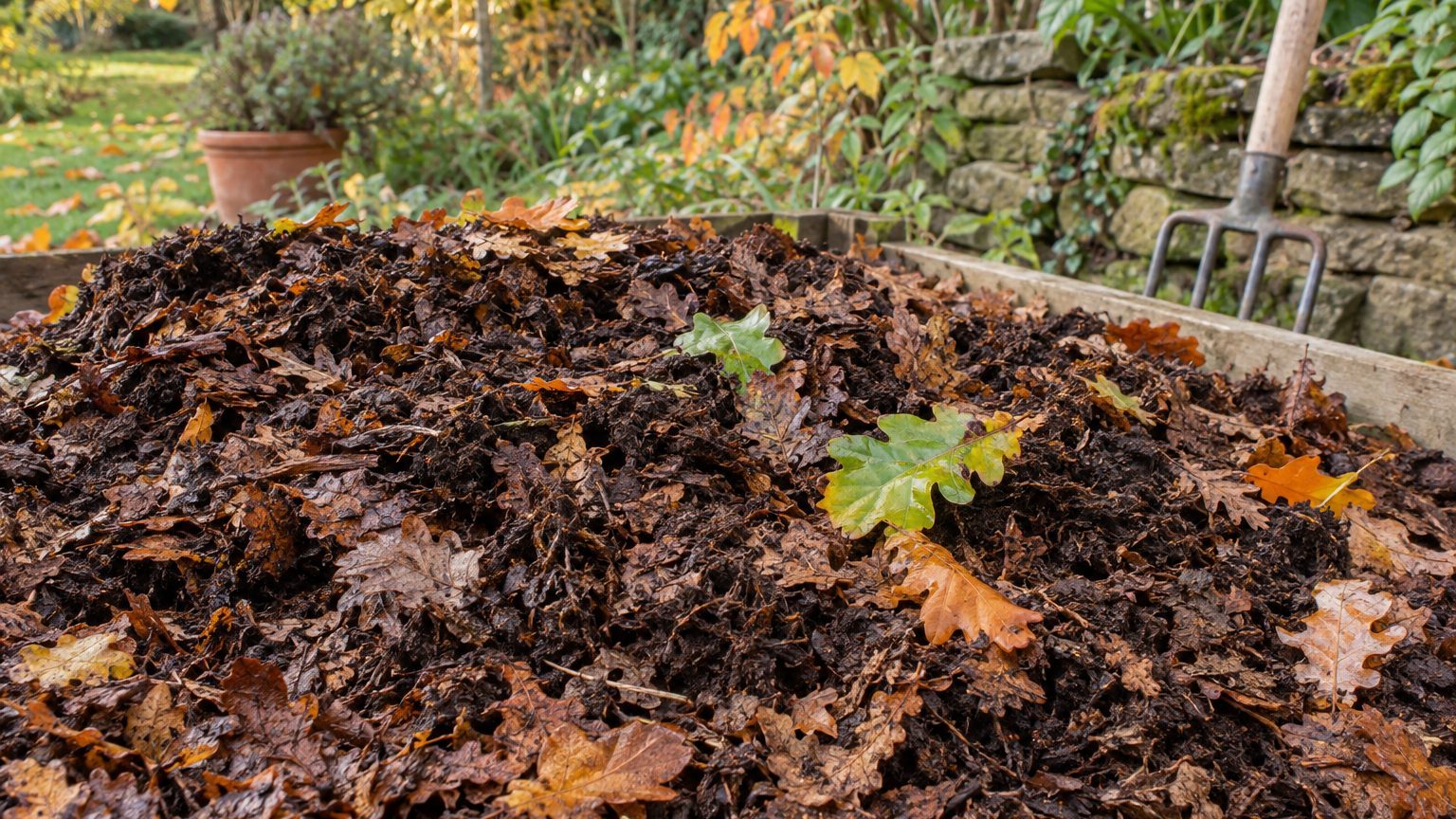
Fresh oak leaves are acidic, but only mildly. They sit at a pH of about 4.5 to 4.7.
Even oak leaves, which are acidic when fresh, break down to be neutral to slightly alkaline.
The acidity is real, but it fades quickly and rarely changes the soil underneath.
Are oak leaves acidic or alkaline
Both, depending on timing. A freshly fallen oak leaf measures acidic. A leaf that has spent a season rotting measures close to neutral, and sometimes a little above it.
Although oak leaves have an acid pH (4.5 to 4.7) when fresh, the breakdown products are neutral to slightly alkaline.
A conservation magazine once put the myth to bed in a single sentence:
as oak leaves rot they lose their slight acidity, and the oak leaf mold ends up alkaline.
The pH scale is logarithmic, so 4.5 is not a little off from neutral 7. It is roughly 200 to 300 times more acidic in raw chemical terms. That sounds alarming until you remember how leaves behave in a yard. They are spread on top of the soil, not stirred into it, and they spend months decomposing and shedding the compounds that made them acidic.
Oak is also not the only leaf with this reputation.
Most leaves are slightly acidic when they fall, with a pH below 6.
Oak just happens to be the one people worry about. Tannins are one reason. These compounds are abundant in oak foliage, and they gave the tree its folk reputation as a soil spoiler. A second reason is that oaks themselves tend to grow in soils on the acidic side, so people assume the tree made the soil that way. In most cases it works the other way around: the tree settled where the soil already suited it.
Leaf type does change how long the process takes.
Oak and holly are higher in lignin than other leaves, and therefore take much longer to break down.
That slowness is the practical complaint about oak leaves. The pH worry is mostly folklore.
Using oak leaves as mulch
Mulch is where the acidity question matters most, and the answer is reassuring. Extension specialists keep repeating the same point:
in all but the sandiest soils, soil pH is strongly buffered (resists change), so soil pH changes very little after applying most mulches.
Buffering is the soil’s built-in shock absorber. Clay and organic matter hold onto minerals that neutralize small acid inputs, so a layer of leaves can’t push the pH around much.
There is a small caveat.
Some changes in soil pH may occur in the top 2 inches of soil, especially if mulch is applied repeatedly.
That shallow zone rarely matters for established shrubs, trees and perennials, whose roots work deeper. The place to be careful is a bed of very sandy soil with little buffering capacity, or a seedbed where tiny roots live in that top couple of inches.
Lawn research supports the same conclusion. A Michigan State University study found
no change in soil pH after six seasons of mulching oak leaves into a lawn.
Six autumns of heavy oak leaf drop is a harsher test than most backyards will ever face, and the grass beneath didn’t shift.
So where can the leaves go? Iowa State’s yard and garden specialists answer a plain yes.
Shredded leaves are an excellent mulch for vegetable gardens, raspberry plantings, perennial flower beds and around trees and shrubs.
The mulch also feeds the soil. University of Illinois Extension figures that a two-inch layer of leaf mulch supplies about 150 pounds of nitrogen per acre, along with phosphorus and potassium.
That works out to 3.44 pounds of nitrogen, 0.46 of phosphorus and 1.49 of potassium
for a standard 1,000-square-foot patch. It’s a free, modest fertilizer, and you rake it up anyway.
Oak leaves are stiff, though, and they behave differently from soft maple leaves.
Oak leaves are fairly slow to break down and can pack down during the winter; if you shred them before placing them, they will break down faster and stay looser.
A whole-leaf layer can mat into a damp sheet that sheds water and smothers crowns. Running a mower over the pile a few times fixes that. Our guide on how to shred leaves for mulch covers the tools and the pass count, and the page on shredded leaves as mulch explains how shredded layers perform through winter. For the broader picture, including which beds benefit most, see using leaves as mulch.
Depth and placement matter more than pH. Aim for a layer 2 to 3 inches deep. Around trees,
don’t pile mulch against the trunk, which can encourage damp and disease, and allow 6 inches mulch-free around the trunk flare.
The same rule applies to shrubs and woody perennials, where a leaf pile touching the stems can hold moisture against the bark all winter.
One more option, if you have the space: leave some leaves whole.
Some types of butterflies and bumblebees use leaves for protection in the winter,
so a loose, unshredded layer under a hedge or at the back of a border gives overwintering insects somewhere to shelter.
Are composted oak leaves acidic
Rarely, and almost never in a way that matters. Composting is the same decay process as mulching, just concentrated and accelerated. Finished leaf compost starts acidic and ends near neutral. One composting guide gives a typical end range of
a reasonably neutral end product, pH between 6 and 8.
Another describes the trajectory the same way:
as the leaves break down into leaf mold, the pH goes up into a more neutral range.
Don’t expect leaf mold to fix a pH problem, though. It moderates.
Leaf mold will not correct pH problems, but will have a moderating effect.
If your soil test shows a real imbalance, compost won’t be the cure. University of Missouri Extension advisors recommend you
test your soil and add lime if necessary to raise the pH.
A soil test costs little, and extension offices in most states offer one.
Time is the real cost of composted oak leaves. Whole leaves in a simple pile are slow, and oak is slower than most leaves, so treat these Illinois Extension timings for leaves in general as a minimum.
If the leaves are shredded first, the mulch will be ready in 6 months. If the leaves are whole, then it will take longer, 9 to 12 months.
Neglect makes it worse:
an unattended pile of dry leaves could take three years or more to break down.
Keeping the pile covered and moist,
you may have ready-to-use leaf mold in a year.
A wire bin or a few mesh-sided cages works well. Shredding leaves in the fall and leaving them to sit over winter gets you a dark, crumbly product by the following autumn.
One group of gardeners should adjust expectations. If you grow blueberries, azaleas or other acid-lovers, finished oak leaf compost won’t acidify their soil.
Fully mature, neutral oak leaf compost will not provide the acidity acid-lovers need.
For those plants, partly decomposed leaves are slightly more acidic than finished compost, but their effect on the soil is small, and the dependable fix for acid-lovers is still a soil test and the proper amendment, such as sulfur.
Leaf compost has one more quirk worth knowing before spring. Missouri’s conservation writers noted that
fallen maple and oak leaves release natural phenols during the first 6 to 8 months of the rotting period.
The same source therefore advises you to
keep dead leaves and leaf compost out of an area where seeds will be sprouting until after plants are up and growing well.
So spread half-rotted oak leaves around established plants, and keep leaf mold off the seed rows until the seedlings are up and growing well.
Sources : extension.illinois.edu | mdc.mo.gov | yardandgarden.extension.iastate.edu