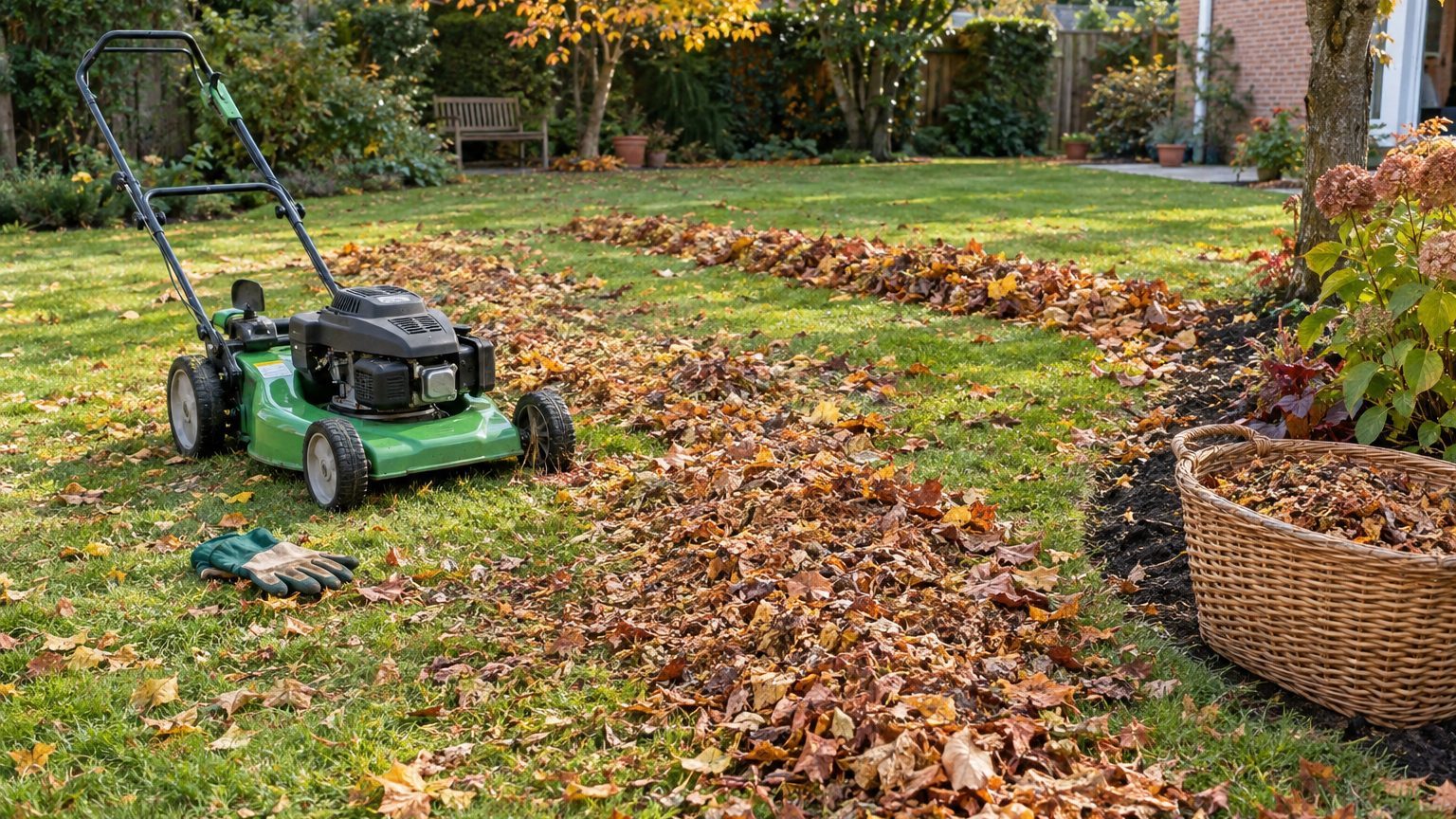
Dry leaves, a mower, and a few overlapping passes: that is one of the quickest ways to shred leaves for mulch. The target is pieces about the size of a dime, roughly three-quarters of an inch across. Anything bigger tends to mat into a soggy layer. Anything that size or smaller breaks down and lets air and water through.
How to shred leaves
Start with the mower, because you already own one.
Any type of lawn mower can chop up leaves.
The University of Florida’s extension service describes a setup that costs nothing:
pile the leaves on the lawn in rows about three feet wide and two feet deep, then run over them with the mower at its highest wheel setting.
A high deck keeps the blade from scalping the grass underneath. It also keeps the leaves from being pressed flat before they’re cut.
Expect more than one pass.
You may need to mow areas repeatedly
, and each pass makes the pieces smaller. If your mower takes a bag, use it.
With a bag attachment, collecting the shredded leaves is a neat and easy task
, and you end up with a pile you can carry straight to the beds. Running the mower in one direction so the discharge lands on a tarp also makes cleanup quicker.
Moisture decides whether any of this works. Wet leaves
pack under a mower deck and clog a vacuum mulcher’s tube instead of flowing through it, and they clump rather than shred.
If last night’s rain soaked the yard, wait. Spreading the leaves in a thin layer in the sun for a day is usually enough, and shredding goes noticeably faster once the surface crackles underfoot.
A string trimmer handles smaller jobs well. Fill a tall trash can about halfway with dry leaves,
put the trimmer inside, and mulch away.
The can contains the spray, which matters on a windy November afternoon. Wear safety glasses, because the line throws fragments of leaf and the occasional twig at your face. Work in short bursts and stir the bin so the bottom layer gets chopped too.
Leaf vacuums with a built-in shredding blade suck up and chop in a single step, and they’re easy to use around beds and along fences. The catch is bag size.
Because the bags are typically small, a big yard means emptying them many times.
A dedicated electric or chipper shredder makes more sense if you process leaves in volume every year. Those machines also accept thin twigs, but feed them sticks sparingly. Thick branches will stall or damage a mower or a light electric unit.
How much does the effort pay back? UF/IFAS Extension puts the figure at
a 90 percent reduction in leaf volume from shredding and composting.
Think of ten bags of whole leaves becoming one. That is the difference between a curb full of paper sacks and a single tidy pile behind the shed. Once you have that pile, using leaves as mulch in your beds takes about an afternoon, and the page on shredded leaves as mulch covers depth and placement in detail.
Don’t let leaves pile up first
Timing matters as much as technique. Mulching weekly during peak leaf drop works best because
there isn’t enough time between mowings for more than 6 inches of leaves to accumulate.
A thick, deep drift is hard on the mower and hard on you. Three light passes over a thin layer beat one heroic assault on a knee-high heap.
How to shred leaves for compost
Shredding matters even more for compost than for mulch, because compost microbes work on surfaces. Whole leaves give them very little to grab. Texas A&M’s extension horticulturists state it plainly:
most leaves decompose faster and more thoroughly when shredded.
Their guidance is to rake up the chopped leaves and add them to the pile.
Chopping also helps with the chemistry. Leaves are carbon-heavy, and Cornell’s composting program lists
autumn leaves at a carbon-to-nitrogen ratio of 30 to 80 to 1
(the exact figure depends on the tree species). The target for a working pile is
around 30:1 by weight.
Piles that run too high in carbon stall.
If the ratio is too high, decomposition slows down.
A pile of nothing but leaves will eventually break down, but it can take a long time.
Pairing shredded leaves with a nitrogen source fixes that. Nebraska Extension gives a worked example:
half brown tree leaves at 40:1 and half grass clippings at 20:1 produce a pile at the ideal 30:1.
Missouri Extension offers a simpler field rule:
mix roughly equal weights of fresh green material and dried brown waste, or use a 2:1 ratio of dried browns to fresh greens.
Since nobody weighs leaves, treat those as starting points and adjust. Too slimy or smelly means more leaves. Cold and inactive means more greens.
Here the bagging mower earns its keep. Mowing leaves with the bag attached collects shredded leaves and some grass clippings in the same load, which gives you a ready-made brown-and-green blend. In late fall the lawn grows slowly, so clippings may be thin. Kitchen scraps (coffee grounds, vegetable peelings) can supply nitrogen. Coffee grounds are a good example of a green material most households already have.
Finally, moisten the pile as you build it. A compost heap should feel like a wrung-out sponge. Shredded dry leaves absorb water readily, so a few passes with the hose while layering saves you from a stalled, dusty pile in January. If you want to avoid composting altogether, you can also simply pile shredded leaves in a corner and let them rot into leaf mold. It is slower, but it needs almost no attention.
How to shred leaves by hand
No mower, no trimmer, no budget for a shredder? You can still get there. How to shred leaves without a shredder goes through the full list of workarounds, but three hand methods are worth knowing here.
The first is the crunch. Dry leaves, especially thin ones such as birch, maple, and aspen, crumble when you squeeze them in a gloved fist or rub them between your palms over a bucket. It’s slow and good only for small amounts, such as topping a container or a few square feet of bed. But it takes no equipment, and the pieces come out irregular, which is fine for mulch.
The second is the chop. Put a few inches of dry leaves in a trash can or on a hard surface, and cut through them with a flat-bladed spade, a machete, or a pair of long-handled garden shears. Use a downward chopping motion, not a swing, and keep your free hand well back. Ten minutes of this on a Saturday morning makes a surprising amount of mulch. Wear gloves and eye protection.
The third is the stomp-and-rake. Spread leaves over a driveway or patio, walk over them, run a wheelbarrow across them, then rake and repeat. It crushes more than it cuts, but crushed leaves still pack less than whole ones, and they break down sooner. Done on a dry day, it works as a rough pre-shred before a trimmer or mower pass.
Whichever method you choose, don’t skip the thin-layer rule. Even well-shredded leaves can mat if applied too thickly. Two to three inches on beds is plenty. On the lawn,
leave no more than about an inch
of shredded pieces, so grass can still be seen through the layer. That is the sign you’re done. If you can’t see grass blades at all, make another pass or rake some up for the beds.
A last nuance: not every leaf shreds equally. Oak and beech leaves are tough and leathery, and they stay intact longer than maple leaves, so they benefit from an extra pass. Black walnut leaves are a separate matter, since the tree produces a compound that can harm some plants. If you have walnut trees, keep their leaves away from vegetable beds and sensitive perennials, or compost them first. A few minutes to sort your leaves by species before you start can save you a season of puzzling over a stunted tomato plant.
Sources : aggie-horticulture.tamu.edu | compost.css.cornell.edu | extension.missouri.edu