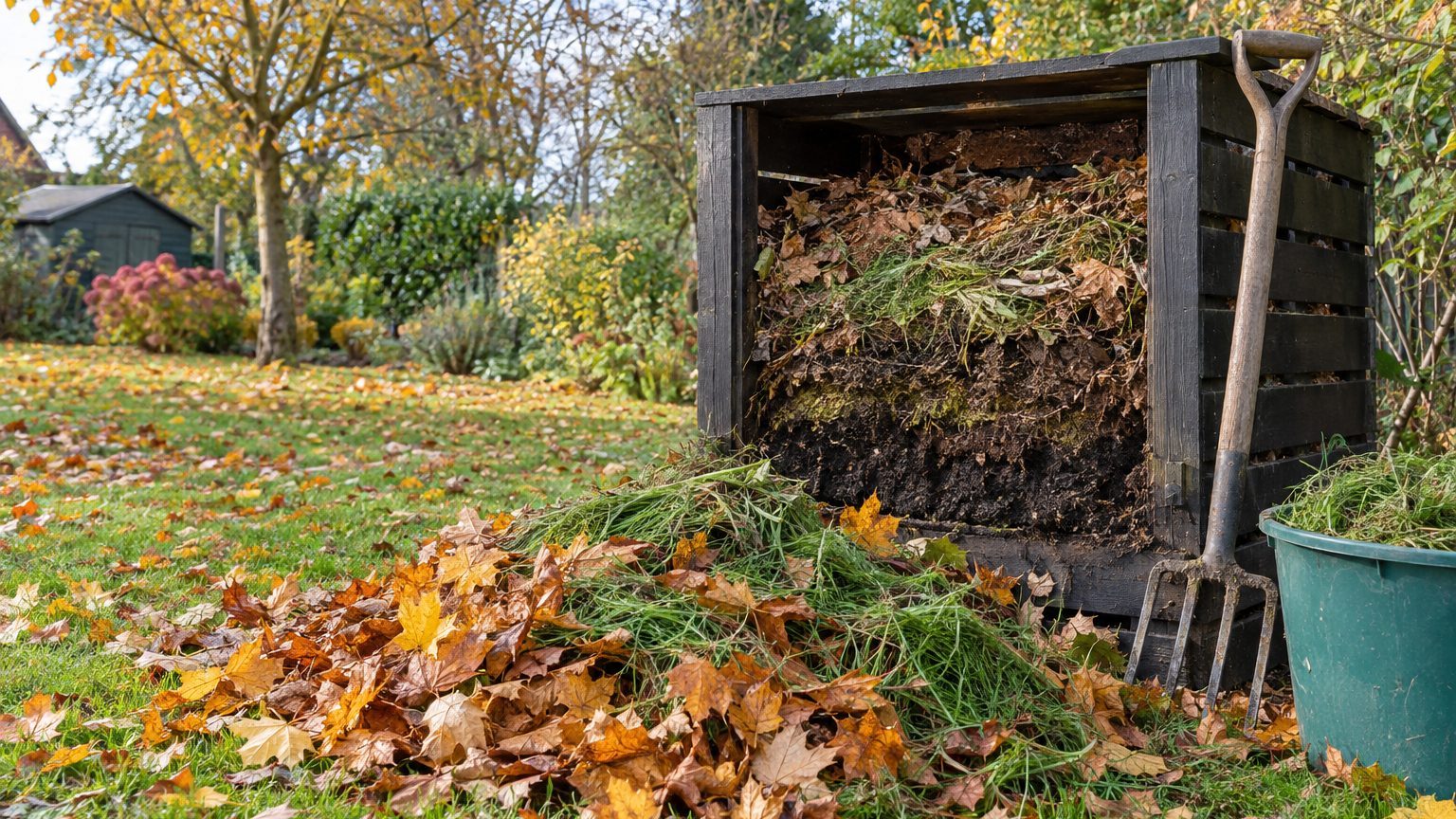
Mix about three parts dry leaves to one part fresh grass clippings by volume, keep the pile damp, and turn it. That is the whole method. The EPA puts the
ideal ratio at roughly three parts browns to one part greens by volume
. Fall leaves are the brown, and clippings are the green. Each one fixes the other’s weakness. Leaves alone rot slowly, and clippings alone turn to slime.
How to compost leaves and grass together
Start with the reason the pairing works. Colorado State Extension explains that
leaves are rich in carbon, which pairs well with nitrogen-rich materials like grass clippings and kitchen scraps
. Microbes do the actual decomposing, and they need both fuel (carbon) and protein (nitrogen) to multiply. Leaves supply the fuel. Clippings supply the protein. The Rutgers extension service notes that
dead leaves lack adequate nitrogen for rapid decomposition
, which is why a leaf-only pile can sit for a year looking much as it did in November.
The simplest build takes about twenty minutes. Pick a spot with good drainage and no standing water. Rutgers also points out that
shade reduces moisture evaporation from the surface, but tree roots may grow into the pile
. Lay down a thick bed of leaves, spread a thinner layer of clippings over it, then add more leaves. Keep going until the bin or heap is full. Finish with leaves on top, so the clippings are sealed in and flies have less to investigate.
Moisture is the next variable. Dry leaves shed water at first, so wet them as you stack. Rutgers gives a hand test:
squeeze a sample from the interior, and a few drops of water should appear
. A fistful that drips freely is too wet. A fistful that crumbles is too dry.
Timing matters more than most people expect. Clippings should go in fresh and soon after mowing. Left in a heap by the garage for a week, they mat down and heat up on their own, and the smell is hard to forget. Add them to the pile the day you mow, ideally in thin layers, and cover them with leaves right away.
Should you compost clippings at all? Often the lawn is the better destination. Missouri Extension says
clippings returned to the lawn can supply up to 25 percent of a lawn’s total fertilizer needs
, and the University of Minnesota says
recycling clippings to the lawn does not contribute to thatch
. Composting makes the most sense when you cut a lot of grass at once, such as after a skipped mow or the last cleanup of the season. It also makes sense when you want more green material to balance a mountain of leaves.
Brown vs green compost ratio
There are two ratios in circulation, and mixing them up causes much of the confusion. One is carbon to nitrogen, measured by weight, with a target near 30:1. The other is browns to greens, measured by volume, which is what you can see and scoop. The EPA notes that its volume recommendation
translates to roughly 30:1 in terms of elemental carbon to nitrogen
. For a full breakdown of the math, see the guide to the browns and greens compost ratio.
Why does a volume ratio of about 3:1 land near a carbon-to-nitrogen ratio of 30:1? Because the materials differ in density and in nitrogen content. Weights vary with moisture and packing, but a bucket of loose dry leaves weighs far less than a bucket of fresh clippings, which matches what anyone who has hauled both knows. Leaves are bulk with little mass. Clippings are dense and wet. Bucket for bucket, the clippings carry far more nitrogen than their volume suggests.
The numbers behind the pairing are easy to see. According to one garden-science source,
fall leaves have a C:N value between 30 and 80, while fresh grass clippings run 15 to 25
. Oak leaves sit near the high end. Softer maple leaves sit lower. So an oak-heavy yard may want a bit more clipping than a maple-heavy one.
Not every extension service gives the same number, and the differences are worth knowing. Missouri Extension suggests that heavy loads of fresh clippings can be tamed by
mixing compost, dry leaves or wood chips in a 1:1 or 2:1 ratio with clippings before composting
. Rutgers goes the other way for a pure leaf pile, saying
it can be built of leaves only, with a small amount of grass clippings added
. Treat 3:1 as the middle of the range. If you have a lot of clippings, go toward 2:1. If you want a slow, low-effort leaf pile, use far less.
Your nose will tell you whether you got it right. An ammonia smell means too much green, so add leaves. A pile that stays cold and never changes means too much brown, so add clippings or another nitrogen source. Rutgers notes that
a high-nitrogen fertilizer added to the pile may speed up decomposition
if you have leaves but no clippings, which is a useful fallback in November, when the mowing is done.
Leaves in the compost bin
A bin changes the physics a little. Walls hold in heat and moisture, which helps in a cold climate, but they also cut airflow. That makes the layering more important. The University of Minnesota warns that
a thick layer of grass clippings in a compost pile will lead to bad odors from anaerobic decomposition
. Keep each clipping layer to a couple of inches at most, and break up any clumps with a fork as you add them.
Whole leaves or shredded? Practical advice varies. Shredded leaves pack tighter and break down faster at the surface, which is why many guides recommend running a mower over the pile. Colorado State takes a different view, saying that
whole leaves are preferable to those shredded or mulched by a lawn mower
for composting. Both approaches work. Whole leaves leave more air in the pile, and shredded ones decay faster but compact more. If you want to speed things up, the guide on how to compost leaves faster covers shredding, turning and heat. If you only need the basics for a leaf-only pile, start with how to compost leaves.
Turning is where a grass-heavy bin differs most from a leaf-only heap. Michigan State’s Ask Extension service says a pile with grass clippings needs
turning at least once a week to stay aerobic
, because
clippings can block airflow and turn the pile anaerobic
. A mostly leaf pile is more forgiving. Turning it every few weeks, or even once or twice a season, is usually enough.
Many yards also carry a chemical history. Check what was applied to the lawn before you bag clippings for the bin. Missouri Extension reports that
insecticides sprayed on plant material break down rapidly in light, and the material can usually go into the pile within one week
. For fungicides, it says to
keep treated material out of the compost pile for at least one week
. Herbicides are less clear-cut. Missouri advises returning herbicide-treated clippings to the lawn for two or three mowings before composting them, and its general answer on pesticides in compost is
“No simple answer exists”
. Ask Extension says herbicide residue
may slow the process but won’t totally inhibit it
. Some persistent herbicides can survive composting and later harm vegetables and other sensitive plants, so the safest approach is to read the product label for any clippings restriction. If you plan to use the finished compost on vegetables, hold treated clippings out of the bin.
Then there is the calendar. Leaves come down for roughly two months, and a bin filled in November will not be finished by Thanksgiving. Rutgers frames it neatly:
because leaves fall only about two months a year, there are ten months for decomposition before space is needed for the next batch
. A fall-built pile that is turned occasionally can be ready by the following autumn, and sooner if it stays warm and damp. Finished compost looks dark and crumbly and smells like forest soil, with few or no recognizable leaves left.
One last practical point is scale. A full bin can settle noticeably within weeks as the clippings collapse. Don’t take that settling as a sign of failure. Top it off with fresh leaves and a thin layer of clippings, and keep a tarp-covered stash of bagged leaves beside the bin. Browns are plentiful in October and scarce in July, so stored leaves become the carbon source for next summer’s grass clippings.