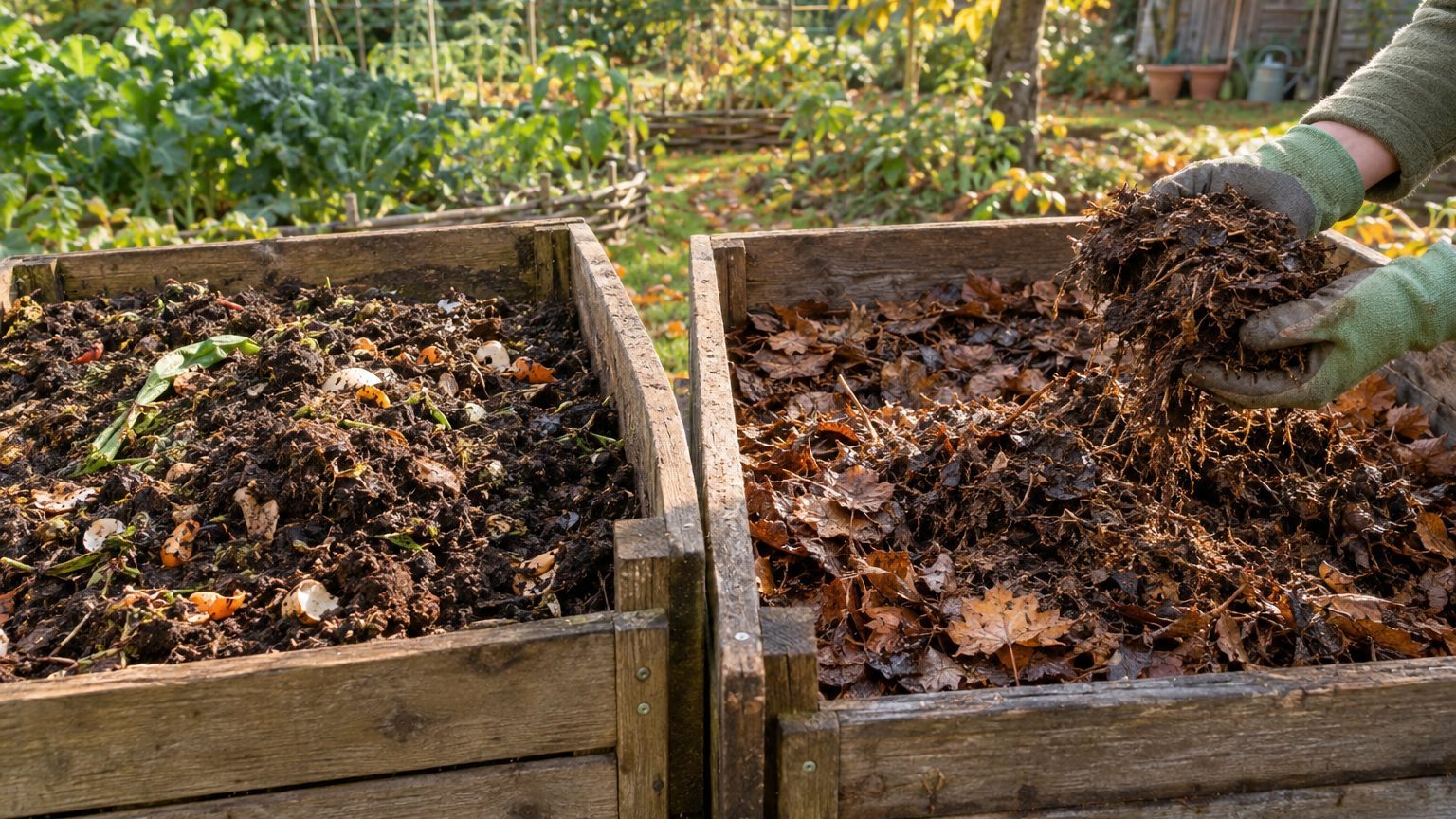
Compost primarily adds nutrients, while leaf mold primarily improves soil structure and water retention.
That is the short answer. Compost feeds plants. Leaf mold changes how soil holds water and air. Neither one replaces the other, and the question for a backyard gardener is which job the bed needs done.
Leaf mold vs compost: where each one wins
Start with how they are made, because the process explains almost every difference. Compost is a mixed recipe: kitchen scraps, grass clippings, garden trimmings, leaves. Bacteria do most of the work, and a well-managed pile heats up. Leaf mold is a single ingredient, fallen leaves.
Fungi do the majority of the decomposing, as opposed to bacteria.
That makes the process cool and slow, and it needs very little management from you.
Nutrition is where compost pulls ahead. Penn State Extension describes leaf mold as
not high in nutrients
, though still an excellent soil amendment. Compost made from a variety of materials carries a broader nutrient load, which is why vegetable beds, heavy feeders like tomatoes and squash, and tired soil usually respond better to it. Leaf mold won’t give a hungry bed what it’s missing. North Carolina Cooperative Extension says plainly that leaf mold
doesn’t provide much in the way of nutrition
, so you still need compost or another organic fertilizer to build fertility.
Water is where leaf mold takes over. North Carolina Cooperative Extension refers to unnamed university studies reporting that
adding leaf mold increased water retention in soils by over 50%.
Because the slow breakdown leaves leaf fragments partly intact, the material stays spongy and open. It also loosens clay and helps sandy ground hold moisture, the opposite problem fixed by the same material.
Then there’s time. Compost can be ready in a few months if you tend the pile. Leaf mold is a patient project. In a bagged pile, North Carolina’s extension service says you can have a finished product after
six months to a year
, while an open pile often takes longer. If you’re planning around a calendar, the guide on how long does leaf mold take breaks the timeline down by method and leaf type.
One more difference that gardeners tend to like: weeds. Penn State Extension notes that
unlike compost or manure, leaf mold is mostly weed-free.
A compost pile that never got hot enough can deliver a flush of seedlings along with its nutrients. A pile of nothing but leaves rarely does.
Here is how the trade-offs line up:
- Compost: richer in nutrients, faster to make, a better fit for vegetable beds, but it can carry weed seeds and takes more pile management.
- Leaf mold: low in nutrients, slower, cheap (the leaves are free), very good for moisture and soil texture, and mostly weed-free.
- Together: compost for fertility, leaf mold for structure and water, which covers most of what a garden bed needs.
Leaf mold compost benefits
“Leaf mold compost” is a common term, and it’s slightly misleading. Leaf mold is composted leaves, strictly speaking, but it behaves differently from a mixed compost pile. Its benefits are about soil physics and biology more than fertilizer value.
Soil structure is the headline. Penn State Extension credits it with improving structure, increasing water retention,
returning essential elements to the soil
, and benefiting the fungi, bacteria and other microbes that break down organic matter. Dark, crumbly, with an earthy smell, finished leaf mold looks a lot like compost. It just doesn’t work like it.
Drought buffering matters in practice. A bed amended with leaf mold dries out more slowly between waterings, which means fewer hose sessions in July. That’s the part gardeners in sandy soil tend to notice first. Clay gardeners notice something else: heavy ground that used to cake into slabs starts to break apart more easily, and water soaks in instead of pooling.
Seedlings and containers benefit too. Penn State Extension notes leaf mold can be
added to potting soil
. For that use, sift it first so the mix stays fine and even. Fully finished material works best, and young, half-rotted leaf mold is better kept for mulch.
Which one for which bed?
For a vegetable garden, start with compost, because vegetables need the nutrients, and add leaf mold if the soil dries out fast or compacts. For a shade garden or woodland-style planting, leaf mold fits the conditions those plants evolved in. Around shrubs and perennials that need moisture more than food, it’s the better choice. For lawns, a thin top-dressing of finely screened leaf mold can improve soil texture, though compost is the usual pick when the goal is to thicken thin turf.
The two make a good pair. Compost goes into the top few inches in spring for nutrition. Leaf mold goes on top or into the soil to keep that nutrition from drying out or washing away. If you’ve never made it, the walkthrough on how to make leaf mold covers the basic pile and bin setups. Short on space? Bagging is the easiest route, and how to make leaf mold in plastic bags shows how to do it with ordinary trash bags and a few air holes.
Leaf mold mulch
Mulch is where the gap between “leaves” and “leaf mold” blurs, and it’s worth being precise. You can mulch with fresh shredded leaves this fall, or you can wait and mulch with partly or fully decomposed leaf mold later. Both work. They just work on different schedules.
Shredded fresh leaves are the faster option. Penn State Extension recommends a
2 to 4-inch-thick layer of mulch around trees and shrubs or on perennial beds
. Shredding matters, since whole leaves, especially maples and other broad ones, can mat into a wet sheet.
Shredded leaves tend to mat down less than whole leaves, and watering after application helps them stay in place.
A mulching mower run over the lawn a few times does the shredding for you.
What does the mulch actually do? The same Penn State guidance says leaf mulch
moderates soil temperatures, retains soil moisture, and keeps down weeds.
In winter that means less freeze and thaw swing around shallow roots. In summer it means cooler soil and slower evaporation.
Partly rotted leaf mold, the kind that’s a year or so along and still shows leaf outlines, makes an excellent mulch because it’s already begun to break down and won’t blow around. Fully finished leaf mold is crumbly enough to spread like a soil blanket, but many gardeners save it for planting beds and potting mixes, since it takes longest to produce and is very useful once it’s done.
Keep mulch off the stems. Pull any layer, leaf-based or not, a few inches away from trunks and plant crowns. Home Depot’s gardening guidance warns that piling mulch against the base, so-called volcano mulching,
traps moisture and leads to rot or disease.
Shrub stems and young trees are especially vulnerable.
Not every leaf behaves the same. Oak and beech leaves are tough and slow, and they last longer as mulch. Maple and birch leaves break down faster. Pine needles
make an excellent mulch, too, and they don’t need to be shredded or decomposed before use.
If you’re working with a mixed yard of leaves, shred them together and you’ll get a more even result.
One caution on timing: if you’re mulching a vegetable bed, consider using finished leaf mold or well-shredded leaves instead of large whole pieces. Some gardeners find that big leaf fragments left on the soil surface give pests a place to overwinter, so tidy shredded material is the safer choice there.
Last, a planning fact that surprises first-timers. When leaves finish breaking down, the pile can shrink to roughly a third of its original volume. Three full trash bags of leaves in October become roughly one bag of leaf mold, so if you want a meaningful amount for next year’s beds, collect more leaves than seems reasonable.
Sources : extension.psu.edu | letsgocompost.org | bigblogofgardening.com