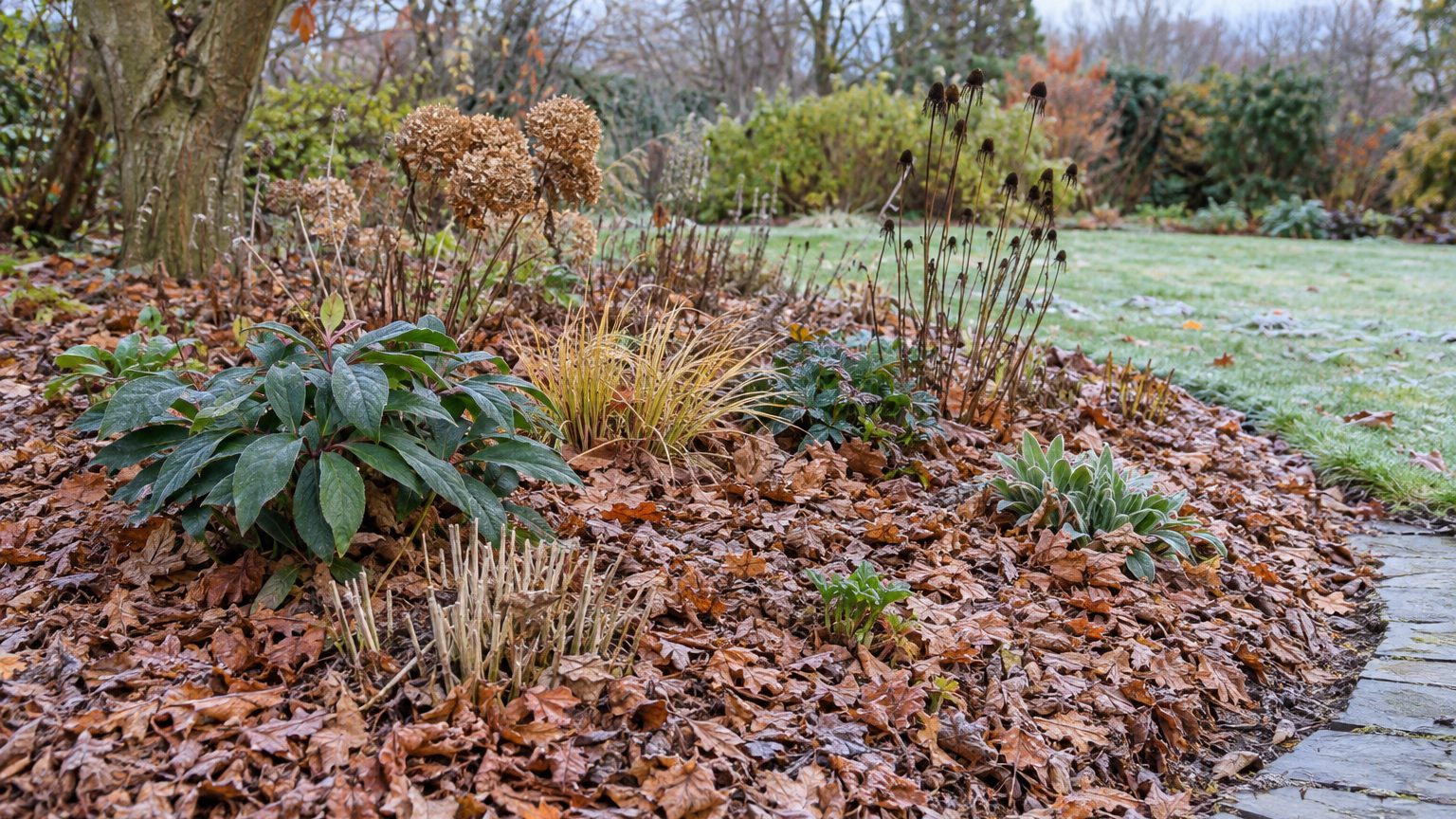
Leaves in flower beds
Yes, you can leave leaves in flower beds over winter, and most perennial beds come out better for it. Keep the layer loose and about 2 to 3 inches deep, with shredded or small leaves working best.
Most perennials can grow through three inches of shredded leaves or smaller whole leaves
, and Penn State Extension puts the range for perennial beds at
2 to 4 inches of shredded leaves
. Pull the layer back from crowns and evergreen foliage. Rake out soggy mats of whole leaves and any leaves with disease.
Zone matters. In the coldest parts of the USDA Plant Hardiness Zone Map, University of Minnesota Extension suggests
five or six inches of whole or shredded leaves
over perennial and bulb beds, but only
after the soil begins to freeze
. Go early and you can coax growth under the mulch that weakens the plants. A mild-winter bed needs far less.
The payoff is practical. A leaf layer
moderates soil temperatures, retains soil moisture, and keeps down weeds
, and it blunts the freeze-thaw cycles that
lift plants out of the soil and destroy roots
.
Whole leaves versus shredded is a trade. Shredded leaves
decay much more quickly
and mat less, but whole leaves shelter more overwintering insects. One workable answer is to
leave some leaves whole while shredding others
. Oak is the exception to this loose approach, because
perennials cannot grow through a thick mat of oak leaves
.
Leaves that blow in and pile against plants can be the bigger problem. Fork them out of the crown zone and spread them thinly across open soil. Then run the matting test: if the layer is wet, flat, and stuck together after rain, thin it or shred it.
Leaf mulch in garden beds
Depth is half the job. The other half is where the leaves sit. Pull mulch
a few inches back from the center of perennials
so the crown stays able to breathe. Evergreen foliage and woody stems need the same gap.
Leaves also mix well with other winter mulches. Minnesota’s list includes
partially decomposed compost, ground corn stalks, and straw
alongside leaves. Chopped leaves and compost are good choices because
plants can push up through them in spring
. Straw works too, though it is a different kind of cover, since its hollow stems trap air.
This guide covers ornamental beds only. For the general overview, see leaves in garden beds, and for enclosed growing spaces, leaves in raised beds. The table below sorts flower beds by plant type.
| Bed type | Leaf approach | Depth | Watch for | Start pulling back |
|---|---|---|---|---|
| Herbaceous perennials (hostas, daylilies, coneflower) | Shred, or leave small leaves | 2 to 3 inches (more in the coldest zones, after the soil freezes) | Matting, crown rot, slugs | Gradually as soil thaws and shoots appear |
| Bulbs (tulips, daffodils) | Leave a loose layer | 2 to 3 inches, applied after the soil starts to freeze | Leaves stuck to emerging shoots, voles | Early spring, before growth starts |
| Roses | Remove if black spot was present; otherwise thin | Clean, loose 2 to 3 inches at most | Black spot spores on fallen leaves | Before buds swell |
| Mediterranean and drought-tolerant plants (lavender, sedum, thyme) | Remove from the crown | None at the crown | Trapped moisture, crown rot | Keep clear all winter |
| Evergreen groundcovers and low evergreens | Thin, keep off foliage | Light scatter, foliage still visible | Smothering, trapped wet | As new growth resumes |
| Annual or bare beds | Leave or shred; remove diseased plant debris | 2 to 3 inches | Disease carried over from spent plants | Before planting |
Should i rake leaves in the spring
Gradually, and later than your instincts say. A widely repeated rule is to wait for daytime temperatures in the 50s°F for about a week, but even that is a starting point.
There is no hard and fast date or temperature
, and the Xerces Society points to cues like
putting away snow shovels and winter coats and mowing new lawn growth
. Insects wake at different times, and some stay in the leaf litter well into the growing season. The longer version lives in when to rake in spring.
A sequence that protects shoots and insects:
- When the soil thaws and nights stay above freezing, pull leaves back from crowns and bulb beds. Minnesota advises removing mulch
as it thaws to avoid crown rot
while keeping a cover handy for a late freeze. - Check the shoots. If leaves are stuck on tulip foliage,
carefully remove the mulch or leaves from the bulb leaves
. Yellowing from the disturbance fades after a few days. - After a stretch of mild nights, finish the cleanup. Rose canes with black spot should be pruned
before the buds swell
. - Compromise on looks:
remove leaves near garden edges
and leave the back of the border alone, where emerging plants soon hide the litter.
Healthy leaves you remove can go to the compost bin, a leaf mold pile, or other beds. Shredded leaves can turn into leaf mold in about six to twelve months,
while whole leaves can take a year or two
. Diseased leaves go in the trash.
Can leaves cause rot or smother plants in a flower bed?
They can, and wet weather in a mild winter is when it happens. Crown rot develops when damp organic matter sits against a plant’s growing point for weeks. Low rosettes and plants that keep green foliage through winter smother fastest, and anything that wants dry feet suffers most.
Mediterranean-type plants are among the most vulnerable. Lavender growers warn that
leaves and other organic mulches retain too much moisture
in cold, wet winters. Rosemary and Russian sage face
compaction, humidity, and crown rot
under winter mulch. Sedum is even simpler:
there is no reason to mulch it
.
Disease is the second reason to rake. Rose black spot is the clearest case, since
the fungus overwinters in fallen leaves and stem cankers
, and Clemson suggests removing old leaves and any mulch where infected ones fell, then
replacing it with fresh mulch
. Peonies work the same way. Botrytis blight attacks stems, buds, and leaves, and extension guidance is to cut foliage to ground level after a hard freeze and take it away. Peony leaf blotch also persists on dead leaves and stems.
Warning signs that the leaf layer has to go:
- Slimy, blackened leaves at the bottom of the layer
- A sour or swampy smell when you lift it
- Mushy, darkened crowns
- Early rot or yellowing on shoots that should be healthy
Which types of leaves are safe to leave on flower beds?
Small, thin leaves are the easiest. They
break down over the winter
, while maple takes a season. Big flat leaves are riskier:
maple and sycamore glue themselves into wet sheets
, so shred them or thin them. Oak leaves are tough and mat thickly, which is why they suit shredding or a lighter scatter. Magnolia leaves are leathery and slow to rot, so they are best chopped and mixed with finer material.
Some leaves stay out. Anything with fungal spots goes to the trash, not the beds. Black walnut leaves contain juglone, which some ornamentals tolerate poorly, so keep them away from sensitive plantings. And no leaves, however clean, belong against lavender, sedum, or thyme.
Frequently Asked Questions
Can I leave leaves on top of bulbs over winter?
Yes, a loose layer applied after the soil begins to freeze helps keep bulbs from
emerging too early and being damaged by late freezes
. Pull it away from the planting spot in early spring, before growth starts. Matted leaves are hard for shoots to push through.
Do leaves in flower beds attract slugs, mice, or voles?
Thick, damp layers can. University of Minnesota Extension notes that
too many chopped leaves can encourage slug habitat
, and advises removing extra leaves in spring. Voles favor
thick mulches and heavy vegetation debris
and eat bulbs and hostas, so keep the layer thin and loose if they are a problem.
Should I cut back perennials before leaving leaves on the bed?
It depends on the plant. Cut back peonies and any plant with fungal disease, and remove those clippings. Healthy stems can stay standing, since
some insects overwinter inside stems
.
Can I use whole leaves in flower beds or do they have to be shredded?
Small whole leaves are fine in a thin layer. Large leaves like maple and sycamore mat when wet, so shred them or mix them with other material. Plan on a thin whole-leaf layer in the back of the border for insects and shredded leaves up front.
How do I know if the leaves in my flower bed are causing rot?
Lift a corner of the layer in a thaw. Slimy leaves, a sour smell, or mushy crowns mean it is time to rake the layer back and let the soil air out. Check lavender, sedum, and any evergreens first, because they tend to show problems early.
Sources: archive.lib.msu.edu | extension.illinois.edu | extension.missouri.edu