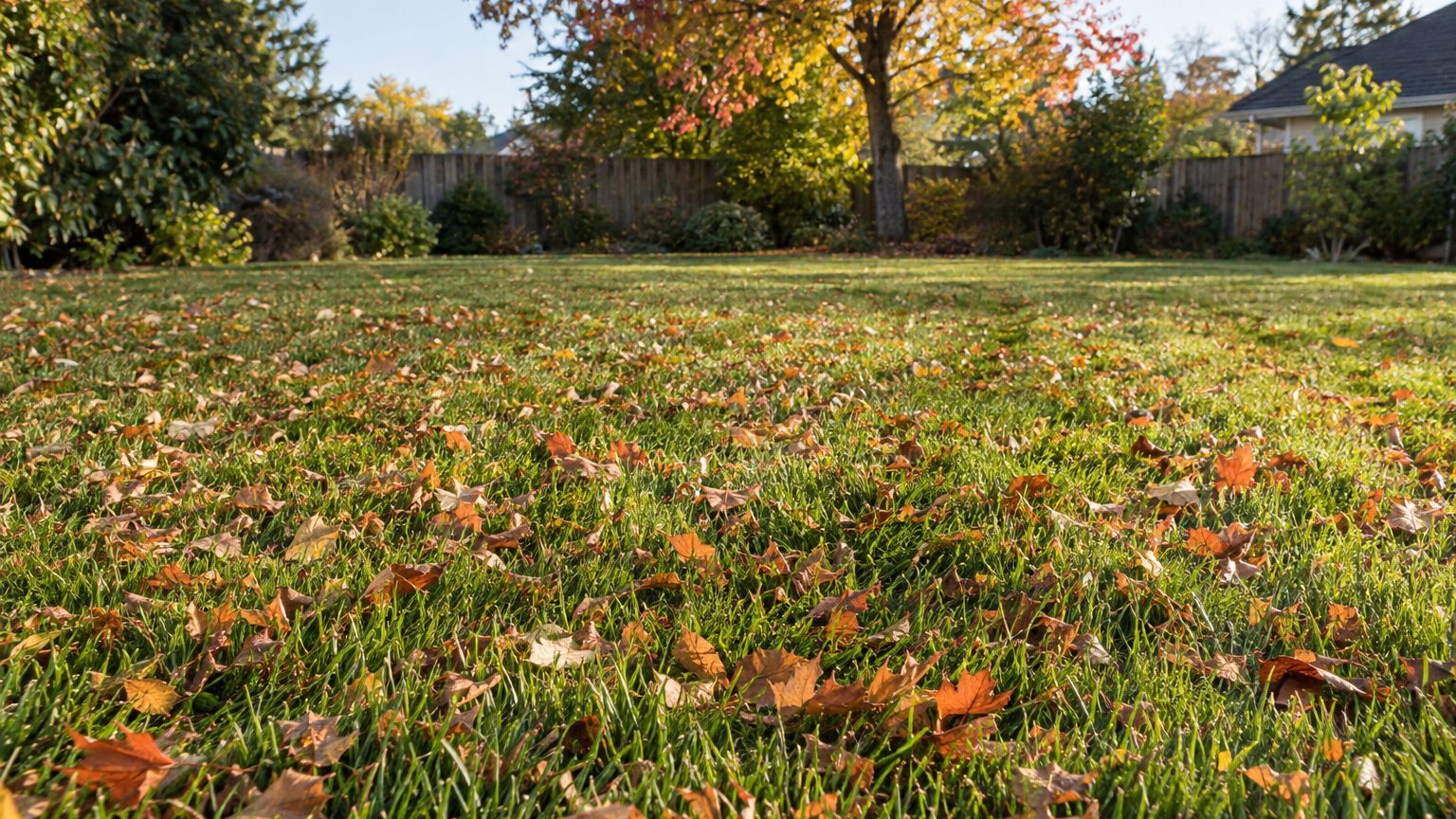
For most lawns, mulching wins. It takes less time, costs less, and keeps organic matter and nutrients in your own soil instead of at the curb. The test that decides it is visual: if about half or more of the lawn still shows through the shredded pieces, mulch. Bag the leaves, or at least remove some, when the layer is thick, wet and matted, when the leaves carry disease, when the lawn is newly seeded, or when your town requires collection. Many yards do best with a mix. Mowing technique is covered on the page about mulching leaves with mower, and the full lawn process sits with mulching leaves into lawn.
Mulching leaves good for lawn
Michigan State University turf specialists started testing ground-up leaves on lawns
after yard waste was banned from Michigan landfills in the 1990s
. Their finding:
up to 6 inches of leaves can be mulched at a time
, with the caveat that it depends on your mower, and
multiple passes might be needed
. A separate MSU study on maple and oak leaves in Kentucky bluegrass also found fewer dandelions where leaves were mulched. MSU says that after three years of mulching, homeowners can see
nearly a 100 percent decrease in dandelions and crabgrass
. The reason is mechanical.
The decomposing pieces cover bare spots between turf plants, which are an open door for weed seeds.
Bagging throws away a free soil amendment. Mulched leaves
return nitrogen, potassium and phosphorus to the soil
. They return less nitrogen than grass clippings do, but
they still reduce the need for supplemental fertilizer
. They also improve soil structure as they break down. Purdue researchers found that mulching leaves into turf
doesn’t increase thatch or disease
.
How many leaves are too many? University of Minnesota Extension gives a clear line:
mulch until you can only see about half of the lawn surface
. Once less than 50% is visible,
bag the leaves and compost them off-site
. Stand over a few spots after each pass and look straight down. Green blades poking through? You’re fine. A solid brown carpet? Too thick, because excess leaf residue
can promote snow mold damage
.
Shredded leaves on lawn
Leaf size matters more than the method’s name. Mulching only works when the pieces are
small enough to filter down between grass blades
. In MSU’s work, the tiny pieces sift down through the turf, and the visible residue
only lasts a few days
. A mulching blade helps, since
mulching mowers are preferred for cutting leaves into small pieces that decompose
. If the pieces still look coarse,
go over the lawn again at right angles to the first pass
.
Whole leaves behave differently. A thick layer
blocks sunlight and traps moisture in the turf canopy, raising the potential for disease
. Pile on wet, heavy snow and, as MSU puts it,
it can mean disaster for the turf plant below
. Same leaves, opposite outcome. One group got chopped and sifted into the turf; the other sat on top and mashed together.
A properly mulched lawn looks almost boring: green grass with light flecks of leaf fragments that fade within days. Check again after rain or heavy dew. If the pieces have settled into
a thin, open layer
, they’re doing their job.
Mulching leaves for garden
Lawn and beds don’t have to compete for the same leaves. Mulching in place feeds the turf. Bagging or collecting leaves moves them where they’re more useful. MSU suggests that if you have a bagging mower,
you can alternate between mulching into the turf one week and collecting ground leaves to use as mulch in landscape beds and vegetable gardens
. Leaves can also serve
as insulating mulch around tender or new plants
.
Collected leaves are worth keeping when the lawn has more than it can absorb, and when the leaves are healthy. Whole leaves suit composting better than mower-shredded ones, per Colorado State University Extension, and the page on leaf mold vs compost compares those two routes. Skip diseased leaves for garden mulch entirely. Extension guidance on apple scab is blunt:
don’t use the leaves as mulch
.
When should you bag leaves instead of mulching them?
Four situations tip the decision toward bags.
Thick or matted layers. Under 50% of the lawn visible means bagging time. Wet leaves make it worse, since they
clog up your lawn mower and can suffocate the grass
. University of Minnesota Extension advises mulching
when leaves are dry
.
Diseased leaves. The apple scab fungus
survives the winter on diseased leaves that have fallen under the tree
. Ohio State’s guidance is to rake and destroy them. Chopping is an option only
when coupled with two or three applications of 5 percent urea
. For a single backyard tree, UC IPM says
removing, then composting or destroying, its dropped leaves can limit the disease to tolerable levels
. Heavy spotting on any tree is a reason to bag that tree’s leaves.
New seed, patchy or shaded turf. Seedlings and thin shade grass have little canopy to hide a leaf layer, and leaves already cut light to turf. Keep leaves off these areas and remove them rather than shredding them in place.
Local rules. HOAs sometimes police visible leaf litter. Curbside programs vary widely. Fairfax County, Virginia,
prohibits the use of plastic bags for yard waste
, and Raleigh, North Carolina, requires paper bags or city bins. West Hartford, Connecticut,
doesn’t accept plastic bags or loose piles
, while Troy, Ohio,
collects unbagged leaves during the fall season
. Check your own town’s page before you buy anything.
Is mulching leaves cheaper and faster than bagging them?
Yes, in most yards. Mulching folds into mowing: a normal pass, maybe a second one. Bagging stacks tasks: rake or mow-and-bag, stuff, tie, drag, haul. Each fill of a mower bag or lawn bag is a trip. The weight of wet leaves in a bag is where the sore back comes from.
Costs fall into categories rather than a single number. Bagging means paper bags or containers, fuel for extra trips, and, if you self-haul, facility charges (Fairfax County, for one, accepts yard waste at its sites
for a fee
). Mulching costs a bit of fuel for the extra pass and a sharp blade.
Keeping blades sharp and filters clean
helps your engine through repeated fall mowing.
The national picture adds scale. The EPA estimates that
yard trimmings made up 35.4 million tons, or 12.1 percent of municipal solid waste, in 2018
. Every bag you don’t set out is a small piece of that stream you skip.
| Factor | Mulching leaves | Bagging leaves |
|---|---|---|
| Time and effort | Low to moderate; folded into mowing | High; raking or bagging, tying, hauling |
| Ongoing cost | Low; fuel and a sharp blade | Moderate; bags, fuel, possible fees |
| Nutrient and organic matter return | High; stays in the soil | Low on the lawn; only if reused in beds |
| Effect on lawn health | Positive when the layer is thin | Neutral; clears light and moisture |
| Weed suppression | Good; fills bare gaps | None |
| Disease risk | Higher if leaves are diseased or matted | Lower; removes infected leaves |
| Usefulness for garden beds | Indirect, through the soil | High when leaves are healthy |
| Disposal and local rules | Little to none | Paper-bag, pickup and HOA rules apply |
| Best situations | Light to moderate, dry layers | Thick, wet, matted or diseased leaves; new seed |
How do you decide between mulching and bagging leaves?
Run through five checks:
- Leaf depth: at least half the lawn visible after a pass means mulch; less than half visible means remove some first.
- Tree count: a few trees point to mulching, while many mature trees often mean a hybrid.
- Lawn condition: established turf can mulch, but new seed or thin shade grass should be bagged.
- Disease: spotted fruit-tree leaves go in the bag.
- Local rules: an HOA or curbside requirement can settle it.
The hybrid workflow is simple. Mulch the areas where grass still shows through, then check each zone. Bag only the matted or diseased patches, then send healthy surplus to beds as insulation around plants or to a compost pile. That’s the same approach MSU describes with alternating weeks of mulching and collecting.
One last point: mulching leaves doesn’t replace lawn care. Overseeding, fertilizing and watering follow their usual schedule, and MSU’s own message is that fall is the time to invest in next spring’s lawn. Leaves trim the fertilizer bill. They don’t erase it.
Frequently Asked Questions
Can I mulch wet leaves?
It’s better to wait. Extension guidance says to mulch when leaves are dry, because wet leaves clump, clog the mower and don’t shred evenly. If rain keeps them soggy, rake the wettest patches into a pile for beds or bags and mulch the rest once things dry out.
Are paper yard waste bags better than plastic bags?
Where programs say so, yes. Many municipalities require paper bags or reusable containers and refuse plastic, such as Fairfax County and Raleigh. Raleigh adds that
compostable plastic bags don’t break down
at its yard waste center. Rules vary locally, so check your town’s page.
Do mulched leaves attract pests or ticks?
Thick leaf litter is the concern. Extension guidance flags leaves
at the edges where woods and lawn meet
as possible habitat for blacklegged ticks. A 2020 study in the Journal of Medical Entomology (Jordan and Schulze) found that raking or blowing leaves to that edge raised blacklegged tick nymph numbers there. Shredded pieces sift into turf rather than forming deep litter, but keep surplus leaves away from wooded borders.
Can I mulch some of the leaves and bag the rest?
Yes, and it’s often the smartest plan. Mulch while the layer is light, and bag or collect leaves from matted, diseased or newly seeded areas. Healthy bagged leaves can go to beds or compost instead of the curb.
Sources: archive.epa.gov | archive.lib.msu.edu | cityoflancasterpa.gov